
Precision Stitched Into Every Detail
How embroidery transforms branding, decoration and identity into permanent features of every shoe.
Precision Stitched Into Every Detail
Written by
EMBROIDERY

Embroidery is one of the most precise decorative processes in footwear manufacturing. Unlike printed graphics or applied embellishments, embroidery becomes physically integrated into the material through thousands of individual stitches. Every logo, monogram or decorative pattern must balance aesthetics, durability and production efficiency. The quality of the final result depends as much on digital preparation as it does on the precision of the embroidery machine itself.

Digital Preparation
Every embroidery begins long before thread touches fabric or leather. Artwork must first be converted into a stitch file using specialised digitising software. This process determines stitch direction, density, sequence and compensation for material movement during sewing.
Different materials require different embroidery strategies. Technical mesh, canvas, suede and textiles all respond differently under needle penetration and thread tension. A design that performs perfectly on cotton may distort entirely when applied to leather or stretch fabrics.
Good digitising ensures that the finished embroidery reproduces the original design faithfully while remaining stable throughout production.
Choosing Threads and Materials
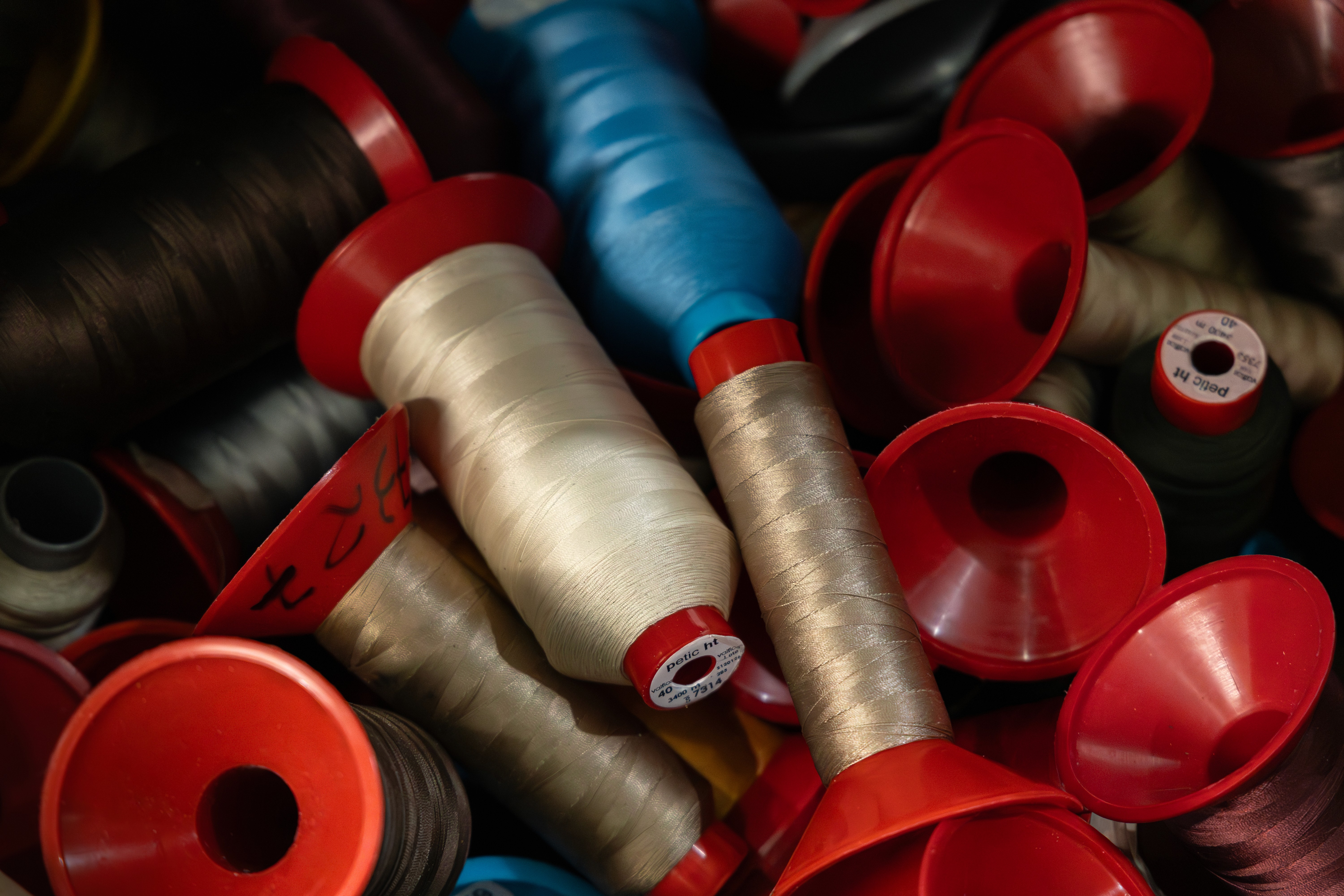
Thread selection influences both appearance and performance. Polyester threads provide excellent colour retention and abrasion resistance, while rayon offers a softer sheen for premium decorative applications. Thickness, finish and colour consistency are carefully selected according to the design requirements.
Backing materials and stabilisers are equally important. They support the material during stitching, minimise distortion and allow the embroidery to maintain its intended shape after production and regular wear.
The goal is not simply decorative detail, but long-term durability.
Machine Embroidery Process
Modern embroidery machines operate with remarkable precision, executing thousands of stitches per minute while maintaining consistent tension and alignment. Multiple needle heads allow automatic colour changes without interrupting production.
Operators position every component accurately inside embroidery frames before production begins. Even slight misalignment can affect logo placement or symmetry between left and right shoes.
Throughout the process, machines are continuously monitored to ensure smooth thread feeding, correct stitch formation and consistent registration.
Quality Control During Embroidery
Inspection takes place continuously rather than only after completion. Operators monitor thread tension, stitch density, colour sequence and overall alignment throughout production.
Broken threads, skipped stitches or minor registration shifts are identified immediately before they affect larger production batches. Each embroidered component is checked against approved references to ensure consistency across every pair.
The objective is simple: every embroidered logo or graphic should appear identical regardless of production volume.
Integration Into Production
Once embroidery is completed, components continue through the remaining manufacturing stages. Properly executed embroidery must withstand lasting, stitching, assembly and finishing without distortion or thread damage.
Because embroidery becomes part of the material itself, every previous decision—from digitising to stabilisation—directly influences how the component performs throughout the entire manufacturing process.
Successful embroidery is not an isolated operation but an integrated part of footwear production.
Conclusion
Embroidery combines digital precision with traditional craftsmanship. Every stitch contributes to the identity of the finished product, transforming branding and decorative details into durable features that remain part of the shoe throughout its lifetime. When executed correctly, embroidery delivers consistency, elegance and lasting value—one stitch at a time.

More articles

Sunday, June 14, 2026
Written by
Coincal
Where every great shoe begins
How ideas evolve into production-ready footwear through research, creative direction and technical expertise.
Every successful footwear collection begins long before the first material is selected or the first sample is produced. It begins with an idea. Whether that idea arrives as a sketch, a moodboard or a fully developed concept, the design phase is where creative ambition meets the discipline of manufacturing. At Coincal, the purpose is not simply to draw an attractive shoe. It is to understand the brand behind it, the person who will wear it and the practical decisions that will allow the idea to become a convincing, producible object. This early alignment is especially important in footwear, where appearance, comfort and construction are inseparable. A line that gives a silhouette energy may change the pattern beneath it; a material chosen for softness may require hidden reinforcement; a sole selected for attitude will also determine weight and flex. Design becomes stronger when these consequences are welcomed from the beginning.
Every successful footwear collection begins long before the first material is selected or the first sample is produced. It begins with an idea. Whether that idea arrives as a sketch, a moodboard or a fully developed concept, the design phase is where creative ambition meets the discipline of manufacturing. At Coincal, the purpose is not simply to draw an attractive shoe. It is to understand the brand behind it, the person who will wear it and the practical decisions that will allow the idea to become a convincing, producible object. This early alignment is especially important in footwear, where appearance, comfort and construction are inseparable. A line that gives a silhouette energy may change the pattern beneath it; a material chosen for softness may require hidden reinforcement; a sole selected for attitude will also determine weight and flex. Design becomes stronger when these consequences are welcomed from the beginning.
Sunday, June 14, 2026
Written by
Coincal
Where Every Impression Represents the Brand
How precision embossing transforms logos into permanent signatures of quality and craftsmanship.
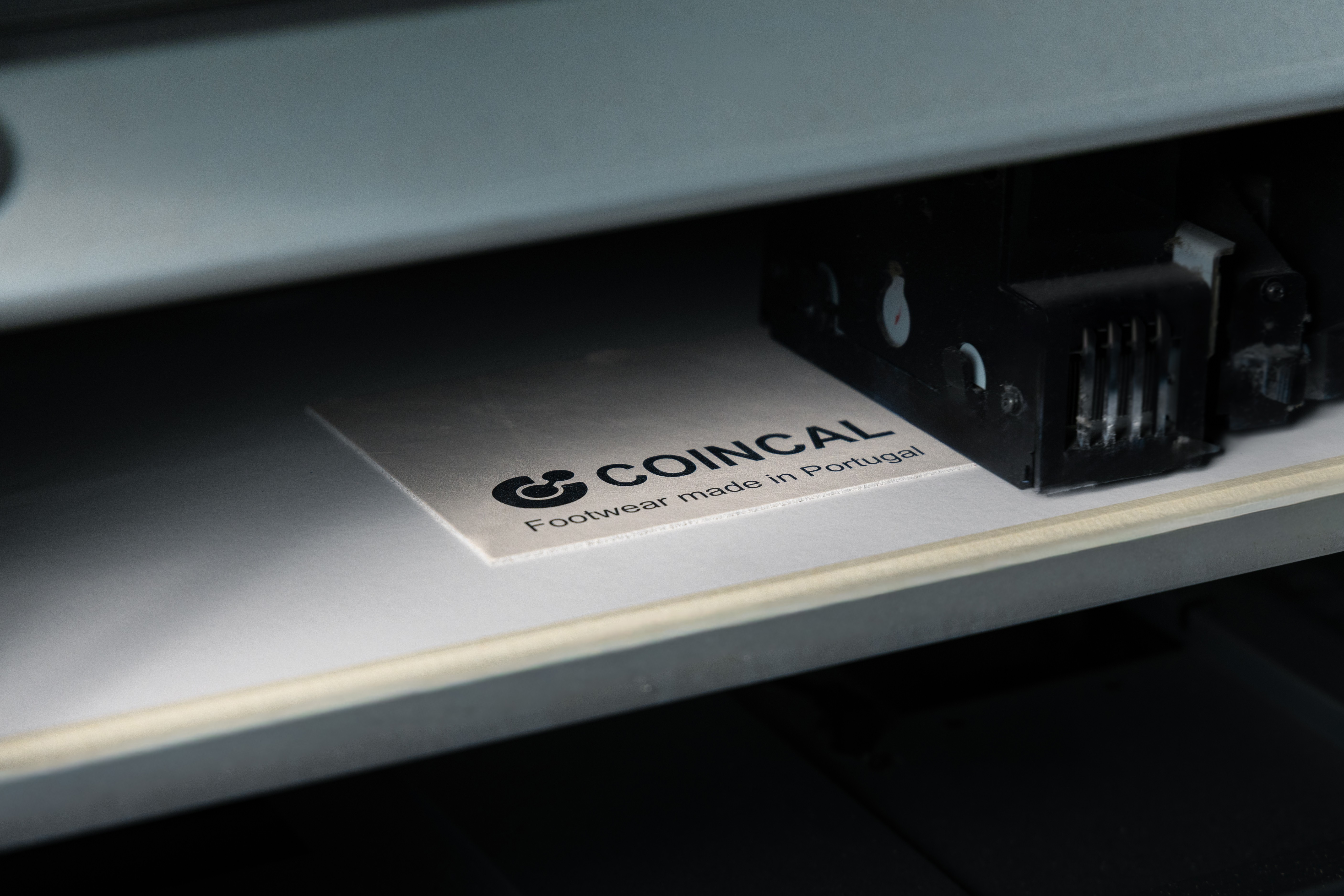
A logo is often the smallest element of a product, yet it carries the greatest responsibility. It represents the identity of a brand, communicates quality and becomes one of the most recognisable details of the finished shoe. Whether blind embossed, debossed, hot stamped or foil finished, logo application demands exceptional precision. Pressure, temperature, material behaviour and positioning must all work together to produce a clean, consistent and permanent result.
A logo is often the smallest element of a product, yet it carries the greatest responsibility. It represents the identity of a brand, communicates quality and becomes one of the most recognisable details of the finished shoe. Whether blind embossed, debossed, hot stamped or foil finished, logo application demands exceptional precision. Pressure, temperature, material behaviour and positioning must all work together to produce a clean, consistent and permanent result.

Wednesday, January 1, 2025
Written by
Coincal
The Final Step Is Never Just Shipping
How quality control, finishing and logistics ensure every pair reaches customers exactly as intended.
When production ends, responsibility does not. The final days before dispatch determine how a collection will be experienced by warehouses, retailers and, ultimately, customers. Inspection, finishing, packing and logistics are not administrative tasks added after manufacturing; they are the closing stages of it. They protect the work already invested in every pair and ensure that the product arrives with the same clarity it had when it left the line.
When production ends, responsibility does not. The final days before dispatch determine how a collection will be experienced by warehouses, retailers and, ultimately, customers. Inspection, finishing, packing and logistics are not administrative tasks added after manufacturing; they are the closing stages of it. They protect the work already invested in every pair and ensure that the product arrives with the same clarity it had when it left the line.

Thursday, December 19, 2024
Written by
Coincal
Where Hundreds of Components Become One Product
A closer look at the manufacturing process behind premium footwear.
A finished shoe appears singular: one silhouette, one colour story, one clear object. In production, it begins as a carefully organised field of separate parts. Upper panels, linings, reinforcements, threads, eyelets, insoles, outsoles, counters, toe puffs, labels and laces must arrive at the right workstation in the right condition. Assembly is the discipline of turning that complexity into unity without losing control of fit, proportion or finish.
A finished shoe appears singular: one silhouette, one colour story, one clear object. In production, it begins as a carefully organised field of separate parts. Upper panels, linings, reinforcements, threads, eyelets, insoles, outsoles, counters, toe puffs, labels and laces must arrive at the right workstation in the right condition. Assembly is the discipline of turning that complexity into unity without losing control of fit, proportion or finish.

Thursday, December 19, 2024
Written by
Coincal
Quality Without Compromise
Every product is carefully inspected through rigorous quality control to ensure flawless construction, consistency and long-lasting performance before leaving our facilities.
Quality control is where craftsmanship is verified rather than assumed. Every finished shoe is carefully inspected for construction, proportions, stitching accuracy, material consistency and finishing details before it leaves the factory. It is a meticulous process that combines trained human judgement with rigorous standards, ensuring every pair meets the expectations of the brands we work with. Excellence is not added at the end—it is confirmed through every inspection.
Quality control is where craftsmanship is verified rather than assumed. Every finished shoe is carefully inspected for construction, proportions, stitching accuracy, material consistency and finishing details before it leaves the factory. It is a meticulous process that combines trained human judgement with rigorous standards, ensuring every pair meets the expectations of the brands we work with. Excellence is not added at the end—it is confirmed through every inspection.
Precision Stitched Into Every Detail
How embroidery transforms branding, decoration and identity into permanent features of every shoe.
Precision Stitched Into Every Detail
Written by
EMBROIDERY
Embroidery is one of the most precise decorative processes in footwear manufacturing. Unlike printed graphics or applied embellishments, embroidery becomes physically integrated into the material through thousands of individual stitches. Every logo, monogram or decorative pattern must balance aesthetics, durability and production efficiency. The quality of the final result depends as much on digital preparation as it does on the precision of the embroidery machine itself.
Digital Preparation
Every embroidery begins long before thread touches fabric or leather. Artwork must first be converted into a stitch file using specialised digitising software. This process determines stitch direction, density, sequence and compensation for material movement during sewing.
Different materials require different embroidery strategies. Technical mesh, canvas, suede and textiles all respond differently under needle penetration and thread tension. A design that performs perfectly on cotton may distort entirely when applied to leather or stretch fabrics.
Good digitising ensures that the finished embroidery reproduces the original design faithfully while remaining stable throughout production.
Choosing Threads and Materials
Thread selection influences both appearance and performance. Polyester threads provide excellent colour retention and abrasion resistance, while rayon offers a softer sheen for premium decorative applications. Thickness, finish and colour consistency are carefully selected according to the design requirements.
Backing materials and stabilisers are equally important. They support the material during stitching, minimise distortion and allow the embroidery to maintain its intended shape after production and regular wear.
The goal is not simply decorative detail, but long-term durability.
Machine Embroidery Process
Modern embroidery machines operate with remarkable precision, executing thousands of stitches per minute while maintaining consistent tension and alignment. Multiple needle heads allow automatic colour changes without interrupting production.
Operators position every component accurately inside embroidery frames before production begins. Even slight misalignment can affect logo placement or symmetry between left and right shoes.
Throughout the process, machines are continuously monitored to ensure smooth thread feeding, correct stitch formation and consistent registration.
Quality Control During Embroidery
Inspection takes place continuously rather than only after completion. Operators monitor thread tension, stitch density, colour sequence and overall alignment throughout production.
Broken threads, skipped stitches or minor registration shifts are identified immediately before they affect larger production batches. Each embroidered component is checked against approved references to ensure consistency across every pair.
The objective is simple: every embroidered logo or graphic should appear identical regardless of production volume.
Integration Into Production
Once embroidery is completed, components continue through the remaining manufacturing stages. Properly executed embroidery must withstand lasting, stitching, assembly and finishing without distortion or thread damage.
Because embroidery becomes part of the material itself, every previous decision—from digitising to stabilisation—directly influences how the component performs throughout the entire manufacturing process.
Successful embroidery is not an isolated operation but an integrated part of footwear production.
Conclusion
Embroidery combines digital precision with traditional craftsmanship. Every stitch contributes to the identity of the finished product, transforming branding and decorative details into durable features that remain part of the shoe throughout its lifetime. When executed correctly, embroidery delivers consistency, elegance and lasting value—one stitch at a time.
More articles
Where every great shoe begins
How ideas evolve into production-ready footwear through research, creative direction and technical expertise.
Where Every Impression Represents the Brand
How precision embossing transforms logos into permanent signatures of quality and craftsmanship.
The Final Step Is Never Just Shipping
How quality control, finishing and logistics ensure every pair reaches customers exactly as intended.
Where Hundreds of Components Become One Product
A closer look at the manufacturing process behind premium footwear.
Quality Without Compromise
Every product is carefully inspected through rigorous quality control to ensure flawless construction, consistency and long-lasting performance before leaving our facilities.
Precision Stitched Into Every Detail
How embroidery transforms branding, decoration and identity into permanent features of every shoe.
Precision Stitched Into Every Detail
Written by
EMBROIDERY
Embroidery is one of the most precise decorative processes in footwear manufacturing. Unlike printed graphics or applied embellishments, embroidery becomes physically integrated into the material through thousands of individual stitches. Every logo, monogram or decorative pattern must balance aesthetics, durability and production efficiency. The quality of the final result depends as much on digital preparation as it does on the precision of the embroidery machine itself.
Digital Preparation
Every embroidery begins long before thread touches fabric or leather. Artwork must first be converted into a stitch file using specialised digitising software. This process determines stitch direction, density, sequence and compensation for material movement during sewing.
Different materials require different embroidery strategies. Technical mesh, canvas, suede and textiles all respond differently under needle penetration and thread tension. A design that performs perfectly on cotton may distort entirely when applied to leather or stretch fabrics.
Good digitising ensures that the finished embroidery reproduces the original design faithfully while remaining stable throughout production.
Choosing Threads and Materials
Thread selection influences both appearance and performance. Polyester threads provide excellent colour retention and abrasion resistance, while rayon offers a softer sheen for premium decorative applications. Thickness, finish and colour consistency are carefully selected according to the design requirements.
Backing materials and stabilisers are equally important. They support the material during stitching, minimise distortion and allow the embroidery to maintain its intended shape after production and regular wear.
The goal is not simply decorative detail, but long-term durability.
Machine Embroidery Process
Modern embroidery machines operate with remarkable precision, executing thousands of stitches per minute while maintaining consistent tension and alignment. Multiple needle heads allow automatic colour changes without interrupting production.
Operators position every component accurately inside embroidery frames before production begins. Even slight misalignment can affect logo placement or symmetry between left and right shoes.
Throughout the process, machines are continuously monitored to ensure smooth thread feeding, correct stitch formation and consistent registration.
Quality Control During Embroidery
Inspection takes place continuously rather than only after completion. Operators monitor thread tension, stitch density, colour sequence and overall alignment throughout production.
Broken threads, skipped stitches or minor registration shifts are identified immediately before they affect larger production batches. Each embroidered component is checked against approved references to ensure consistency across every pair.
The objective is simple: every embroidered logo or graphic should appear identical regardless of production volume.
Integration Into Production
Once embroidery is completed, components continue through the remaining manufacturing stages. Properly executed embroidery must withstand lasting, stitching, assembly and finishing without distortion or thread damage.
Because embroidery becomes part of the material itself, every previous decision—from digitising to stabilisation—directly influences how the component performs throughout the entire manufacturing process.
Successful embroidery is not an isolated operation but an integrated part of footwear production.
Conclusion
Embroidery combines digital precision with traditional craftsmanship. Every stitch contributes to the identity of the finished product, transforming branding and decorative details into durable features that remain part of the shoe throughout its lifetime. When executed correctly, embroidery delivers consistency, elegance and lasting value—one stitch at a time.
More articles
Where every great shoe begins
How ideas evolve into production-ready footwear through research, creative direction and technical expertise.
Where Every Impression Represents the Brand
How precision embossing transforms logos into permanent signatures of quality and craftsmanship.
The Final Step Is Never Just Shipping
How quality control, finishing and logistics ensure every pair reaches customers exactly as intended.
Where Hundreds of Components Become One Product
A closer look at the manufacturing process behind premium footwear.
Quality Without Compromise
Every product is carefully inspected through rigorous quality control to ensure flawless construction, consistency and long-lasting performance before leaving our facilities.

We transform brands.
Your success is next.
Start your footwear journey by speaking with our manufacturing experts.

Precision Stitched Into Every Detail
How embroidery transforms branding, decoration and identity into permanent features of every shoe.
Precision Stitched Into Every Detail
Written by
EMBROIDERY
Embroidery is one of the most precise decorative processes in footwear manufacturing. Unlike printed graphics or applied embellishments, embroidery becomes physically integrated into the material through thousands of individual stitches. Every logo, monogram or decorative pattern must balance aesthetics, durability and production efficiency. The quality of the final result depends as much on digital preparation as it does on the precision of the embroidery machine itself.
Digital Preparation
Every embroidery begins long before thread touches fabric or leather. Artwork must first be converted into a stitch file using specialised digitising software. This process determines stitch direction, density, sequence and compensation for material movement during sewing.
Different materials require different embroidery strategies. Technical mesh, canvas, suede and textiles all respond differently under needle penetration and thread tension. A design that performs perfectly on cotton may distort entirely when applied to leather or stretch fabrics.
Good digitising ensures that the finished embroidery reproduces the original design faithfully while remaining stable throughout production.
Choosing Threads and Materials
Thread selection influences both appearance and performance. Polyester threads provide excellent colour retention and abrasion resistance, while rayon offers a softer sheen for premium decorative applications. Thickness, finish and colour consistency are carefully selected according to the design requirements.
Backing materials and stabilisers are equally important. They support the material during stitching, minimise distortion and allow the embroidery to maintain its intended shape after production and regular wear.
The goal is not simply decorative detail, but long-term durability.
Machine Embroidery Process
Modern embroidery machines operate with remarkable precision, executing thousands of stitches per minute while maintaining consistent tension and alignment. Multiple needle heads allow automatic colour changes without interrupting production.
Operators position every component accurately inside embroidery frames before production begins. Even slight misalignment can affect logo placement or symmetry between left and right shoes.
Throughout the process, machines are continuously monitored to ensure smooth thread feeding, correct stitch formation and consistent registration.
Quality Control During Embroidery
Inspection takes place continuously rather than only after completion. Operators monitor thread tension, stitch density, colour sequence and overall alignment throughout production.
Broken threads, skipped stitches or minor registration shifts are identified immediately before they affect larger production batches. Each embroidered component is checked against approved references to ensure consistency across every pair.
The objective is simple: every embroidered logo or graphic should appear identical regardless of production volume.
Integration Into Production
Once embroidery is completed, components continue through the remaining manufacturing stages. Properly executed embroidery must withstand lasting, stitching, assembly and finishing without distortion or thread damage.
Because embroidery becomes part of the material itself, every previous decision—from digitising to stabilisation—directly influences how the component performs throughout the entire manufacturing process.
Successful embroidery is not an isolated operation but an integrated part of footwear production.
Conclusion
Embroidery combines digital precision with traditional craftsmanship. Every stitch contributes to the identity of the finished product, transforming branding and decorative details into durable features that remain part of the shoe throughout its lifetime. When executed correctly, embroidery delivers consistency, elegance and lasting value—one stitch at a time.
More articles
Sunday, June 14, 2026
Written by
Coincal
Where every great shoe begins
How ideas evolve into production-ready footwear through research, creative direction and technical expertise.
Every successful footwear collection begins long before the first material is selected or the first sample is produced. It begins with an idea. Whether that idea arrives as a sketch, a moodboard or a fully developed concept, the design phase is where creative ambition meets the discipline of manufacturing. At Coincal, the purpose is not simply to draw an attractive shoe. It is to understand the brand behind it, the person who will wear it and the practical decisions that will allow the idea to become a convincing, producible object. This early alignment is especially important in footwear, where appearance, comfort and construction are inseparable. A line that gives a silhouette energy may change the pattern beneath it; a material chosen for softness may require hidden reinforcement; a sole selected for attitude will also determine weight and flex. Design becomes stronger when these consequences are welcomed from the beginning.
Every successful footwear collection begins long before the first material is selected or the first sample is produced. It begins with an idea. Whether that idea arrives as a sketch, a moodboard or a fully developed concept, the design phase is where creative ambition meets the discipline of manufacturing. At Coincal, the purpose is not simply to draw an attractive shoe. It is to understand the brand behind it, the person who will wear it and the practical decisions that will allow the idea to become a convincing, producible object. This early alignment is especially important in footwear, where appearance, comfort and construction are inseparable. A line that gives a silhouette energy may change the pattern beneath it; a material chosen for softness may require hidden reinforcement; a sole selected for attitude will also determine weight and flex. Design becomes stronger when these consequences are welcomed from the beginning.
Sunday, June 14, 2026
Written by
Coincal
Where Every Impression Represents the Brand
How precision embossing transforms logos into permanent signatures of quality and craftsmanship.
A logo is often the smallest element of a product, yet it carries the greatest responsibility. It represents the identity of a brand, communicates quality and becomes one of the most recognisable details of the finished shoe. Whether blind embossed, debossed, hot stamped or foil finished, logo application demands exceptional precision. Pressure, temperature, material behaviour and positioning must all work together to produce a clean, consistent and permanent result.
A logo is often the smallest element of a product, yet it carries the greatest responsibility. It represents the identity of a brand, communicates quality and becomes one of the most recognisable details of the finished shoe. Whether blind embossed, debossed, hot stamped or foil finished, logo application demands exceptional precision. Pressure, temperature, material behaviour and positioning must all work together to produce a clean, consistent and permanent result.
Wednesday, January 1, 2025
Written by
Coincal
The Final Step Is Never Just Shipping
How quality control, finishing and logistics ensure every pair reaches customers exactly as intended.
When production ends, responsibility does not. The final days before dispatch determine how a collection will be experienced by warehouses, retailers and, ultimately, customers. Inspection, finishing, packing and logistics are not administrative tasks added after manufacturing; they are the closing stages of it. They protect the work already invested in every pair and ensure that the product arrives with the same clarity it had when it left the line.
When production ends, responsibility does not. The final days before dispatch determine how a collection will be experienced by warehouses, retailers and, ultimately, customers. Inspection, finishing, packing and logistics are not administrative tasks added after manufacturing; they are the closing stages of it. They protect the work already invested in every pair and ensure that the product arrives with the same clarity it had when it left the line.
Thursday, December 19, 2024
Written by
Coincal
Where Hundreds of Components Become One Product
A closer look at the manufacturing process behind premium footwear.
A finished shoe appears singular: one silhouette, one colour story, one clear object. In production, it begins as a carefully organised field of separate parts. Upper panels, linings, reinforcements, threads, eyelets, insoles, outsoles, counters, toe puffs, labels and laces must arrive at the right workstation in the right condition. Assembly is the discipline of turning that complexity into unity without losing control of fit, proportion or finish.
A finished shoe appears singular: one silhouette, one colour story, one clear object. In production, it begins as a carefully organised field of separate parts. Upper panels, linings, reinforcements, threads, eyelets, insoles, outsoles, counters, toe puffs, labels and laces must arrive at the right workstation in the right condition. Assembly is the discipline of turning that complexity into unity without losing control of fit, proportion or finish.
Thursday, December 19, 2024
Written by
Coincal
Quality Without Compromise
Every product is carefully inspected through rigorous quality control to ensure flawless construction, consistency and long-lasting performance before leaving our facilities.
Quality control is where craftsmanship is verified rather than assumed. Every finished shoe is carefully inspected for construction, proportions, stitching accuracy, material consistency and finishing details before it leaves the factory. It is a meticulous process that combines trained human judgement with rigorous standards, ensuring every pair meets the expectations of the brands we work with. Excellence is not added at the end—it is confirmed through every inspection.
Quality control is where craftsmanship is verified rather than assumed. Every finished shoe is carefully inspected for construction, proportions, stitching accuracy, material consistency and finishing details before it leaves the factory. It is a meticulous process that combines trained human judgement with rigorous standards, ensuring every pair meets the expectations of the brands we work with. Excellence is not added at the end—it is confirmed through every inspection.
Precision Stitched Into Every Detail
How embroidery transforms branding, decoration and identity into permanent features of every shoe.
Precision Stitched Into Every Detail
Written by
EMBROIDERY
Embroidery is one of the most precise decorative processes in footwear manufacturing. Unlike printed graphics or applied embellishments, embroidery becomes physically integrated into the material through thousands of individual stitches. Every logo, monogram or decorative pattern must balance aesthetics, durability and production efficiency. The quality of the final result depends as much on digital preparation as it does on the precision of the embroidery machine itself.
Digital Preparation
Every embroidery begins long before thread touches fabric or leather. Artwork must first be converted into a stitch file using specialised digitising software. This process determines stitch direction, density, sequence and compensation for material movement during sewing.
Different materials require different embroidery strategies. Technical mesh, canvas, suede and textiles all respond differently under needle penetration and thread tension. A design that performs perfectly on cotton may distort entirely when applied to leather or stretch fabrics.
Good digitising ensures that the finished embroidery reproduces the original design faithfully while remaining stable throughout production.
Choosing Threads and Materials
Thread selection influences both appearance and performance. Polyester threads provide excellent colour retention and abrasion resistance, while rayon offers a softer sheen for premium decorative applications. Thickness, finish and colour consistency are carefully selected according to the design requirements.
Backing materials and stabilisers are equally important. They support the material during stitching, minimise distortion and allow the embroidery to maintain its intended shape after production and regular wear.
The goal is not simply decorative detail, but long-term durability.
Machine Embroidery Process
Modern embroidery machines operate with remarkable precision, executing thousands of stitches per minute while maintaining consistent tension and alignment. Multiple needle heads allow automatic colour changes without interrupting production.
Operators position every component accurately inside embroidery frames before production begins. Even slight misalignment can affect logo placement or symmetry between left and right shoes.
Throughout the process, machines are continuously monitored to ensure smooth thread feeding, correct stitch formation and consistent registration.
Quality Control During Embroidery
Inspection takes place continuously rather than only after completion. Operators monitor thread tension, stitch density, colour sequence and overall alignment throughout production.
Broken threads, skipped stitches or minor registration shifts are identified immediately before they affect larger production batches. Each embroidered component is checked against approved references to ensure consistency across every pair.
The objective is simple: every embroidered logo or graphic should appear identical regardless of production volume.
Integration Into Production
Once embroidery is completed, components continue through the remaining manufacturing stages. Properly executed embroidery must withstand lasting, stitching, assembly and finishing without distortion or thread damage.
Because embroidery becomes part of the material itself, every previous decision—from digitising to stabilisation—directly influences how the component performs throughout the entire manufacturing process.
Successful embroidery is not an isolated operation but an integrated part of footwear production.
Conclusion
Embroidery combines digital precision with traditional craftsmanship. Every stitch contributes to the identity of the finished product, transforming branding and decorative details into durable features that remain part of the shoe throughout its lifetime. When executed correctly, embroidery delivers consistency, elegance and lasting value—one stitch at a time.
More articles
Where every great shoe begins
How ideas evolve into production-ready footwear through research, creative direction and technical expertise.
Where Every Impression Represents the Brand
How precision embossing transforms logos into permanent signatures of quality and craftsmanship.
The Final Step Is Never Just Shipping
How quality control, finishing and logistics ensure every pair reaches customers exactly as intended.
Where Hundreds of Components Become One Product
A closer look at the manufacturing process behind premium footwear.
Quality Without Compromise
Every product is carefully inspected through rigorous quality control to ensure flawless construction, consistency and long-lasting performance before leaving our facilities.
Precision Stitched Into Every Detail
How embroidery transforms branding, decoration and identity into permanent features of every shoe.
Precision Stitched Into Every Detail
Written by
EMBROIDERY
Embroidery is one of the most precise decorative processes in footwear manufacturing. Unlike printed graphics or applied embellishments, embroidery becomes physically integrated into the material through thousands of individual stitches. Every logo, monogram or decorative pattern must balance aesthetics, durability and production efficiency. The quality of the final result depends as much on digital preparation as it does on the precision of the embroidery machine itself.
Digital Preparation
Every embroidery begins long before thread touches fabric or leather. Artwork must first be converted into a stitch file using specialised digitising software. This process determines stitch direction, density, sequence and compensation for material movement during sewing.
Different materials require different embroidery strategies. Technical mesh, canvas, suede and textiles all respond differently under needle penetration and thread tension. A design that performs perfectly on cotton may distort entirely when applied to leather or stretch fabrics.
Good digitising ensures that the finished embroidery reproduces the original design faithfully while remaining stable throughout production.
Choosing Threads and Materials
Thread selection influences both appearance and performance. Polyester threads provide excellent colour retention and abrasion resistance, while rayon offers a softer sheen for premium decorative applications. Thickness, finish and colour consistency are carefully selected according to the design requirements.
Backing materials and stabilisers are equally important. They support the material during stitching, minimise distortion and allow the embroidery to maintain its intended shape after production and regular wear.
The goal is not simply decorative detail, but long-term durability.
Machine Embroidery Process
Modern embroidery machines operate with remarkable precision, executing thousands of stitches per minute while maintaining consistent tension and alignment. Multiple needle heads allow automatic colour changes without interrupting production.
Operators position every component accurately inside embroidery frames before production begins. Even slight misalignment can affect logo placement or symmetry between left and right shoes.
Throughout the process, machines are continuously monitored to ensure smooth thread feeding, correct stitch formation and consistent registration.
Quality Control During Embroidery
Inspection takes place continuously rather than only after completion. Operators monitor thread tension, stitch density, colour sequence and overall alignment throughout production.
Broken threads, skipped stitches or minor registration shifts are identified immediately before they affect larger production batches. Each embroidered component is checked against approved references to ensure consistency across every pair.
The objective is simple: every embroidered logo or graphic should appear identical regardless of production volume.
Integration Into Production
Once embroidery is completed, components continue through the remaining manufacturing stages. Properly executed embroidery must withstand lasting, stitching, assembly and finishing without distortion or thread damage.
Because embroidery becomes part of the material itself, every previous decision—from digitising to stabilisation—directly influences how the component performs throughout the entire manufacturing process.
Successful embroidery is not an isolated operation but an integrated part of footwear production.
Conclusion
Embroidery combines digital precision with traditional craftsmanship. Every stitch contributes to the identity of the finished product, transforming branding and decorative details into durable features that remain part of the shoe throughout its lifetime. When executed correctly, embroidery delivers consistency, elegance and lasting value—one stitch at a time.
More articles
Where every great shoe begins
How ideas evolve into production-ready footwear through research, creative direction and technical expertise.
Where Every Impression Represents the Brand
How precision embossing transforms logos into permanent signatures of quality and craftsmanship.
The Final Step Is Never Just Shipping
How quality control, finishing and logistics ensure every pair reaches customers exactly as intended.
Where Hundreds of Components Become One Product
A closer look at the manufacturing process behind premium footwear.
Quality Without Compromise
Every product is carefully inspected through rigorous quality control to ensure flawless construction, consistency and long-lasting performance before leaving our facilities.
We transform brands.
Your success is next.
Start your footwear journey by speaking with our manufacturing experts.
Precision Stitched Into Every Detail
How embroidery transforms branding, decoration and identity into permanent features of every shoe.
Precision Stitched Into Every Detail
Written by
EMBROIDERY
Embroidery is one of the most precise decorative processes in footwear manufacturing. Unlike printed graphics or applied embellishments, embroidery becomes physically integrated into the material through thousands of individual stitches. Every logo, monogram or decorative pattern must balance aesthetics, durability and production efficiency. The quality of the final result depends as much on digital preparation as it does on the precision of the embroidery machine itself.
Digital Preparation
Every embroidery begins long before thread touches fabric or leather. Artwork must first be converted into a stitch file using specialised digitising software. This process determines stitch direction, density, sequence and compensation for material movement during sewing.
Different materials require different embroidery strategies. Technical mesh, canvas, suede and textiles all respond differently under needle penetration and thread tension. A design that performs perfectly on cotton may distort entirely when applied to leather or stretch fabrics.
Good digitising ensures that the finished embroidery reproduces the original design faithfully while remaining stable throughout production.
Choosing Threads and Materials
Thread selection influences both appearance and performance. Polyester threads provide excellent colour retention and abrasion resistance, while rayon offers a softer sheen for premium decorative applications. Thickness, finish and colour consistency are carefully selected according to the design requirements.
Backing materials and stabilisers are equally important. They support the material during stitching, minimise distortion and allow the embroidery to maintain its intended shape after production and regular wear.
The goal is not simply decorative detail, but long-term durability.
Machine Embroidery Process
Modern embroidery machines operate with remarkable precision, executing thousands of stitches per minute while maintaining consistent tension and alignment. Multiple needle heads allow automatic colour changes without interrupting production.
Operators position every component accurately inside embroidery frames before production begins. Even slight misalignment can affect logo placement or symmetry between left and right shoes.
Throughout the process, machines are continuously monitored to ensure smooth thread feeding, correct stitch formation and consistent registration.
Quality Control During Embroidery
Inspection takes place continuously rather than only after completion. Operators monitor thread tension, stitch density, colour sequence and overall alignment throughout production.
Broken threads, skipped stitches or minor registration shifts are identified immediately before they affect larger production batches. Each embroidered component is checked against approved references to ensure consistency across every pair.
The objective is simple: every embroidered logo or graphic should appear identical regardless of production volume.
Integration Into Production
Once embroidery is completed, components continue through the remaining manufacturing stages. Properly executed embroidery must withstand lasting, stitching, assembly and finishing without distortion or thread damage.
Because embroidery becomes part of the material itself, every previous decision—from digitising to stabilisation—directly influences how the component performs throughout the entire manufacturing process.
Successful embroidery is not an isolated operation but an integrated part of footwear production.
Conclusion
Embroidery combines digital precision with traditional craftsmanship. Every stitch contributes to the identity of the finished product, transforming branding and decorative details into durable features that remain part of the shoe throughout its lifetime. When executed correctly, embroidery delivers consistency, elegance and lasting value—one stitch at a time.
More articles
Sunday, June 14, 2026
Written by
Coincal
Where every great shoe begins
How ideas evolve into production-ready footwear through research, creative direction and technical expertise.
Every successful footwear collection begins long before the first material is selected or the first sample is produced. It begins with an idea. Whether that idea arrives as a sketch, a moodboard or a fully developed concept, the design phase is where creative ambition meets the discipline of manufacturing. At Coincal, the purpose is not simply to draw an attractive shoe. It is to understand the brand behind it, the person who will wear it and the practical decisions that will allow the idea to become a convincing, producible object. This early alignment is especially important in footwear, where appearance, comfort and construction are inseparable. A line that gives a silhouette energy may change the pattern beneath it; a material chosen for softness may require hidden reinforcement; a sole selected for attitude will also determine weight and flex. Design becomes stronger when these consequences are welcomed from the beginning.
Every successful footwear collection begins long before the first material is selected or the first sample is produced. It begins with an idea. Whether that idea arrives as a sketch, a moodboard or a fully developed concept, the design phase is where creative ambition meets the discipline of manufacturing. At Coincal, the purpose is not simply to draw an attractive shoe. It is to understand the brand behind it, the person who will wear it and the practical decisions that will allow the idea to become a convincing, producible object. This early alignment is especially important in footwear, where appearance, comfort and construction are inseparable. A line that gives a silhouette energy may change the pattern beneath it; a material chosen for softness may require hidden reinforcement; a sole selected for attitude will also determine weight and flex. Design becomes stronger when these consequences are welcomed from the beginning.
Sunday, June 14, 2026
Written by
Coincal
Where Every Impression Represents the Brand
How precision embossing transforms logos into permanent signatures of quality and craftsmanship.
A logo is often the smallest element of a product, yet it carries the greatest responsibility. It represents the identity of a brand, communicates quality and becomes one of the most recognisable details of the finished shoe. Whether blind embossed, debossed, hot stamped or foil finished, logo application demands exceptional precision. Pressure, temperature, material behaviour and positioning must all work together to produce a clean, consistent and permanent result.
A logo is often the smallest element of a product, yet it carries the greatest responsibility. It represents the identity of a brand, communicates quality and becomes one of the most recognisable details of the finished shoe. Whether blind embossed, debossed, hot stamped or foil finished, logo application demands exceptional precision. Pressure, temperature, material behaviour and positioning must all work together to produce a clean, consistent and permanent result.
Wednesday, January 1, 2025
Written by
Coincal
The Final Step Is Never Just Shipping
How quality control, finishing and logistics ensure every pair reaches customers exactly as intended.
When production ends, responsibility does not. The final days before dispatch determine how a collection will be experienced by warehouses, retailers and, ultimately, customers. Inspection, finishing, packing and logistics are not administrative tasks added after manufacturing; they are the closing stages of it. They protect the work already invested in every pair and ensure that the product arrives with the same clarity it had when it left the line.
When production ends, responsibility does not. The final days before dispatch determine how a collection will be experienced by warehouses, retailers and, ultimately, customers. Inspection, finishing, packing and logistics are not administrative tasks added after manufacturing; they are the closing stages of it. They protect the work already invested in every pair and ensure that the product arrives with the same clarity it had when it left the line.
Thursday, December 19, 2024
Written by
Coincal
Where Hundreds of Components Become One Product
A closer look at the manufacturing process behind premium footwear.
A finished shoe appears singular: one silhouette, one colour story, one clear object. In production, it begins as a carefully organised field of separate parts. Upper panels, linings, reinforcements, threads, eyelets, insoles, outsoles, counters, toe puffs, labels and laces must arrive at the right workstation in the right condition. Assembly is the discipline of turning that complexity into unity without losing control of fit, proportion or finish.
A finished shoe appears singular: one silhouette, one colour story, one clear object. In production, it begins as a carefully organised field of separate parts. Upper panels, linings, reinforcements, threads, eyelets, insoles, outsoles, counters, toe puffs, labels and laces must arrive at the right workstation in the right condition. Assembly is the discipline of turning that complexity into unity without losing control of fit, proportion or finish.
Thursday, December 19, 2024
Written by
Coincal
Quality Without Compromise
Every product is carefully inspected through rigorous quality control to ensure flawless construction, consistency and long-lasting performance before leaving our facilities.
Quality control is where craftsmanship is verified rather than assumed. Every finished shoe is carefully inspected for construction, proportions, stitching accuracy, material consistency and finishing details before it leaves the factory. It is a meticulous process that combines trained human judgement with rigorous standards, ensuring every pair meets the expectations of the brands we work with. Excellence is not added at the end—it is confirmed through every inspection.
Quality control is where craftsmanship is verified rather than assumed. Every finished shoe is carefully inspected for construction, proportions, stitching accuracy, material consistency and finishing details before it leaves the factory. It is a meticulous process that combines trained human judgement with rigorous standards, ensuring every pair meets the expectations of the brands we work with. Excellence is not added at the end—it is confirmed through every inspection.
Precision Stitched Into Every Detail
How embroidery transforms branding, decoration and identity into permanent features of every shoe.
Precision Stitched Into Every Detail
Written by
EMBROIDERY
Embroidery is one of the most precise decorative processes in footwear manufacturing. Unlike printed graphics or applied embellishments, embroidery becomes physically integrated into the material through thousands of individual stitches. Every logo, monogram or decorative pattern must balance aesthetics, durability and production efficiency. The quality of the final result depends as much on digital preparation as it does on the precision of the embroidery machine itself.
Digital Preparation
Every embroidery begins long before thread touches fabric or leather. Artwork must first be converted into a stitch file using specialised digitising software. This process determines stitch direction, density, sequence and compensation for material movement during sewing.
Different materials require different embroidery strategies. Technical mesh, canvas, suede and textiles all respond differently under needle penetration and thread tension. A design that performs perfectly on cotton may distort entirely when applied to leather or stretch fabrics.
Good digitising ensures that the finished embroidery reproduces the original design faithfully while remaining stable throughout production.
Choosing Threads and Materials
Thread selection influences both appearance and performance. Polyester threads provide excellent colour retention and abrasion resistance, while rayon offers a softer sheen for premium decorative applications. Thickness, finish and colour consistency are carefully selected according to the design requirements.
Backing materials and stabilisers are equally important. They support the material during stitching, minimise distortion and allow the embroidery to maintain its intended shape after production and regular wear.
The goal is not simply decorative detail, but long-term durability.
Machine Embroidery Process
Modern embroidery machines operate with remarkable precision, executing thousands of stitches per minute while maintaining consistent tension and alignment. Multiple needle heads allow automatic colour changes without interrupting production.
Operators position every component accurately inside embroidery frames before production begins. Even slight misalignment can affect logo placement or symmetry between left and right shoes.
Throughout the process, machines are continuously monitored to ensure smooth thread feeding, correct stitch formation and consistent registration.
Quality Control During Embroidery
Inspection takes place continuously rather than only after completion. Operators monitor thread tension, stitch density, colour sequence and overall alignment throughout production.
Broken threads, skipped stitches or minor registration shifts are identified immediately before they affect larger production batches. Each embroidered component is checked against approved references to ensure consistency across every pair.
The objective is simple: every embroidered logo or graphic should appear identical regardless of production volume.
Integration Into Production
Once embroidery is completed, components continue through the remaining manufacturing stages. Properly executed embroidery must withstand lasting, stitching, assembly and finishing without distortion or thread damage.
Because embroidery becomes part of the material itself, every previous decision—from digitising to stabilisation—directly influences how the component performs throughout the entire manufacturing process.
Successful embroidery is not an isolated operation but an integrated part of footwear production.
Conclusion
Embroidery combines digital precision with traditional craftsmanship. Every stitch contributes to the identity of the finished product, transforming branding and decorative details into durable features that remain part of the shoe throughout its lifetime. When executed correctly, embroidery delivers consistency, elegance and lasting value—one stitch at a time.
More articles
Where every great shoe begins
How ideas evolve into production-ready footwear through research, creative direction and technical expertise.
Where Every Impression Represents the Brand
How precision embossing transforms logos into permanent signatures of quality and craftsmanship.
The Final Step Is Never Just Shipping
How quality control, finishing and logistics ensure every pair reaches customers exactly as intended.
Where Hundreds of Components Become One Product
A closer look at the manufacturing process behind premium footwear.
Quality Without Compromise
Every product is carefully inspected through rigorous quality control to ensure flawless construction, consistency and long-lasting performance before leaving our facilities.
Precision Stitched Into Every Detail
How embroidery transforms branding, decoration and identity into permanent features of every shoe.
Precision Stitched Into Every Detail
Written by
EMBROIDERY
Embroidery is one of the most precise decorative processes in footwear manufacturing. Unlike printed graphics or applied embellishments, embroidery becomes physically integrated into the material through thousands of individual stitches. Every logo, monogram or decorative pattern must balance aesthetics, durability and production efficiency. The quality of the final result depends as much on digital preparation as it does on the precision of the embroidery machine itself.
Digital Preparation
Every embroidery begins long before thread touches fabric or leather. Artwork must first be converted into a stitch file using specialised digitising software. This process determines stitch direction, density, sequence and compensation for material movement during sewing.
Different materials require different embroidery strategies. Technical mesh, canvas, suede and textiles all respond differently under needle penetration and thread tension. A design that performs perfectly on cotton may distort entirely when applied to leather or stretch fabrics.
Good digitising ensures that the finished embroidery reproduces the original design faithfully while remaining stable throughout production.
Choosing Threads and Materials
Thread selection influences both appearance and performance. Polyester threads provide excellent colour retention and abrasion resistance, while rayon offers a softer sheen for premium decorative applications. Thickness, finish and colour consistency are carefully selected according to the design requirements.
Backing materials and stabilisers are equally important. They support the material during stitching, minimise distortion and allow the embroidery to maintain its intended shape after production and regular wear.
The goal is not simply decorative detail, but long-term durability.
Machine Embroidery Process
Modern embroidery machines operate with remarkable precision, executing thousands of stitches per minute while maintaining consistent tension and alignment. Multiple needle heads allow automatic colour changes without interrupting production.
Operators position every component accurately inside embroidery frames before production begins. Even slight misalignment can affect logo placement or symmetry between left and right shoes.
Throughout the process, machines are continuously monitored to ensure smooth thread feeding, correct stitch formation and consistent registration.
Quality Control During Embroidery
Inspection takes place continuously rather than only after completion. Operators monitor thread tension, stitch density, colour sequence and overall alignment throughout production.
Broken threads, skipped stitches or minor registration shifts are identified immediately before they affect larger production batches. Each embroidered component is checked against approved references to ensure consistency across every pair.
The objective is simple: every embroidered logo or graphic should appear identical regardless of production volume.
Integration Into Production
Once embroidery is completed, components continue through the remaining manufacturing stages. Properly executed embroidery must withstand lasting, stitching, assembly and finishing without distortion or thread damage.
Because embroidery becomes part of the material itself, every previous decision—from digitising to stabilisation—directly influences how the component performs throughout the entire manufacturing process.
Successful embroidery is not an isolated operation but an integrated part of footwear production.
Conclusion
Embroidery combines digital precision with traditional craftsmanship. Every stitch contributes to the identity of the finished product, transforming branding and decorative details into durable features that remain part of the shoe throughout its lifetime. When executed correctly, embroidery delivers consistency, elegance and lasting value—one stitch at a time.
More articles
Where every great shoe begins
How ideas evolve into production-ready footwear through research, creative direction and technical expertise.
Where Every Impression Represents the Brand
How precision embossing transforms logos into permanent signatures of quality and craftsmanship.
The Final Step Is Never Just Shipping
How quality control, finishing and logistics ensure every pair reaches customers exactly as intended.
Where Hundreds of Components Become One Product
A closer look at the manufacturing process behind premium footwear.
Quality Without Compromise
Every product is carefully inspected through rigorous quality control to ensure flawless construction, consistency and long-lasting performance before leaving our facilities.
We transform brands.
Your success is next.
Start your footwear journey by speaking with our manufacturing experts.
Precision Stitched Into Every Detail
How embroidery transforms branding, decoration and identity into permanent features of every shoe.
Precision Stitched Into Every Detail
Written by
EMBROIDERY
Embroidery is one of the most precise decorative processes in footwear manufacturing. Unlike printed graphics or applied embellishments, embroidery becomes physically integrated into the material through thousands of individual stitches. Every logo, monogram or decorative pattern must balance aesthetics, durability and production efficiency. The quality of the final result depends as much on digital preparation as it does on the precision of the embroidery machine itself.
Digital Preparation
Every embroidery begins long before thread touches fabric or leather. Artwork must first be converted into a stitch file using specialised digitising software. This process determines stitch direction, density, sequence and compensation for material movement during sewing.
Different materials require different embroidery strategies. Technical mesh, canvas, suede and textiles all respond differently under needle penetration and thread tension. A design that performs perfectly on cotton may distort entirely when applied to leather or stretch fabrics.
Good digitising ensures that the finished embroidery reproduces the original design faithfully while remaining stable throughout production.
Choosing Threads and Materials
Thread selection influences both appearance and performance. Polyester threads provide excellent colour retention and abrasion resistance, while rayon offers a softer sheen for premium decorative applications. Thickness, finish and colour consistency are carefully selected according to the design requirements.
Backing materials and stabilisers are equally important. They support the material during stitching, minimise distortion and allow the embroidery to maintain its intended shape after production and regular wear.
The goal is not simply decorative detail, but long-term durability.
Machine Embroidery Process
Modern embroidery machines operate with remarkable precision, executing thousands of stitches per minute while maintaining consistent tension and alignment. Multiple needle heads allow automatic colour changes without interrupting production.
Operators position every component accurately inside embroidery frames before production begins. Even slight misalignment can affect logo placement or symmetry between left and right shoes.
Throughout the process, machines are continuously monitored to ensure smooth thread feeding, correct stitch formation and consistent registration.
Quality Control During Embroidery
Inspection takes place continuously rather than only after completion. Operators monitor thread tension, stitch density, colour sequence and overall alignment throughout production.
Broken threads, skipped stitches or minor registration shifts are identified immediately before they affect larger production batches. Each embroidered component is checked against approved references to ensure consistency across every pair.
The objective is simple: every embroidered logo or graphic should appear identical regardless of production volume.
Integration Into Production
Once embroidery is completed, components continue through the remaining manufacturing stages. Properly executed embroidery must withstand lasting, stitching, assembly and finishing without distortion or thread damage.
Because embroidery becomes part of the material itself, every previous decision—from digitising to stabilisation—directly influences how the component performs throughout the entire manufacturing process.
Successful embroidery is not an isolated operation but an integrated part of footwear production.
Conclusion
Embroidery combines digital precision with traditional craftsmanship. Every stitch contributes to the identity of the finished product, transforming branding and decorative details into durable features that remain part of the shoe throughout its lifetime. When executed correctly, embroidery delivers consistency, elegance and lasting value—one stitch at a time.
More articles
Sunday, June 14, 2026
Written by
Coincal
Where every great shoe begins
How ideas evolve into production-ready footwear through research, creative direction and technical expertise.
Every successful footwear collection begins long before the first material is selected or the first sample is produced. It begins with an idea. Whether that idea arrives as a sketch, a moodboard or a fully developed concept, the design phase is where creative ambition meets the discipline of manufacturing. At Coincal, the purpose is not simply to draw an attractive shoe. It is to understand the brand behind it, the person who will wear it and the practical decisions that will allow the idea to become a convincing, producible object. This early alignment is especially important in footwear, where appearance, comfort and construction are inseparable. A line that gives a silhouette energy may change the pattern beneath it; a material chosen for softness may require hidden reinforcement; a sole selected for attitude will also determine weight and flex. Design becomes stronger when these consequences are welcomed from the beginning.
Every successful footwear collection begins long before the first material is selected or the first sample is produced. It begins with an idea. Whether that idea arrives as a sketch, a moodboard or a fully developed concept, the design phase is where creative ambition meets the discipline of manufacturing. At Coincal, the purpose is not simply to draw an attractive shoe. It is to understand the brand behind it, the person who will wear it and the practical decisions that will allow the idea to become a convincing, producible object. This early alignment is especially important in footwear, where appearance, comfort and construction are inseparable. A line that gives a silhouette energy may change the pattern beneath it; a material chosen for softness may require hidden reinforcement; a sole selected for attitude will also determine weight and flex. Design becomes stronger when these consequences are welcomed from the beginning.
Sunday, June 14, 2026
Written by
Coincal
Where Every Impression Represents the Brand
How precision embossing transforms logos into permanent signatures of quality and craftsmanship.
A logo is often the smallest element of a product, yet it carries the greatest responsibility. It represents the identity of a brand, communicates quality and becomes one of the most recognisable details of the finished shoe. Whether blind embossed, debossed, hot stamped or foil finished, logo application demands exceptional precision. Pressure, temperature, material behaviour and positioning must all work together to produce a clean, consistent and permanent result.
A logo is often the smallest element of a product, yet it carries the greatest responsibility. It represents the identity of a brand, communicates quality and becomes one of the most recognisable details of the finished shoe. Whether blind embossed, debossed, hot stamped or foil finished, logo application demands exceptional precision. Pressure, temperature, material behaviour and positioning must all work together to produce a clean, consistent and permanent result.
Wednesday, January 1, 2025
Written by
Coincal
The Final Step Is Never Just Shipping
How quality control, finishing and logistics ensure every pair reaches customers exactly as intended.
When production ends, responsibility does not. The final days before dispatch determine how a collection will be experienced by warehouses, retailers and, ultimately, customers. Inspection, finishing, packing and logistics are not administrative tasks added after manufacturing; they are the closing stages of it. They protect the work already invested in every pair and ensure that the product arrives with the same clarity it had when it left the line.
When production ends, responsibility does not. The final days before dispatch determine how a collection will be experienced by warehouses, retailers and, ultimately, customers. Inspection, finishing, packing and logistics are not administrative tasks added after manufacturing; they are the closing stages of it. They protect the work already invested in every pair and ensure that the product arrives with the same clarity it had when it left the line.
Thursday, December 19, 2024
Written by
Coincal
Where Hundreds of Components Become One Product
A closer look at the manufacturing process behind premium footwear.
A finished shoe appears singular: one silhouette, one colour story, one clear object. In production, it begins as a carefully organised field of separate parts. Upper panels, linings, reinforcements, threads, eyelets, insoles, outsoles, counters, toe puffs, labels and laces must arrive at the right workstation in the right condition. Assembly is the discipline of turning that complexity into unity without losing control of fit, proportion or finish.
A finished shoe appears singular: one silhouette, one colour story, one clear object. In production, it begins as a carefully organised field of separate parts. Upper panels, linings, reinforcements, threads, eyelets, insoles, outsoles, counters, toe puffs, labels and laces must arrive at the right workstation in the right condition. Assembly is the discipline of turning that complexity into unity without losing control of fit, proportion or finish.
Thursday, December 19, 2024
Written by
Coincal
Quality Without Compromise
Every product is carefully inspected through rigorous quality control to ensure flawless construction, consistency and long-lasting performance before leaving our facilities.
Quality control is where craftsmanship is verified rather than assumed. Every finished shoe is carefully inspected for construction, proportions, stitching accuracy, material consistency and finishing details before it leaves the factory. It is a meticulous process that combines trained human judgement with rigorous standards, ensuring every pair meets the expectations of the brands we work with. Excellence is not added at the end—it is confirmed through every inspection.
Quality control is where craftsmanship is verified rather than assumed. Every finished shoe is carefully inspected for construction, proportions, stitching accuracy, material consistency and finishing details before it leaves the factory. It is a meticulous process that combines trained human judgement with rigorous standards, ensuring every pair meets the expectations of the brands we work with. Excellence is not added at the end—it is confirmed through every inspection.
Precision Stitched Into Every Detail
How embroidery transforms branding, decoration and identity into permanent features of every shoe.
Precision Stitched Into Every Detail
Written by
EMBROIDERY
Embroidery is one of the most precise decorative processes in footwear manufacturing. Unlike printed graphics or applied embellishments, embroidery becomes physically integrated into the material through thousands of individual stitches. Every logo, monogram or decorative pattern must balance aesthetics, durability and production efficiency. The quality of the final result depends as much on digital preparation as it does on the precision of the embroidery machine itself.
Digital Preparation
Every embroidery begins long before thread touches fabric or leather. Artwork must first be converted into a stitch file using specialised digitising software. This process determines stitch direction, density, sequence and compensation for material movement during sewing.
Different materials require different embroidery strategies. Technical mesh, canvas, suede and textiles all respond differently under needle penetration and thread tension. A design that performs perfectly on cotton may distort entirely when applied to leather or stretch fabrics.
Good digitising ensures that the finished embroidery reproduces the original design faithfully while remaining stable throughout production.
Choosing Threads and Materials
Thread selection influences both appearance and performance. Polyester threads provide excellent colour retention and abrasion resistance, while rayon offers a softer sheen for premium decorative applications. Thickness, finish and colour consistency are carefully selected according to the design requirements.
Backing materials and stabilisers are equally important. They support the material during stitching, minimise distortion and allow the embroidery to maintain its intended shape after production and regular wear.
The goal is not simply decorative detail, but long-term durability.
Machine Embroidery Process
Modern embroidery machines operate with remarkable precision, executing thousands of stitches per minute while maintaining consistent tension and alignment. Multiple needle heads allow automatic colour changes without interrupting production.
Operators position every component accurately inside embroidery frames before production begins. Even slight misalignment can affect logo placement or symmetry between left and right shoes.
Throughout the process, machines are continuously monitored to ensure smooth thread feeding, correct stitch formation and consistent registration.
Quality Control During Embroidery
Inspection takes place continuously rather than only after completion. Operators monitor thread tension, stitch density, colour sequence and overall alignment throughout production.
Broken threads, skipped stitches or minor registration shifts are identified immediately before they affect larger production batches. Each embroidered component is checked against approved references to ensure consistency across every pair.
The objective is simple: every embroidered logo or graphic should appear identical regardless of production volume.
Integration Into Production
Once embroidery is completed, components continue through the remaining manufacturing stages. Properly executed embroidery must withstand lasting, stitching, assembly and finishing without distortion or thread damage.
Because embroidery becomes part of the material itself, every previous decision—from digitising to stabilisation—directly influences how the component performs throughout the entire manufacturing process.
Successful embroidery is not an isolated operation but an integrated part of footwear production.
Conclusion
Embroidery combines digital precision with traditional craftsmanship. Every stitch contributes to the identity of the finished product, transforming branding and decorative details into durable features that remain part of the shoe throughout its lifetime. When executed correctly, embroidery delivers consistency, elegance and lasting value—one stitch at a time.
More articles
Where every great shoe begins
How ideas evolve into production-ready footwear through research, creative direction and technical expertise.
Where Every Impression Represents the Brand
How precision embossing transforms logos into permanent signatures of quality and craftsmanship.
The Final Step Is Never Just Shipping
How quality control, finishing and logistics ensure every pair reaches customers exactly as intended.
Where Hundreds of Components Become One Product
A closer look at the manufacturing process behind premium footwear.
Quality Without Compromise
Every product is carefully inspected through rigorous quality control to ensure flawless construction, consistency and long-lasting performance before leaving our facilities.
Precision Stitched Into Every Detail
How embroidery transforms branding, decoration and identity into permanent features of every shoe.
Precision Stitched Into Every Detail
Written by
EMBROIDERY
Embroidery is one of the most precise decorative processes in footwear manufacturing. Unlike printed graphics or applied embellishments, embroidery becomes physically integrated into the material through thousands of individual stitches. Every logo, monogram or decorative pattern must balance aesthetics, durability and production efficiency. The quality of the final result depends as much on digital preparation as it does on the precision of the embroidery machine itself.
Digital Preparation
Every embroidery begins long before thread touches fabric or leather. Artwork must first be converted into a stitch file using specialised digitising software. This process determines stitch direction, density, sequence and compensation for material movement during sewing.
Different materials require different embroidery strategies. Technical mesh, canvas, suede and textiles all respond differently under needle penetration and thread tension. A design that performs perfectly on cotton may distort entirely when applied to leather or stretch fabrics.
Good digitising ensures that the finished embroidery reproduces the original design faithfully while remaining stable throughout production.
Choosing Threads and Materials
Thread selection influences both appearance and performance. Polyester threads provide excellent colour retention and abrasion resistance, while rayon offers a softer sheen for premium decorative applications. Thickness, finish and colour consistency are carefully selected according to the design requirements.
Backing materials and stabilisers are equally important. They support the material during stitching, minimise distortion and allow the embroidery to maintain its intended shape after production and regular wear.
The goal is not simply decorative detail, but long-term durability.
Machine Embroidery Process
Modern embroidery machines operate with remarkable precision, executing thousands of stitches per minute while maintaining consistent tension and alignment. Multiple needle heads allow automatic colour changes without interrupting production.
Operators position every component accurately inside embroidery frames before production begins. Even slight misalignment can affect logo placement or symmetry between left and right shoes.
Throughout the process, machines are continuously monitored to ensure smooth thread feeding, correct stitch formation and consistent registration.
Quality Control During Embroidery
Inspection takes place continuously rather than only after completion. Operators monitor thread tension, stitch density, colour sequence and overall alignment throughout production.
Broken threads, skipped stitches or minor registration shifts are identified immediately before they affect larger production batches. Each embroidered component is checked against approved references to ensure consistency across every pair.
The objective is simple: every embroidered logo or graphic should appear identical regardless of production volume.
Integration Into Production
Once embroidery is completed, components continue through the remaining manufacturing stages. Properly executed embroidery must withstand lasting, stitching, assembly and finishing without distortion or thread damage.
Because embroidery becomes part of the material itself, every previous decision—from digitising to stabilisation—directly influences how the component performs throughout the entire manufacturing process.
Successful embroidery is not an isolated operation but an integrated part of footwear production.
Conclusion
Embroidery combines digital precision with traditional craftsmanship. Every stitch contributes to the identity of the finished product, transforming branding and decorative details into durable features that remain part of the shoe throughout its lifetime. When executed correctly, embroidery delivers consistency, elegance and lasting value—one stitch at a time.
More articles
Where every great shoe begins
How ideas evolve into production-ready footwear through research, creative direction and technical expertise.
Where Every Impression Represents the Brand
How precision embossing transforms logos into permanent signatures of quality and craftsmanship.
The Final Step Is Never Just Shipping
How quality control, finishing and logistics ensure every pair reaches customers exactly as intended.
Where Hundreds of Components Become One Product
A closer look at the manufacturing process behind premium footwear.
Quality Without Compromise
Every product is carefully inspected through rigorous quality control to ensure flawless construction, consistency and long-lasting performance before leaving our facilities.
We transform brands.
Your success is next.
Start your footwear journey by speaking with our manufacturing experts.