
Where Every Impression Represents the Brand
How precision embossing transforms logos into permanent signatures of quality and craftsmanship.
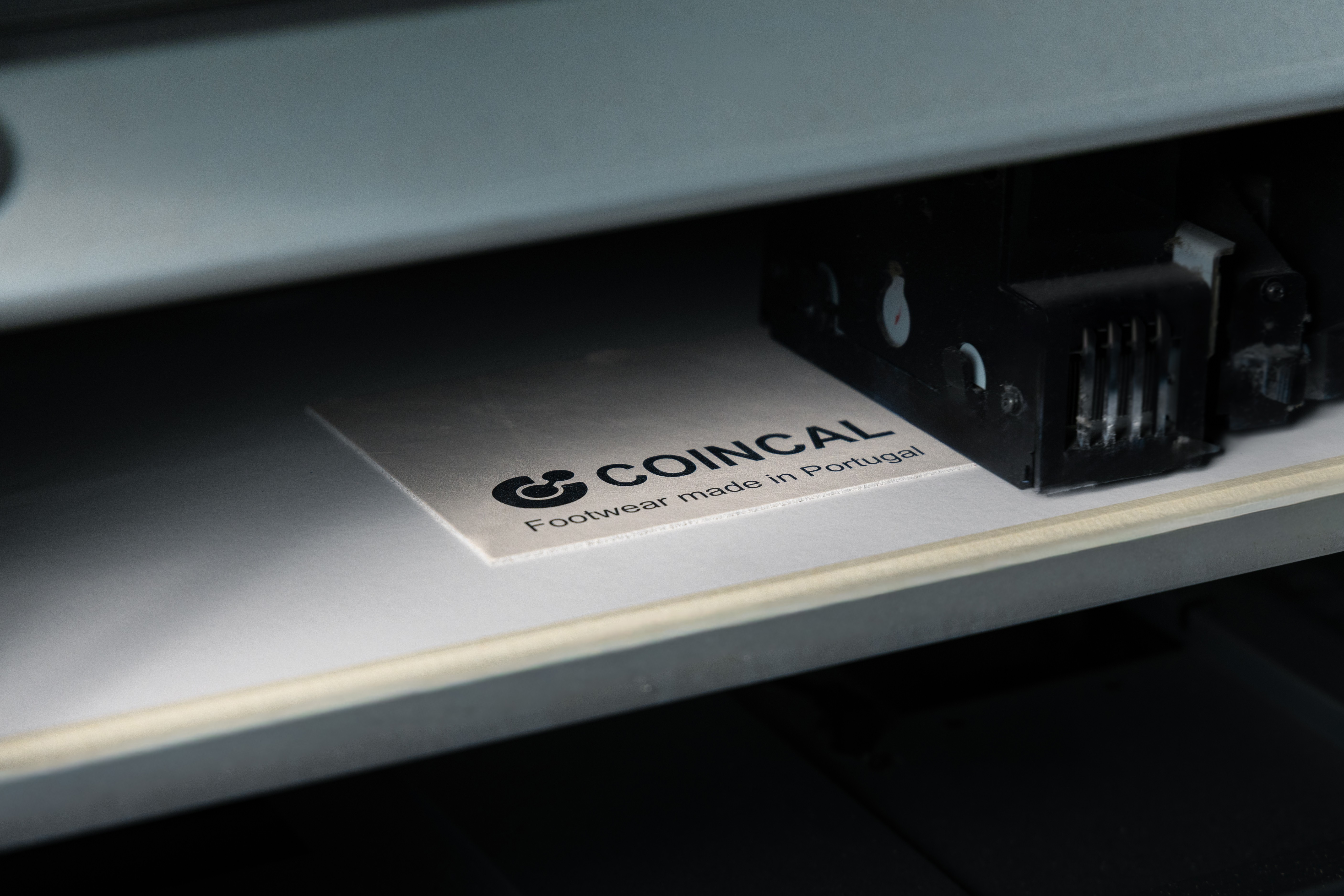
Where Every Impression Represents the Brand
Written by
LOGO EMBOSSING

A logo is often the smallest element of a product, yet it carries the greatest responsibility. It represents the identity of a brand, communicates quality and becomes one of the most recognisable details of the finished shoe. Whether blind embossed, debossed, hot stamped or foil finished, logo application demands exceptional precision. Pressure, temperature, material behaviour and positioning must all work together to produce a clean, consistent and permanent result.

Preparing the Artwork
Every embossing process begins with the artwork. Logos are converted into precision metal dies, manufactured to reproduce every curve, line and letter with absolute accuracy. The quality of the die directly influences the quality of every impression that follows.
Designers also consider minimum line thickness, spacing and depth to ensure the logo remains sharp across different materials. Details that appear clear on paper may require adjustment before they can be reproduced successfully in leather.
Proper preparation guarantees that the brand identity remains consistent throughout production.
Understanding the Material
Different leathers respond differently under pressure and heat. Full-grain leather, corrected grain, nubuck and coated finishes each compress in unique ways. Some retain crisp impressions naturally, while others require carefully adjusted temperatures or longer pressing times.
Before production begins, test samples are produced to determine the optimal combination of pressure, dwell time and temperature. The objective is always the same: a clean, balanced impression without damaging the natural surface of the material.
The logo should enhance the leather—not overpower it.
The Embossing Process
Once parameters have been established, each component is carefully positioned before the die is lowered under controlled pressure. Depending on the desired finish, the process may involve blind embossing, debossing or hot foil stamping using metallic or coloured foils.
Modern embossing presses provide highly repeatable force and temperature control, ensuring consistency throughout production. Operators continuously verify alignment so that every logo appears in exactly the correct position across every pair.
Precision at this stage determines how the brand is perceived.
Quality Control
Inspection focuses on clarity, depth, alignment and consistency. Every logo is checked to ensure sharp edges, uniform pressure and accurate positioning relative to surrounding design features.
Inspectors also verify that there is no excessive compression, surface damage, unwanted shine or distortion around the embossed area. Even subtle variations become immediately noticeable when products are displayed side by side.
The objective is not simply to leave a mark, but to reproduce the brand exactly as intended every single time.
Integration Into Production
After embossing, components continue through stitching, assembly and finishing. The embossed logo must remain clearly visible without affecting the structural performance of the material or interfering with subsequent manufacturing operations.
Because branding becomes a permanent feature of the product, accuracy at this stage contributes directly to the customer's first impression and the overall perception of quality.
Every successful embossing operation strengthens both the product and the identity behind it.
Conclusion
Logo embossing is where craftsmanship meets brand identity. Through carefully controlled pressure, heat and precision tooling, a simple graphic becomes a permanent signature built into the material itself. When executed correctly, every impression reflects the same attention to detail, consistency and quality that define the finished shoe.

More articles

Sunday, June 14, 2026
Written by
Coincal
Where every great shoe begins
How ideas evolve into production-ready footwear through research, creative direction and technical expertise.
Every successful footwear collection begins long before the first material is selected or the first sample is produced. It begins with an idea. Whether that idea arrives as a sketch, a moodboard or a fully developed concept, the design phase is where creative ambition meets the discipline of manufacturing. At Coincal, the purpose is not simply to draw an attractive shoe. It is to understand the brand behind it, the person who will wear it and the practical decisions that will allow the idea to become a convincing, producible object. This early alignment is especially important in footwear, where appearance, comfort and construction are inseparable. A line that gives a silhouette energy may change the pattern beneath it; a material chosen for softness may require hidden reinforcement; a sole selected for attitude will also determine weight and flex. Design becomes stronger when these consequences are welcomed from the beginning.
Every successful footwear collection begins long before the first material is selected or the first sample is produced. It begins with an idea. Whether that idea arrives as a sketch, a moodboard or a fully developed concept, the design phase is where creative ambition meets the discipline of manufacturing. At Coincal, the purpose is not simply to draw an attractive shoe. It is to understand the brand behind it, the person who will wear it and the practical decisions that will allow the idea to become a convincing, producible object. This early alignment is especially important in footwear, where appearance, comfort and construction are inseparable. A line that gives a silhouette energy may change the pattern beneath it; a material chosen for softness may require hidden reinforcement; a sole selected for attitude will also determine weight and flex. Design becomes stronger when these consequences are welcomed from the beginning.
Wednesday, January 1, 2025
Written by
Coincal
Precision Stitched Into Every Detail
How embroidery transforms branding, decoration and identity into permanent features of every shoe.
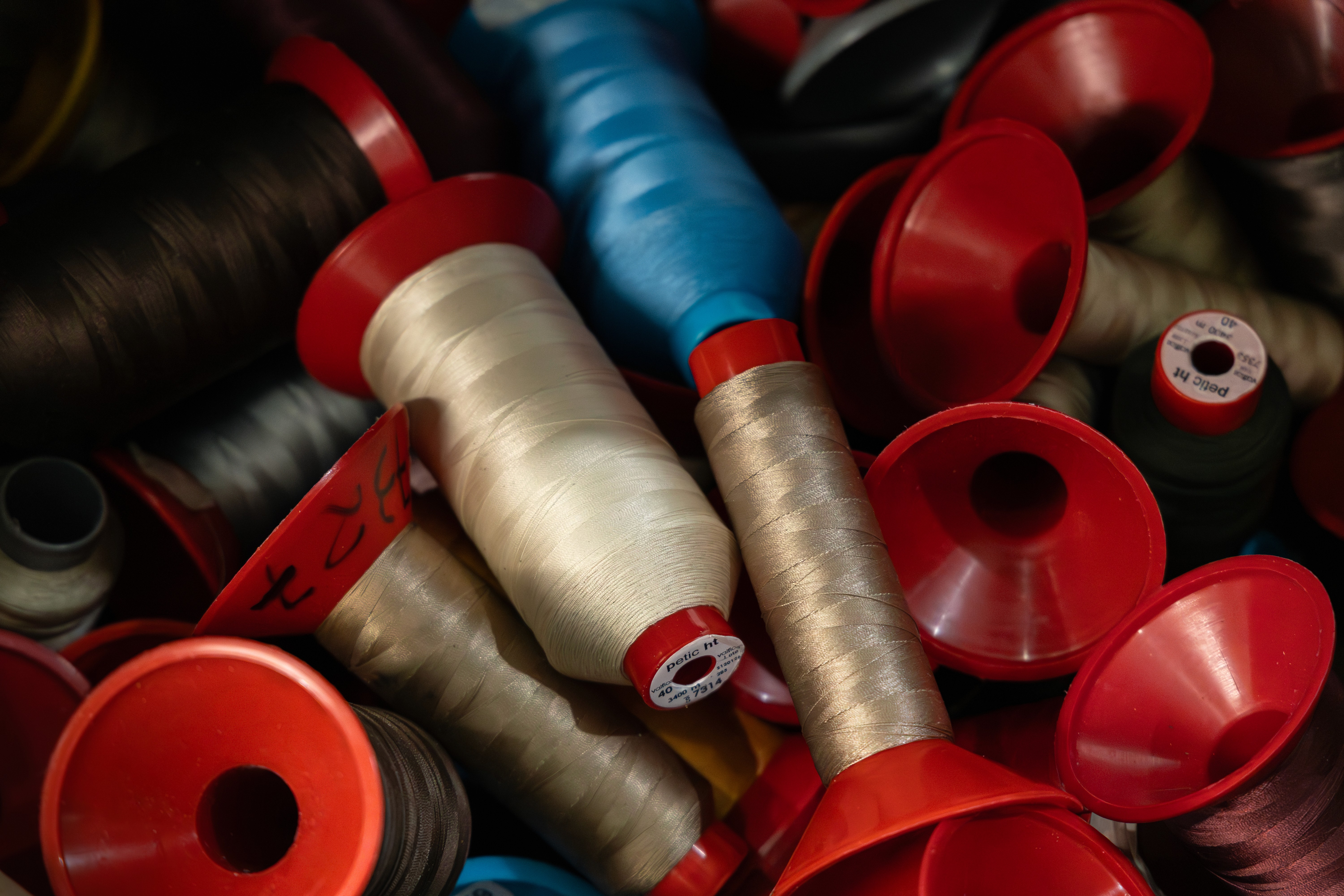
Embroidery is one of the most precise decorative processes in footwear manufacturing. Unlike printed graphics or applied embellishments, embroidery becomes physically integrated into the material through thousands of individual stitches. Every logo, monogram or decorative pattern must balance aesthetics, durability and production efficiency. The quality of the final result depends as much on digital preparation as it does on the precision of the embroidery machine itself.
Embroidery is one of the most precise decorative processes in footwear manufacturing. Unlike printed graphics or applied embellishments, embroidery becomes physically integrated into the material through thousands of individual stitches. Every logo, monogram or decorative pattern must balance aesthetics, durability and production efficiency. The quality of the final result depends as much on digital preparation as it does on the precision of the embroidery machine itself.

Wednesday, January 1, 2025
Written by
Coincal
The Final Step Is Never Just Shipping
How quality control, finishing and logistics ensure every pair reaches customers exactly as intended.
When production ends, responsibility does not. The final days before dispatch determine how a collection will be experienced by warehouses, retailers and, ultimately, customers. Inspection, finishing, packing and logistics are not administrative tasks added after manufacturing; they are the closing stages of it. They protect the work already invested in every pair and ensure that the product arrives with the same clarity it had when it left the line.
When production ends, responsibility does not. The final days before dispatch determine how a collection will be experienced by warehouses, retailers and, ultimately, customers. Inspection, finishing, packing and logistics are not administrative tasks added after manufacturing; they are the closing stages of it. They protect the work already invested in every pair and ensure that the product arrives with the same clarity it had when it left the line.

Thursday, December 19, 2024
Written by
Coincal
Where Hundreds of Components Become One Product
A closer look at the manufacturing process behind premium footwear.
A finished shoe appears singular: one silhouette, one colour story, one clear object. In production, it begins as a carefully organised field of separate parts. Upper panels, linings, reinforcements, threads, eyelets, insoles, outsoles, counters, toe puffs, labels and laces must arrive at the right workstation in the right condition. Assembly is the discipline of turning that complexity into unity without losing control of fit, proportion or finish.
A finished shoe appears singular: one silhouette, one colour story, one clear object. In production, it begins as a carefully organised field of separate parts. Upper panels, linings, reinforcements, threads, eyelets, insoles, outsoles, counters, toe puffs, labels and laces must arrive at the right workstation in the right condition. Assembly is the discipline of turning that complexity into unity without losing control of fit, proportion or finish.

Thursday, December 19, 2024
Written by
Coincal
Quality Without Compromise
Every product is carefully inspected through rigorous quality control to ensure flawless construction, consistency and long-lasting performance before leaving our facilities.
Quality control is where craftsmanship is verified rather than assumed. Every finished shoe is carefully inspected for construction, proportions, stitching accuracy, material consistency and finishing details before it leaves the factory. It is a meticulous process that combines trained human judgement with rigorous standards, ensuring every pair meets the expectations of the brands we work with. Excellence is not added at the end—it is confirmed through every inspection.
Quality control is where craftsmanship is verified rather than assumed. Every finished shoe is carefully inspected for construction, proportions, stitching accuracy, material consistency and finishing details before it leaves the factory. It is a meticulous process that combines trained human judgement with rigorous standards, ensuring every pair meets the expectations of the brands we work with. Excellence is not added at the end—it is confirmed through every inspection.
Where Every Impression Represents the Brand
How precision embossing transforms logos into permanent signatures of quality and craftsmanship.
Where Every Impression Represents the Brand
Written by
LOGO EMBOSSING
A logo is often the smallest element of a product, yet it carries the greatest responsibility. It represents the identity of a brand, communicates quality and becomes one of the most recognisable details of the finished shoe. Whether blind embossed, debossed, hot stamped or foil finished, logo application demands exceptional precision. Pressure, temperature, material behaviour and positioning must all work together to produce a clean, consistent and permanent result.
Preparing the Artwork
Every embossing process begins with the artwork. Logos are converted into precision metal dies, manufactured to reproduce every curve, line and letter with absolute accuracy. The quality of the die directly influences the quality of every impression that follows.
Designers also consider minimum line thickness, spacing and depth to ensure the logo remains sharp across different materials. Details that appear clear on paper may require adjustment before they can be reproduced successfully in leather.
Proper preparation guarantees that the brand identity remains consistent throughout production.
Understanding the Material
Different leathers respond differently under pressure and heat. Full-grain leather, corrected grain, nubuck and coated finishes each compress in unique ways. Some retain crisp impressions naturally, while others require carefully adjusted temperatures or longer pressing times.
Before production begins, test samples are produced to determine the optimal combination of pressure, dwell time and temperature. The objective is always the same: a clean, balanced impression without damaging the natural surface of the material.
The logo should enhance the leather—not overpower it.
The Embossing Process
Once parameters have been established, each component is carefully positioned before the die is lowered under controlled pressure. Depending on the desired finish, the process may involve blind embossing, debossing or hot foil stamping using metallic or coloured foils.
Modern embossing presses provide highly repeatable force and temperature control, ensuring consistency throughout production. Operators continuously verify alignment so that every logo appears in exactly the correct position across every pair.
Precision at this stage determines how the brand is perceived.
Quality Control
Inspection focuses on clarity, depth, alignment and consistency. Every logo is checked to ensure sharp edges, uniform pressure and accurate positioning relative to surrounding design features.
Inspectors also verify that there is no excessive compression, surface damage, unwanted shine or distortion around the embossed area. Even subtle variations become immediately noticeable when products are displayed side by side.
The objective is not simply to leave a mark, but to reproduce the brand exactly as intended every single time.
Integration Into Production
After embossing, components continue through stitching, assembly and finishing. The embossed logo must remain clearly visible without affecting the structural performance of the material or interfering with subsequent manufacturing operations.
Because branding becomes a permanent feature of the product, accuracy at this stage contributes directly to the customer's first impression and the overall perception of quality.
Every successful embossing operation strengthens both the product and the identity behind it.
Conclusion
Logo embossing is where craftsmanship meets brand identity. Through carefully controlled pressure, heat and precision tooling, a simple graphic becomes a permanent signature built into the material itself. When executed correctly, every impression reflects the same attention to detail, consistency and quality that define the finished shoe.
More articles
Where every great shoe begins
How ideas evolve into production-ready footwear through research, creative direction and technical expertise.
Precision Stitched Into Every Detail
How embroidery transforms branding, decoration and identity into permanent features of every shoe.
The Final Step Is Never Just Shipping
How quality control, finishing and logistics ensure every pair reaches customers exactly as intended.
Where Hundreds of Components Become One Product
A closer look at the manufacturing process behind premium footwear.
Quality Without Compromise
Every product is carefully inspected through rigorous quality control to ensure flawless construction, consistency and long-lasting performance before leaving our facilities.
Where Every Impression Represents the Brand
How precision embossing transforms logos into permanent signatures of quality and craftsmanship.
Where Every Impression Represents the Brand
Written by
LOGO EMBOSSING
A logo is often the smallest element of a product, yet it carries the greatest responsibility. It represents the identity of a brand, communicates quality and becomes one of the most recognisable details of the finished shoe. Whether blind embossed, debossed, hot stamped or foil finished, logo application demands exceptional precision. Pressure, temperature, material behaviour and positioning must all work together to produce a clean, consistent and permanent result.
Preparing the Artwork
Every embossing process begins with the artwork. Logos are converted into precision metal dies, manufactured to reproduce every curve, line and letter with absolute accuracy. The quality of the die directly influences the quality of every impression that follows.
Designers also consider minimum line thickness, spacing and depth to ensure the logo remains sharp across different materials. Details that appear clear on paper may require adjustment before they can be reproduced successfully in leather.
Proper preparation guarantees that the brand identity remains consistent throughout production.
Understanding the Material
Different leathers respond differently under pressure and heat. Full-grain leather, corrected grain, nubuck and coated finishes each compress in unique ways. Some retain crisp impressions naturally, while others require carefully adjusted temperatures or longer pressing times.
Before production begins, test samples are produced to determine the optimal combination of pressure, dwell time and temperature. The objective is always the same: a clean, balanced impression without damaging the natural surface of the material.
The logo should enhance the leather—not overpower it.
The Embossing Process
Once parameters have been established, each component is carefully positioned before the die is lowered under controlled pressure. Depending on the desired finish, the process may involve blind embossing, debossing or hot foil stamping using metallic or coloured foils.
Modern embossing presses provide highly repeatable force and temperature control, ensuring consistency throughout production. Operators continuously verify alignment so that every logo appears in exactly the correct position across every pair.
Precision at this stage determines how the brand is perceived.
Quality Control
Inspection focuses on clarity, depth, alignment and consistency. Every logo is checked to ensure sharp edges, uniform pressure and accurate positioning relative to surrounding design features.
Inspectors also verify that there is no excessive compression, surface damage, unwanted shine or distortion around the embossed area. Even subtle variations become immediately noticeable when products are displayed side by side.
The objective is not simply to leave a mark, but to reproduce the brand exactly as intended every single time.
Integration Into Production
After embossing, components continue through stitching, assembly and finishing. The embossed logo must remain clearly visible without affecting the structural performance of the material or interfering with subsequent manufacturing operations.
Because branding becomes a permanent feature of the product, accuracy at this stage contributes directly to the customer's first impression and the overall perception of quality.
Every successful embossing operation strengthens both the product and the identity behind it.
Conclusion
Logo embossing is where craftsmanship meets brand identity. Through carefully controlled pressure, heat and precision tooling, a simple graphic becomes a permanent signature built into the material itself. When executed correctly, every impression reflects the same attention to detail, consistency and quality that define the finished shoe.
More articles
Where every great shoe begins
How ideas evolve into production-ready footwear through research, creative direction and technical expertise.
Precision Stitched Into Every Detail
How embroidery transforms branding, decoration and identity into permanent features of every shoe.
The Final Step Is Never Just Shipping
How quality control, finishing and logistics ensure every pair reaches customers exactly as intended.
Where Hundreds of Components Become One Product
A closer look at the manufacturing process behind premium footwear.
Quality Without Compromise
Every product is carefully inspected through rigorous quality control to ensure flawless construction, consistency and long-lasting performance before leaving our facilities.

We transform brands.
Your success is next.
Start your footwear journey by speaking with our manufacturing experts.

Where Every Impression Represents the Brand
How precision embossing transforms logos into permanent signatures of quality and craftsmanship.
Where Every Impression Represents the Brand
Written by
LOGO EMBOSSING
A logo is often the smallest element of a product, yet it carries the greatest responsibility. It represents the identity of a brand, communicates quality and becomes one of the most recognisable details of the finished shoe. Whether blind embossed, debossed, hot stamped or foil finished, logo application demands exceptional precision. Pressure, temperature, material behaviour and positioning must all work together to produce a clean, consistent and permanent result.
Preparing the Artwork
Every embossing process begins with the artwork. Logos are converted into precision metal dies, manufactured to reproduce every curve, line and letter with absolute accuracy. The quality of the die directly influences the quality of every impression that follows.
Designers also consider minimum line thickness, spacing and depth to ensure the logo remains sharp across different materials. Details that appear clear on paper may require adjustment before they can be reproduced successfully in leather.
Proper preparation guarantees that the brand identity remains consistent throughout production.
Understanding the Material
Different leathers respond differently under pressure and heat. Full-grain leather, corrected grain, nubuck and coated finishes each compress in unique ways. Some retain crisp impressions naturally, while others require carefully adjusted temperatures or longer pressing times.
Before production begins, test samples are produced to determine the optimal combination of pressure, dwell time and temperature. The objective is always the same: a clean, balanced impression without damaging the natural surface of the material.
The logo should enhance the leather—not overpower it.
The Embossing Process
Once parameters have been established, each component is carefully positioned before the die is lowered under controlled pressure. Depending on the desired finish, the process may involve blind embossing, debossing or hot foil stamping using metallic or coloured foils.
Modern embossing presses provide highly repeatable force and temperature control, ensuring consistency throughout production. Operators continuously verify alignment so that every logo appears in exactly the correct position across every pair.
Precision at this stage determines how the brand is perceived.
Quality Control
Inspection focuses on clarity, depth, alignment and consistency. Every logo is checked to ensure sharp edges, uniform pressure and accurate positioning relative to surrounding design features.
Inspectors also verify that there is no excessive compression, surface damage, unwanted shine or distortion around the embossed area. Even subtle variations become immediately noticeable when products are displayed side by side.
The objective is not simply to leave a mark, but to reproduce the brand exactly as intended every single time.
Integration Into Production
After embossing, components continue through stitching, assembly and finishing. The embossed logo must remain clearly visible without affecting the structural performance of the material or interfering with subsequent manufacturing operations.
Because branding becomes a permanent feature of the product, accuracy at this stage contributes directly to the customer's first impression and the overall perception of quality.
Every successful embossing operation strengthens both the product and the identity behind it.
Conclusion
Logo embossing is where craftsmanship meets brand identity. Through carefully controlled pressure, heat and precision tooling, a simple graphic becomes a permanent signature built into the material itself. When executed correctly, every impression reflects the same attention to detail, consistency and quality that define the finished shoe.
More articles
Sunday, June 14, 2026
Written by
Coincal
Where every great shoe begins
How ideas evolve into production-ready footwear through research, creative direction and technical expertise.
Every successful footwear collection begins long before the first material is selected or the first sample is produced. It begins with an idea. Whether that idea arrives as a sketch, a moodboard or a fully developed concept, the design phase is where creative ambition meets the discipline of manufacturing. At Coincal, the purpose is not simply to draw an attractive shoe. It is to understand the brand behind it, the person who will wear it and the practical decisions that will allow the idea to become a convincing, producible object. This early alignment is especially important in footwear, where appearance, comfort and construction are inseparable. A line that gives a silhouette energy may change the pattern beneath it; a material chosen for softness may require hidden reinforcement; a sole selected for attitude will also determine weight and flex. Design becomes stronger when these consequences are welcomed from the beginning.
Every successful footwear collection begins long before the first material is selected or the first sample is produced. It begins with an idea. Whether that idea arrives as a sketch, a moodboard or a fully developed concept, the design phase is where creative ambition meets the discipline of manufacturing. At Coincal, the purpose is not simply to draw an attractive shoe. It is to understand the brand behind it, the person who will wear it and the practical decisions that will allow the idea to become a convincing, producible object. This early alignment is especially important in footwear, where appearance, comfort and construction are inseparable. A line that gives a silhouette energy may change the pattern beneath it; a material chosen for softness may require hidden reinforcement; a sole selected for attitude will also determine weight and flex. Design becomes stronger when these consequences are welcomed from the beginning.
Wednesday, January 1, 2025
Written by
Coincal
Precision Stitched Into Every Detail
How embroidery transforms branding, decoration and identity into permanent features of every shoe.
Embroidery is one of the most precise decorative processes in footwear manufacturing. Unlike printed graphics or applied embellishments, embroidery becomes physically integrated into the material through thousands of individual stitches. Every logo, monogram or decorative pattern must balance aesthetics, durability and production efficiency. The quality of the final result depends as much on digital preparation as it does on the precision of the embroidery machine itself.
Embroidery is one of the most precise decorative processes in footwear manufacturing. Unlike printed graphics or applied embellishments, embroidery becomes physically integrated into the material through thousands of individual stitches. Every logo, monogram or decorative pattern must balance aesthetics, durability and production efficiency. The quality of the final result depends as much on digital preparation as it does on the precision of the embroidery machine itself.
Wednesday, January 1, 2025
Written by
Coincal
The Final Step Is Never Just Shipping
How quality control, finishing and logistics ensure every pair reaches customers exactly as intended.
When production ends, responsibility does not. The final days before dispatch determine how a collection will be experienced by warehouses, retailers and, ultimately, customers. Inspection, finishing, packing and logistics are not administrative tasks added after manufacturing; they are the closing stages of it. They protect the work already invested in every pair and ensure that the product arrives with the same clarity it had when it left the line.
When production ends, responsibility does not. The final days before dispatch determine how a collection will be experienced by warehouses, retailers and, ultimately, customers. Inspection, finishing, packing and logistics are not administrative tasks added after manufacturing; they are the closing stages of it. They protect the work already invested in every pair and ensure that the product arrives with the same clarity it had when it left the line.
Thursday, December 19, 2024
Written by
Coincal
Where Hundreds of Components Become One Product
A closer look at the manufacturing process behind premium footwear.
A finished shoe appears singular: one silhouette, one colour story, one clear object. In production, it begins as a carefully organised field of separate parts. Upper panels, linings, reinforcements, threads, eyelets, insoles, outsoles, counters, toe puffs, labels and laces must arrive at the right workstation in the right condition. Assembly is the discipline of turning that complexity into unity without losing control of fit, proportion or finish.
A finished shoe appears singular: one silhouette, one colour story, one clear object. In production, it begins as a carefully organised field of separate parts. Upper panels, linings, reinforcements, threads, eyelets, insoles, outsoles, counters, toe puffs, labels and laces must arrive at the right workstation in the right condition. Assembly is the discipline of turning that complexity into unity without losing control of fit, proportion or finish.
Thursday, December 19, 2024
Written by
Coincal
Quality Without Compromise
Every product is carefully inspected through rigorous quality control to ensure flawless construction, consistency and long-lasting performance before leaving our facilities.
Quality control is where craftsmanship is verified rather than assumed. Every finished shoe is carefully inspected for construction, proportions, stitching accuracy, material consistency and finishing details before it leaves the factory. It is a meticulous process that combines trained human judgement with rigorous standards, ensuring every pair meets the expectations of the brands we work with. Excellence is not added at the end—it is confirmed through every inspection.
Quality control is where craftsmanship is verified rather than assumed. Every finished shoe is carefully inspected for construction, proportions, stitching accuracy, material consistency and finishing details before it leaves the factory. It is a meticulous process that combines trained human judgement with rigorous standards, ensuring every pair meets the expectations of the brands we work with. Excellence is not added at the end—it is confirmed through every inspection.
Where Every Impression Represents the Brand
How precision embossing transforms logos into permanent signatures of quality and craftsmanship.
Where Every Impression Represents the Brand
Written by
LOGO EMBOSSING
A logo is often the smallest element of a product, yet it carries the greatest responsibility. It represents the identity of a brand, communicates quality and becomes one of the most recognisable details of the finished shoe. Whether blind embossed, debossed, hot stamped or foil finished, logo application demands exceptional precision. Pressure, temperature, material behaviour and positioning must all work together to produce a clean, consistent and permanent result.
Preparing the Artwork
Every embossing process begins with the artwork. Logos are converted into precision metal dies, manufactured to reproduce every curve, line and letter with absolute accuracy. The quality of the die directly influences the quality of every impression that follows.
Designers also consider minimum line thickness, spacing and depth to ensure the logo remains sharp across different materials. Details that appear clear on paper may require adjustment before they can be reproduced successfully in leather.
Proper preparation guarantees that the brand identity remains consistent throughout production.
Understanding the Material
Different leathers respond differently under pressure and heat. Full-grain leather, corrected grain, nubuck and coated finishes each compress in unique ways. Some retain crisp impressions naturally, while others require carefully adjusted temperatures or longer pressing times.
Before production begins, test samples are produced to determine the optimal combination of pressure, dwell time and temperature. The objective is always the same: a clean, balanced impression without damaging the natural surface of the material.
The logo should enhance the leather—not overpower it.
The Embossing Process
Once parameters have been established, each component is carefully positioned before the die is lowered under controlled pressure. Depending on the desired finish, the process may involve blind embossing, debossing or hot foil stamping using metallic or coloured foils.
Modern embossing presses provide highly repeatable force and temperature control, ensuring consistency throughout production. Operators continuously verify alignment so that every logo appears in exactly the correct position across every pair.
Precision at this stage determines how the brand is perceived.
Quality Control
Inspection focuses on clarity, depth, alignment and consistency. Every logo is checked to ensure sharp edges, uniform pressure and accurate positioning relative to surrounding design features.
Inspectors also verify that there is no excessive compression, surface damage, unwanted shine or distortion around the embossed area. Even subtle variations become immediately noticeable when products are displayed side by side.
The objective is not simply to leave a mark, but to reproduce the brand exactly as intended every single time.
Integration Into Production
After embossing, components continue through stitching, assembly and finishing. The embossed logo must remain clearly visible without affecting the structural performance of the material or interfering with subsequent manufacturing operations.
Because branding becomes a permanent feature of the product, accuracy at this stage contributes directly to the customer's first impression and the overall perception of quality.
Every successful embossing operation strengthens both the product and the identity behind it.
Conclusion
Logo embossing is where craftsmanship meets brand identity. Through carefully controlled pressure, heat and precision tooling, a simple graphic becomes a permanent signature built into the material itself. When executed correctly, every impression reflects the same attention to detail, consistency and quality that define the finished shoe.
More articles
Where every great shoe begins
How ideas evolve into production-ready footwear through research, creative direction and technical expertise.
Precision Stitched Into Every Detail
How embroidery transforms branding, decoration and identity into permanent features of every shoe.
The Final Step Is Never Just Shipping
How quality control, finishing and logistics ensure every pair reaches customers exactly as intended.
Where Hundreds of Components Become One Product
A closer look at the manufacturing process behind premium footwear.
Quality Without Compromise
Every product is carefully inspected through rigorous quality control to ensure flawless construction, consistency and long-lasting performance before leaving our facilities.
Where Every Impression Represents the Brand
How precision embossing transforms logos into permanent signatures of quality and craftsmanship.
Where Every Impression Represents the Brand
Written by
LOGO EMBOSSING
A logo is often the smallest element of a product, yet it carries the greatest responsibility. It represents the identity of a brand, communicates quality and becomes one of the most recognisable details of the finished shoe. Whether blind embossed, debossed, hot stamped or foil finished, logo application demands exceptional precision. Pressure, temperature, material behaviour and positioning must all work together to produce a clean, consistent and permanent result.
Preparing the Artwork
Every embossing process begins with the artwork. Logos are converted into precision metal dies, manufactured to reproduce every curve, line and letter with absolute accuracy. The quality of the die directly influences the quality of every impression that follows.
Designers also consider minimum line thickness, spacing and depth to ensure the logo remains sharp across different materials. Details that appear clear on paper may require adjustment before they can be reproduced successfully in leather.
Proper preparation guarantees that the brand identity remains consistent throughout production.
Understanding the Material
Different leathers respond differently under pressure and heat. Full-grain leather, corrected grain, nubuck and coated finishes each compress in unique ways. Some retain crisp impressions naturally, while others require carefully adjusted temperatures or longer pressing times.
Before production begins, test samples are produced to determine the optimal combination of pressure, dwell time and temperature. The objective is always the same: a clean, balanced impression without damaging the natural surface of the material.
The logo should enhance the leather—not overpower it.
The Embossing Process
Once parameters have been established, each component is carefully positioned before the die is lowered under controlled pressure. Depending on the desired finish, the process may involve blind embossing, debossing or hot foil stamping using metallic or coloured foils.
Modern embossing presses provide highly repeatable force and temperature control, ensuring consistency throughout production. Operators continuously verify alignment so that every logo appears in exactly the correct position across every pair.
Precision at this stage determines how the brand is perceived.
Quality Control
Inspection focuses on clarity, depth, alignment and consistency. Every logo is checked to ensure sharp edges, uniform pressure and accurate positioning relative to surrounding design features.
Inspectors also verify that there is no excessive compression, surface damage, unwanted shine or distortion around the embossed area. Even subtle variations become immediately noticeable when products are displayed side by side.
The objective is not simply to leave a mark, but to reproduce the brand exactly as intended every single time.
Integration Into Production
After embossing, components continue through stitching, assembly and finishing. The embossed logo must remain clearly visible without affecting the structural performance of the material or interfering with subsequent manufacturing operations.
Because branding becomes a permanent feature of the product, accuracy at this stage contributes directly to the customer's first impression and the overall perception of quality.
Every successful embossing operation strengthens both the product and the identity behind it.
Conclusion
Logo embossing is where craftsmanship meets brand identity. Through carefully controlled pressure, heat and precision tooling, a simple graphic becomes a permanent signature built into the material itself. When executed correctly, every impression reflects the same attention to detail, consistency and quality that define the finished shoe.
More articles
Where every great shoe begins
How ideas evolve into production-ready footwear through research, creative direction and technical expertise.
Precision Stitched Into Every Detail
How embroidery transforms branding, decoration and identity into permanent features of every shoe.
The Final Step Is Never Just Shipping
How quality control, finishing and logistics ensure every pair reaches customers exactly as intended.
Where Hundreds of Components Become One Product
A closer look at the manufacturing process behind premium footwear.
Quality Without Compromise
Every product is carefully inspected through rigorous quality control to ensure flawless construction, consistency and long-lasting performance before leaving our facilities.
We transform brands.
Your success is next.
Start your footwear journey by speaking with our manufacturing experts.
Where Every Impression Represents the Brand
How precision embossing transforms logos into permanent signatures of quality and craftsmanship.
Where Every Impression Represents the Brand
Written by
LOGO EMBOSSING
A logo is often the smallest element of a product, yet it carries the greatest responsibility. It represents the identity of a brand, communicates quality and becomes one of the most recognisable details of the finished shoe. Whether blind embossed, debossed, hot stamped or foil finished, logo application demands exceptional precision. Pressure, temperature, material behaviour and positioning must all work together to produce a clean, consistent and permanent result.
Preparing the Artwork
Every embossing process begins with the artwork. Logos are converted into precision metal dies, manufactured to reproduce every curve, line and letter with absolute accuracy. The quality of the die directly influences the quality of every impression that follows.
Designers also consider minimum line thickness, spacing and depth to ensure the logo remains sharp across different materials. Details that appear clear on paper may require adjustment before they can be reproduced successfully in leather.
Proper preparation guarantees that the brand identity remains consistent throughout production.
Understanding the Material
Different leathers respond differently under pressure and heat. Full-grain leather, corrected grain, nubuck and coated finishes each compress in unique ways. Some retain crisp impressions naturally, while others require carefully adjusted temperatures or longer pressing times.
Before production begins, test samples are produced to determine the optimal combination of pressure, dwell time and temperature. The objective is always the same: a clean, balanced impression without damaging the natural surface of the material.
The logo should enhance the leather—not overpower it.
The Embossing Process
Once parameters have been established, each component is carefully positioned before the die is lowered under controlled pressure. Depending on the desired finish, the process may involve blind embossing, debossing or hot foil stamping using metallic or coloured foils.
Modern embossing presses provide highly repeatable force and temperature control, ensuring consistency throughout production. Operators continuously verify alignment so that every logo appears in exactly the correct position across every pair.
Precision at this stage determines how the brand is perceived.
Quality Control
Inspection focuses on clarity, depth, alignment and consistency. Every logo is checked to ensure sharp edges, uniform pressure and accurate positioning relative to surrounding design features.
Inspectors also verify that there is no excessive compression, surface damage, unwanted shine or distortion around the embossed area. Even subtle variations become immediately noticeable when products are displayed side by side.
The objective is not simply to leave a mark, but to reproduce the brand exactly as intended every single time.
Integration Into Production
After embossing, components continue through stitching, assembly and finishing. The embossed logo must remain clearly visible without affecting the structural performance of the material or interfering with subsequent manufacturing operations.
Because branding becomes a permanent feature of the product, accuracy at this stage contributes directly to the customer's first impression and the overall perception of quality.
Every successful embossing operation strengthens both the product and the identity behind it.
Conclusion
Logo embossing is where craftsmanship meets brand identity. Through carefully controlled pressure, heat and precision tooling, a simple graphic becomes a permanent signature built into the material itself. When executed correctly, every impression reflects the same attention to detail, consistency and quality that define the finished shoe.
More articles
Sunday, June 14, 2026
Written by
Coincal
Where every great shoe begins
How ideas evolve into production-ready footwear through research, creative direction and technical expertise.
Every successful footwear collection begins long before the first material is selected or the first sample is produced. It begins with an idea. Whether that idea arrives as a sketch, a moodboard or a fully developed concept, the design phase is where creative ambition meets the discipline of manufacturing. At Coincal, the purpose is not simply to draw an attractive shoe. It is to understand the brand behind it, the person who will wear it and the practical decisions that will allow the idea to become a convincing, producible object. This early alignment is especially important in footwear, where appearance, comfort and construction are inseparable. A line that gives a silhouette energy may change the pattern beneath it; a material chosen for softness may require hidden reinforcement; a sole selected for attitude will also determine weight and flex. Design becomes stronger when these consequences are welcomed from the beginning.
Every successful footwear collection begins long before the first material is selected or the first sample is produced. It begins with an idea. Whether that idea arrives as a sketch, a moodboard or a fully developed concept, the design phase is where creative ambition meets the discipline of manufacturing. At Coincal, the purpose is not simply to draw an attractive shoe. It is to understand the brand behind it, the person who will wear it and the practical decisions that will allow the idea to become a convincing, producible object. This early alignment is especially important in footwear, where appearance, comfort and construction are inseparable. A line that gives a silhouette energy may change the pattern beneath it; a material chosen for softness may require hidden reinforcement; a sole selected for attitude will also determine weight and flex. Design becomes stronger when these consequences are welcomed from the beginning.
Wednesday, January 1, 2025
Written by
Coincal
Precision Stitched Into Every Detail
How embroidery transforms branding, decoration and identity into permanent features of every shoe.
Embroidery is one of the most precise decorative processes in footwear manufacturing. Unlike printed graphics or applied embellishments, embroidery becomes physically integrated into the material through thousands of individual stitches. Every logo, monogram or decorative pattern must balance aesthetics, durability and production efficiency. The quality of the final result depends as much on digital preparation as it does on the precision of the embroidery machine itself.
Embroidery is one of the most precise decorative processes in footwear manufacturing. Unlike printed graphics or applied embellishments, embroidery becomes physically integrated into the material through thousands of individual stitches. Every logo, monogram or decorative pattern must balance aesthetics, durability and production efficiency. The quality of the final result depends as much on digital preparation as it does on the precision of the embroidery machine itself.
Wednesday, January 1, 2025
Written by
Coincal
The Final Step Is Never Just Shipping
How quality control, finishing and logistics ensure every pair reaches customers exactly as intended.
When production ends, responsibility does not. The final days before dispatch determine how a collection will be experienced by warehouses, retailers and, ultimately, customers. Inspection, finishing, packing and logistics are not administrative tasks added after manufacturing; they are the closing stages of it. They protect the work already invested in every pair and ensure that the product arrives with the same clarity it had when it left the line.
When production ends, responsibility does not. The final days before dispatch determine how a collection will be experienced by warehouses, retailers and, ultimately, customers. Inspection, finishing, packing and logistics are not administrative tasks added after manufacturing; they are the closing stages of it. They protect the work already invested in every pair and ensure that the product arrives with the same clarity it had when it left the line.
Thursday, December 19, 2024
Written by
Coincal
Where Hundreds of Components Become One Product
A closer look at the manufacturing process behind premium footwear.
A finished shoe appears singular: one silhouette, one colour story, one clear object. In production, it begins as a carefully organised field of separate parts. Upper panels, linings, reinforcements, threads, eyelets, insoles, outsoles, counters, toe puffs, labels and laces must arrive at the right workstation in the right condition. Assembly is the discipline of turning that complexity into unity without losing control of fit, proportion or finish.
A finished shoe appears singular: one silhouette, one colour story, one clear object. In production, it begins as a carefully organised field of separate parts. Upper panels, linings, reinforcements, threads, eyelets, insoles, outsoles, counters, toe puffs, labels and laces must arrive at the right workstation in the right condition. Assembly is the discipline of turning that complexity into unity without losing control of fit, proportion or finish.
Thursday, December 19, 2024
Written by
Coincal
Quality Without Compromise
Every product is carefully inspected through rigorous quality control to ensure flawless construction, consistency and long-lasting performance before leaving our facilities.
Quality control is where craftsmanship is verified rather than assumed. Every finished shoe is carefully inspected for construction, proportions, stitching accuracy, material consistency and finishing details before it leaves the factory. It is a meticulous process that combines trained human judgement with rigorous standards, ensuring every pair meets the expectations of the brands we work with. Excellence is not added at the end—it is confirmed through every inspection.
Quality control is where craftsmanship is verified rather than assumed. Every finished shoe is carefully inspected for construction, proportions, stitching accuracy, material consistency and finishing details before it leaves the factory. It is a meticulous process that combines trained human judgement with rigorous standards, ensuring every pair meets the expectations of the brands we work with. Excellence is not added at the end—it is confirmed through every inspection.
Where Every Impression Represents the Brand
How precision embossing transforms logos into permanent signatures of quality and craftsmanship.
Where Every Impression Represents the Brand
Written by
LOGO EMBOSSING
A logo is often the smallest element of a product, yet it carries the greatest responsibility. It represents the identity of a brand, communicates quality and becomes one of the most recognisable details of the finished shoe. Whether blind embossed, debossed, hot stamped or foil finished, logo application demands exceptional precision. Pressure, temperature, material behaviour and positioning must all work together to produce a clean, consistent and permanent result.
Preparing the Artwork
Every embossing process begins with the artwork. Logos are converted into precision metal dies, manufactured to reproduce every curve, line and letter with absolute accuracy. The quality of the die directly influences the quality of every impression that follows.
Designers also consider minimum line thickness, spacing and depth to ensure the logo remains sharp across different materials. Details that appear clear on paper may require adjustment before they can be reproduced successfully in leather.
Proper preparation guarantees that the brand identity remains consistent throughout production.
Understanding the Material
Different leathers respond differently under pressure and heat. Full-grain leather, corrected grain, nubuck and coated finishes each compress in unique ways. Some retain crisp impressions naturally, while others require carefully adjusted temperatures or longer pressing times.
Before production begins, test samples are produced to determine the optimal combination of pressure, dwell time and temperature. The objective is always the same: a clean, balanced impression without damaging the natural surface of the material.
The logo should enhance the leather—not overpower it.
The Embossing Process
Once parameters have been established, each component is carefully positioned before the die is lowered under controlled pressure. Depending on the desired finish, the process may involve blind embossing, debossing or hot foil stamping using metallic or coloured foils.
Modern embossing presses provide highly repeatable force and temperature control, ensuring consistency throughout production. Operators continuously verify alignment so that every logo appears in exactly the correct position across every pair.
Precision at this stage determines how the brand is perceived.
Quality Control
Inspection focuses on clarity, depth, alignment and consistency. Every logo is checked to ensure sharp edges, uniform pressure and accurate positioning relative to surrounding design features.
Inspectors also verify that there is no excessive compression, surface damage, unwanted shine or distortion around the embossed area. Even subtle variations become immediately noticeable when products are displayed side by side.
The objective is not simply to leave a mark, but to reproduce the brand exactly as intended every single time.
Integration Into Production
After embossing, components continue through stitching, assembly and finishing. The embossed logo must remain clearly visible without affecting the structural performance of the material or interfering with subsequent manufacturing operations.
Because branding becomes a permanent feature of the product, accuracy at this stage contributes directly to the customer's first impression and the overall perception of quality.
Every successful embossing operation strengthens both the product and the identity behind it.
Conclusion
Logo embossing is where craftsmanship meets brand identity. Through carefully controlled pressure, heat and precision tooling, a simple graphic becomes a permanent signature built into the material itself. When executed correctly, every impression reflects the same attention to detail, consistency and quality that define the finished shoe.
More articles
Where every great shoe begins
How ideas evolve into production-ready footwear through research, creative direction and technical expertise.
Precision Stitched Into Every Detail
How embroidery transforms branding, decoration and identity into permanent features of every shoe.
The Final Step Is Never Just Shipping
How quality control, finishing and logistics ensure every pair reaches customers exactly as intended.
Where Hundreds of Components Become One Product
A closer look at the manufacturing process behind premium footwear.
Quality Without Compromise
Every product is carefully inspected through rigorous quality control to ensure flawless construction, consistency and long-lasting performance before leaving our facilities.
Where Every Impression Represents the Brand
How precision embossing transforms logos into permanent signatures of quality and craftsmanship.
Where Every Impression Represents the Brand
Written by
LOGO EMBOSSING
A logo is often the smallest element of a product, yet it carries the greatest responsibility. It represents the identity of a brand, communicates quality and becomes one of the most recognisable details of the finished shoe. Whether blind embossed, debossed, hot stamped or foil finished, logo application demands exceptional precision. Pressure, temperature, material behaviour and positioning must all work together to produce a clean, consistent and permanent result.
Preparing the Artwork
Every embossing process begins with the artwork. Logos are converted into precision metal dies, manufactured to reproduce every curve, line and letter with absolute accuracy. The quality of the die directly influences the quality of every impression that follows.
Designers also consider minimum line thickness, spacing and depth to ensure the logo remains sharp across different materials. Details that appear clear on paper may require adjustment before they can be reproduced successfully in leather.
Proper preparation guarantees that the brand identity remains consistent throughout production.
Understanding the Material
Different leathers respond differently under pressure and heat. Full-grain leather, corrected grain, nubuck and coated finishes each compress in unique ways. Some retain crisp impressions naturally, while others require carefully adjusted temperatures or longer pressing times.
Before production begins, test samples are produced to determine the optimal combination of pressure, dwell time and temperature. The objective is always the same: a clean, balanced impression without damaging the natural surface of the material.
The logo should enhance the leather—not overpower it.
The Embossing Process
Once parameters have been established, each component is carefully positioned before the die is lowered under controlled pressure. Depending on the desired finish, the process may involve blind embossing, debossing or hot foil stamping using metallic or coloured foils.
Modern embossing presses provide highly repeatable force and temperature control, ensuring consistency throughout production. Operators continuously verify alignment so that every logo appears in exactly the correct position across every pair.
Precision at this stage determines how the brand is perceived.
Quality Control
Inspection focuses on clarity, depth, alignment and consistency. Every logo is checked to ensure sharp edges, uniform pressure and accurate positioning relative to surrounding design features.
Inspectors also verify that there is no excessive compression, surface damage, unwanted shine or distortion around the embossed area. Even subtle variations become immediately noticeable when products are displayed side by side.
The objective is not simply to leave a mark, but to reproduce the brand exactly as intended every single time.
Integration Into Production
After embossing, components continue through stitching, assembly and finishing. The embossed logo must remain clearly visible without affecting the structural performance of the material or interfering with subsequent manufacturing operations.
Because branding becomes a permanent feature of the product, accuracy at this stage contributes directly to the customer's first impression and the overall perception of quality.
Every successful embossing operation strengthens both the product and the identity behind it.
Conclusion
Logo embossing is where craftsmanship meets brand identity. Through carefully controlled pressure, heat and precision tooling, a simple graphic becomes a permanent signature built into the material itself. When executed correctly, every impression reflects the same attention to detail, consistency and quality that define the finished shoe.
More articles
Where every great shoe begins
How ideas evolve into production-ready footwear through research, creative direction and technical expertise.
Precision Stitched Into Every Detail
How embroidery transforms branding, decoration and identity into permanent features of every shoe.
The Final Step Is Never Just Shipping
How quality control, finishing and logistics ensure every pair reaches customers exactly as intended.
Where Hundreds of Components Become One Product
A closer look at the manufacturing process behind premium footwear.
Quality Without Compromise
Every product is carefully inspected through rigorous quality control to ensure flawless construction, consistency and long-lasting performance before leaving our facilities.
We transform brands.
Your success is next.
Start your footwear journey by speaking with our manufacturing experts.
Where Every Impression Represents the Brand
How precision embossing transforms logos into permanent signatures of quality and craftsmanship.
Where Every Impression Represents the Brand
Written by
LOGO EMBOSSING
A logo is often the smallest element of a product, yet it carries the greatest responsibility. It represents the identity of a brand, communicates quality and becomes one of the most recognisable details of the finished shoe. Whether blind embossed, debossed, hot stamped or foil finished, logo application demands exceptional precision. Pressure, temperature, material behaviour and positioning must all work together to produce a clean, consistent and permanent result.
Preparing the Artwork
Every embossing process begins with the artwork. Logos are converted into precision metal dies, manufactured to reproduce every curve, line and letter with absolute accuracy. The quality of the die directly influences the quality of every impression that follows.
Designers also consider minimum line thickness, spacing and depth to ensure the logo remains sharp across different materials. Details that appear clear on paper may require adjustment before they can be reproduced successfully in leather.
Proper preparation guarantees that the brand identity remains consistent throughout production.
Understanding the Material
Different leathers respond differently under pressure and heat. Full-grain leather, corrected grain, nubuck and coated finishes each compress in unique ways. Some retain crisp impressions naturally, while others require carefully adjusted temperatures or longer pressing times.
Before production begins, test samples are produced to determine the optimal combination of pressure, dwell time and temperature. The objective is always the same: a clean, balanced impression without damaging the natural surface of the material.
The logo should enhance the leather—not overpower it.
The Embossing Process
Once parameters have been established, each component is carefully positioned before the die is lowered under controlled pressure. Depending on the desired finish, the process may involve blind embossing, debossing or hot foil stamping using metallic or coloured foils.
Modern embossing presses provide highly repeatable force and temperature control, ensuring consistency throughout production. Operators continuously verify alignment so that every logo appears in exactly the correct position across every pair.
Precision at this stage determines how the brand is perceived.
Quality Control
Inspection focuses on clarity, depth, alignment and consistency. Every logo is checked to ensure sharp edges, uniform pressure and accurate positioning relative to surrounding design features.
Inspectors also verify that there is no excessive compression, surface damage, unwanted shine or distortion around the embossed area. Even subtle variations become immediately noticeable when products are displayed side by side.
The objective is not simply to leave a mark, but to reproduce the brand exactly as intended every single time.
Integration Into Production
After embossing, components continue through stitching, assembly and finishing. The embossed logo must remain clearly visible without affecting the structural performance of the material or interfering with subsequent manufacturing operations.
Because branding becomes a permanent feature of the product, accuracy at this stage contributes directly to the customer's first impression and the overall perception of quality.
Every successful embossing operation strengthens both the product and the identity behind it.
Conclusion
Logo embossing is where craftsmanship meets brand identity. Through carefully controlled pressure, heat and precision tooling, a simple graphic becomes a permanent signature built into the material itself. When executed correctly, every impression reflects the same attention to detail, consistency and quality that define the finished shoe.
More articles
Sunday, June 14, 2026
Written by
Coincal
Where every great shoe begins
How ideas evolve into production-ready footwear through research, creative direction and technical expertise.
Every successful footwear collection begins long before the first material is selected or the first sample is produced. It begins with an idea. Whether that idea arrives as a sketch, a moodboard or a fully developed concept, the design phase is where creative ambition meets the discipline of manufacturing. At Coincal, the purpose is not simply to draw an attractive shoe. It is to understand the brand behind it, the person who will wear it and the practical decisions that will allow the idea to become a convincing, producible object. This early alignment is especially important in footwear, where appearance, comfort and construction are inseparable. A line that gives a silhouette energy may change the pattern beneath it; a material chosen for softness may require hidden reinforcement; a sole selected for attitude will also determine weight and flex. Design becomes stronger when these consequences are welcomed from the beginning.
Every successful footwear collection begins long before the first material is selected or the first sample is produced. It begins with an idea. Whether that idea arrives as a sketch, a moodboard or a fully developed concept, the design phase is where creative ambition meets the discipline of manufacturing. At Coincal, the purpose is not simply to draw an attractive shoe. It is to understand the brand behind it, the person who will wear it and the practical decisions that will allow the idea to become a convincing, producible object. This early alignment is especially important in footwear, where appearance, comfort and construction are inseparable. A line that gives a silhouette energy may change the pattern beneath it; a material chosen for softness may require hidden reinforcement; a sole selected for attitude will also determine weight and flex. Design becomes stronger when these consequences are welcomed from the beginning.
Wednesday, January 1, 2025
Written by
Coincal
Precision Stitched Into Every Detail
How embroidery transforms branding, decoration and identity into permanent features of every shoe.
Embroidery is one of the most precise decorative processes in footwear manufacturing. Unlike printed graphics or applied embellishments, embroidery becomes physically integrated into the material through thousands of individual stitches. Every logo, monogram or decorative pattern must balance aesthetics, durability and production efficiency. The quality of the final result depends as much on digital preparation as it does on the precision of the embroidery machine itself.
Embroidery is one of the most precise decorative processes in footwear manufacturing. Unlike printed graphics or applied embellishments, embroidery becomes physically integrated into the material through thousands of individual stitches. Every logo, monogram or decorative pattern must balance aesthetics, durability and production efficiency. The quality of the final result depends as much on digital preparation as it does on the precision of the embroidery machine itself.
Wednesday, January 1, 2025
Written by
Coincal
The Final Step Is Never Just Shipping
How quality control, finishing and logistics ensure every pair reaches customers exactly as intended.
When production ends, responsibility does not. The final days before dispatch determine how a collection will be experienced by warehouses, retailers and, ultimately, customers. Inspection, finishing, packing and logistics are not administrative tasks added after manufacturing; they are the closing stages of it. They protect the work already invested in every pair and ensure that the product arrives with the same clarity it had when it left the line.
When production ends, responsibility does not. The final days before dispatch determine how a collection will be experienced by warehouses, retailers and, ultimately, customers. Inspection, finishing, packing and logistics are not administrative tasks added after manufacturing; they are the closing stages of it. They protect the work already invested in every pair and ensure that the product arrives with the same clarity it had when it left the line.
Thursday, December 19, 2024
Written by
Coincal
Where Hundreds of Components Become One Product
A closer look at the manufacturing process behind premium footwear.
A finished shoe appears singular: one silhouette, one colour story, one clear object. In production, it begins as a carefully organised field of separate parts. Upper panels, linings, reinforcements, threads, eyelets, insoles, outsoles, counters, toe puffs, labels and laces must arrive at the right workstation in the right condition. Assembly is the discipline of turning that complexity into unity without losing control of fit, proportion or finish.
A finished shoe appears singular: one silhouette, one colour story, one clear object. In production, it begins as a carefully organised field of separate parts. Upper panels, linings, reinforcements, threads, eyelets, insoles, outsoles, counters, toe puffs, labels and laces must arrive at the right workstation in the right condition. Assembly is the discipline of turning that complexity into unity without losing control of fit, proportion or finish.
Thursday, December 19, 2024
Written by
Coincal
Quality Without Compromise
Every product is carefully inspected through rigorous quality control to ensure flawless construction, consistency and long-lasting performance before leaving our facilities.
Quality control is where craftsmanship is verified rather than assumed. Every finished shoe is carefully inspected for construction, proportions, stitching accuracy, material consistency and finishing details before it leaves the factory. It is a meticulous process that combines trained human judgement with rigorous standards, ensuring every pair meets the expectations of the brands we work with. Excellence is not added at the end—it is confirmed through every inspection.
Quality control is where craftsmanship is verified rather than assumed. Every finished shoe is carefully inspected for construction, proportions, stitching accuracy, material consistency and finishing details before it leaves the factory. It is a meticulous process that combines trained human judgement with rigorous standards, ensuring every pair meets the expectations of the brands we work with. Excellence is not added at the end—it is confirmed through every inspection.
Where Every Impression Represents the Brand
How precision embossing transforms logos into permanent signatures of quality and craftsmanship.
Where Every Impression Represents the Brand
Written by
LOGO EMBOSSING
A logo is often the smallest element of a product, yet it carries the greatest responsibility. It represents the identity of a brand, communicates quality and becomes one of the most recognisable details of the finished shoe. Whether blind embossed, debossed, hot stamped or foil finished, logo application demands exceptional precision. Pressure, temperature, material behaviour and positioning must all work together to produce a clean, consistent and permanent result.
Preparing the Artwork
Every embossing process begins with the artwork. Logos are converted into precision metal dies, manufactured to reproduce every curve, line and letter with absolute accuracy. The quality of the die directly influences the quality of every impression that follows.
Designers also consider minimum line thickness, spacing and depth to ensure the logo remains sharp across different materials. Details that appear clear on paper may require adjustment before they can be reproduced successfully in leather.
Proper preparation guarantees that the brand identity remains consistent throughout production.
Understanding the Material
Different leathers respond differently under pressure and heat. Full-grain leather, corrected grain, nubuck and coated finishes each compress in unique ways. Some retain crisp impressions naturally, while others require carefully adjusted temperatures or longer pressing times.
Before production begins, test samples are produced to determine the optimal combination of pressure, dwell time and temperature. The objective is always the same: a clean, balanced impression without damaging the natural surface of the material.
The logo should enhance the leather—not overpower it.
The Embossing Process
Once parameters have been established, each component is carefully positioned before the die is lowered under controlled pressure. Depending on the desired finish, the process may involve blind embossing, debossing or hot foil stamping using metallic or coloured foils.
Modern embossing presses provide highly repeatable force and temperature control, ensuring consistency throughout production. Operators continuously verify alignment so that every logo appears in exactly the correct position across every pair.
Precision at this stage determines how the brand is perceived.
Quality Control
Inspection focuses on clarity, depth, alignment and consistency. Every logo is checked to ensure sharp edges, uniform pressure and accurate positioning relative to surrounding design features.
Inspectors also verify that there is no excessive compression, surface damage, unwanted shine or distortion around the embossed area. Even subtle variations become immediately noticeable when products are displayed side by side.
The objective is not simply to leave a mark, but to reproduce the brand exactly as intended every single time.
Integration Into Production
After embossing, components continue through stitching, assembly and finishing. The embossed logo must remain clearly visible without affecting the structural performance of the material or interfering with subsequent manufacturing operations.
Because branding becomes a permanent feature of the product, accuracy at this stage contributes directly to the customer's first impression and the overall perception of quality.
Every successful embossing operation strengthens both the product and the identity behind it.
Conclusion
Logo embossing is where craftsmanship meets brand identity. Through carefully controlled pressure, heat and precision tooling, a simple graphic becomes a permanent signature built into the material itself. When executed correctly, every impression reflects the same attention to detail, consistency and quality that define the finished shoe.
More articles
Where every great shoe begins
How ideas evolve into production-ready footwear through research, creative direction and technical expertise.
Precision Stitched Into Every Detail
How embroidery transforms branding, decoration and identity into permanent features of every shoe.
The Final Step Is Never Just Shipping
How quality control, finishing and logistics ensure every pair reaches customers exactly as intended.
Where Hundreds of Components Become One Product
A closer look at the manufacturing process behind premium footwear.
Quality Without Compromise
Every product is carefully inspected through rigorous quality control to ensure flawless construction, consistency and long-lasting performance before leaving our facilities.
Where Every Impression Represents the Brand
How precision embossing transforms logos into permanent signatures of quality and craftsmanship.
Where Every Impression Represents the Brand
Written by
LOGO EMBOSSING
A logo is often the smallest element of a product, yet it carries the greatest responsibility. It represents the identity of a brand, communicates quality and becomes one of the most recognisable details of the finished shoe. Whether blind embossed, debossed, hot stamped or foil finished, logo application demands exceptional precision. Pressure, temperature, material behaviour and positioning must all work together to produce a clean, consistent and permanent result.
Preparing the Artwork
Every embossing process begins with the artwork. Logos are converted into precision metal dies, manufactured to reproduce every curve, line and letter with absolute accuracy. The quality of the die directly influences the quality of every impression that follows.
Designers also consider minimum line thickness, spacing and depth to ensure the logo remains sharp across different materials. Details that appear clear on paper may require adjustment before they can be reproduced successfully in leather.
Proper preparation guarantees that the brand identity remains consistent throughout production.
Understanding the Material
Different leathers respond differently under pressure and heat. Full-grain leather, corrected grain, nubuck and coated finishes each compress in unique ways. Some retain crisp impressions naturally, while others require carefully adjusted temperatures or longer pressing times.
Before production begins, test samples are produced to determine the optimal combination of pressure, dwell time and temperature. The objective is always the same: a clean, balanced impression without damaging the natural surface of the material.
The logo should enhance the leather—not overpower it.
The Embossing Process
Once parameters have been established, each component is carefully positioned before the die is lowered under controlled pressure. Depending on the desired finish, the process may involve blind embossing, debossing or hot foil stamping using metallic or coloured foils.
Modern embossing presses provide highly repeatable force and temperature control, ensuring consistency throughout production. Operators continuously verify alignment so that every logo appears in exactly the correct position across every pair.
Precision at this stage determines how the brand is perceived.
Quality Control
Inspection focuses on clarity, depth, alignment and consistency. Every logo is checked to ensure sharp edges, uniform pressure and accurate positioning relative to surrounding design features.
Inspectors also verify that there is no excessive compression, surface damage, unwanted shine or distortion around the embossed area. Even subtle variations become immediately noticeable when products are displayed side by side.
The objective is not simply to leave a mark, but to reproduce the brand exactly as intended every single time.
Integration Into Production
After embossing, components continue through stitching, assembly and finishing. The embossed logo must remain clearly visible without affecting the structural performance of the material or interfering with subsequent manufacturing operations.
Because branding becomes a permanent feature of the product, accuracy at this stage contributes directly to the customer's first impression and the overall perception of quality.
Every successful embossing operation strengthens both the product and the identity behind it.
Conclusion
Logo embossing is where craftsmanship meets brand identity. Through carefully controlled pressure, heat and precision tooling, a simple graphic becomes a permanent signature built into the material itself. When executed correctly, every impression reflects the same attention to detail, consistency and quality that define the finished shoe.
More articles
Where every great shoe begins
How ideas evolve into production-ready footwear through research, creative direction and technical expertise.
Precision Stitched Into Every Detail
How embroidery transforms branding, decoration and identity into permanent features of every shoe.
The Final Step Is Never Just Shipping
How quality control, finishing and logistics ensure every pair reaches customers exactly as intended.
Where Hundreds of Components Become One Product
A closer look at the manufacturing process behind premium footwear.
Quality Without Compromise
Every product is carefully inspected through rigorous quality control to ensure flawless construction, consistency and long-lasting performance before leaving our facilities.
We transform brands.
Your success is next.
Start your footwear journey by speaking with our manufacturing experts.