
The Final Step Is Never Just Shipping
How quality control, finishing and logistics ensure every pair reaches customers exactly as intended.

The Final Step Is Never Just Shipping
Written by
DELIVER

When production ends, responsibility does not. The final days before dispatch determine how a collection will be experienced by warehouses, retailers and, ultimately, customers. Inspection, finishing, packing and logistics are not administrative tasks added after manufacturing; they are the closing stages of it. They protect the work already invested in every pair and ensure that the product arrives with the same clarity it had when it left the line.

A Deliberate Final Inspection
Final quality control begins with the specification agreed during development. Inspectors examine materials, stitching, symmetry, sole attachment, colour, sizing, branding and finish. Pairs are viewed together because consistency matters both within a pair and across the wider production batch. A technically sound left shoe is not acceptable if its shade or shape does not correspond to the right.
Inspection also considers use. Closures are operated, removable components checked and interiors reviewed for roughness or residue. Measurements may be verified against tolerances. The purpose is not to search for an abstract ideal, but to confirm that the manufactured object faithfully represents the approved standard.
Cleaning and Finishing
Production is physical. Adhesives, handling and machinery can leave small traces even in a controlled environment. Cleaning removes these signs without disturbing the material. Leather may be conditioned and brushed; suede carefully raised; edges retouched; hardware polished. Laces are arranged and tissue inserted to support the shape.
Finishing is restrained by design. The goal is not to disguise the natural character of a material, but to present it at its best. Overworked leather can lose depth, while aggressive cleaning can change colour or surface. Experienced finishers know when a pair is complete—and when further intervention would do more harm than good.
Packaging as Product Protection
Packaging has several jobs. It must protect the shoe from abrasion, compression, moisture and movement during transport. It must organise sizes and styles for efficient receiving. It must also deliver the brand’s intended first impression without creating unnecessary complexity.
Boxes, tissue, bags, labels and inserts are selected and tested as part of a system. The internal fit should hold the product securely without forcing it. External markings must remain legible through multiple logistics points. Carton quantities and dimensions affect both protection and freight efficiency. Thoughtful packaging is therefore part presentation, part engineering.
Consistency Across a Production Batch
A single beautiful sample is not the measure of manufacturing. The real test is whether the same standards remain visible across sizes, colours and repeated runs. Materials can vary, operators change shifts and environmental conditions move. Batch control establishes references and checkpoints that keep those variables within acceptable limits.
Records from inspection reveal patterns. If a recurring issue appears in one size or operation, the production team can trace it to pattern grading, equipment settings, material behaviour or handling. This transforms quality control from a final gate into a source of knowledge for the next order.
International Logistics
Exporting footwear requires accuracy long before a vehicle reaches the loading bay. Packing lists, commercial documentation, carton labels, country-of-origin information and shipment details must correspond. Different markets may have specific labelling or compliance requirements. Delivery windows must account for transport mode, customs procedures and the receiving schedule of the client.
The best logistics plan begins during production planning. Knowing the destination, launch date and distribution model helps determine packing sequence and dispatch priorities. Consolidated shipments may improve efficiency; split deliveries may support a phased launch. The right choice depends on the brand’s commercial reality, not on a standard formula.
Supporting Global Footwear Brands
For an international brand, a manufacturer is also a point of coordination. Product, packaging, timing and documentation converge before dispatch. Clear updates allow teams to plan photography, retail allocation, wholesale deliveries and e-commerce launches with greater confidence. When information is timely, logistics becomes less reactive and more strategic.
Partnership Beyond the Purchase Order
Long-term manufacturing relationships are built through memory. Feedback from one collection should inform the next: how a material performed, which tolerance needed refinement, where packaging could be simplified, how delivery timing aligned with the market. This accumulated context shortens future decisions and helps the product evolve without repeatedly starting from zero.
Continuous Improvement
After delivery, performance is reviewed. Returns, wear feedback, retailer comments and production observations can all reveal useful information. The aim is not to defend the previous process, but to improve the next one. Manufacturing maturity is visible in this willingness to learn from the full life of the product.
A pair is not finished when it leaves the line. It is finished when it arrives exactly as the brand intended.
Conclusion
Delivery closes the manufacturing cycle, but it also begins the next conversation. Careful inspection, considered packing and informed logistics protect both the product and the partnership behind it.

More articles

Sunday, June 14, 2026
Written by
Coincal
Where every great shoe begins
How ideas evolve into production-ready footwear through research, creative direction and technical expertise.
Every successful footwear collection begins long before the first material is selected or the first sample is produced. It begins with an idea. Whether that idea arrives as a sketch, a moodboard or a fully developed concept, the design phase is where creative ambition meets the discipline of manufacturing. At Coincal, the purpose is not simply to draw an attractive shoe. It is to understand the brand behind it, the person who will wear it and the practical decisions that will allow the idea to become a convincing, producible object. This early alignment is especially important in footwear, where appearance, comfort and construction are inseparable. A line that gives a silhouette energy may change the pattern beneath it; a material chosen for softness may require hidden reinforcement; a sole selected for attitude will also determine weight and flex. Design becomes stronger when these consequences are welcomed from the beginning.
Every successful footwear collection begins long before the first material is selected or the first sample is produced. It begins with an idea. Whether that idea arrives as a sketch, a moodboard or a fully developed concept, the design phase is where creative ambition meets the discipline of manufacturing. At Coincal, the purpose is not simply to draw an attractive shoe. It is to understand the brand behind it, the person who will wear it and the practical decisions that will allow the idea to become a convincing, producible object. This early alignment is especially important in footwear, where appearance, comfort and construction are inseparable. A line that gives a silhouette energy may change the pattern beneath it; a material chosen for softness may require hidden reinforcement; a sole selected for attitude will also determine weight and flex. Design becomes stronger when these consequences are welcomed from the beginning.
Sunday, June 14, 2026
Written by
Coincal
Where Every Impression Represents the Brand
How precision embossing transforms logos into permanent signatures of quality and craftsmanship.
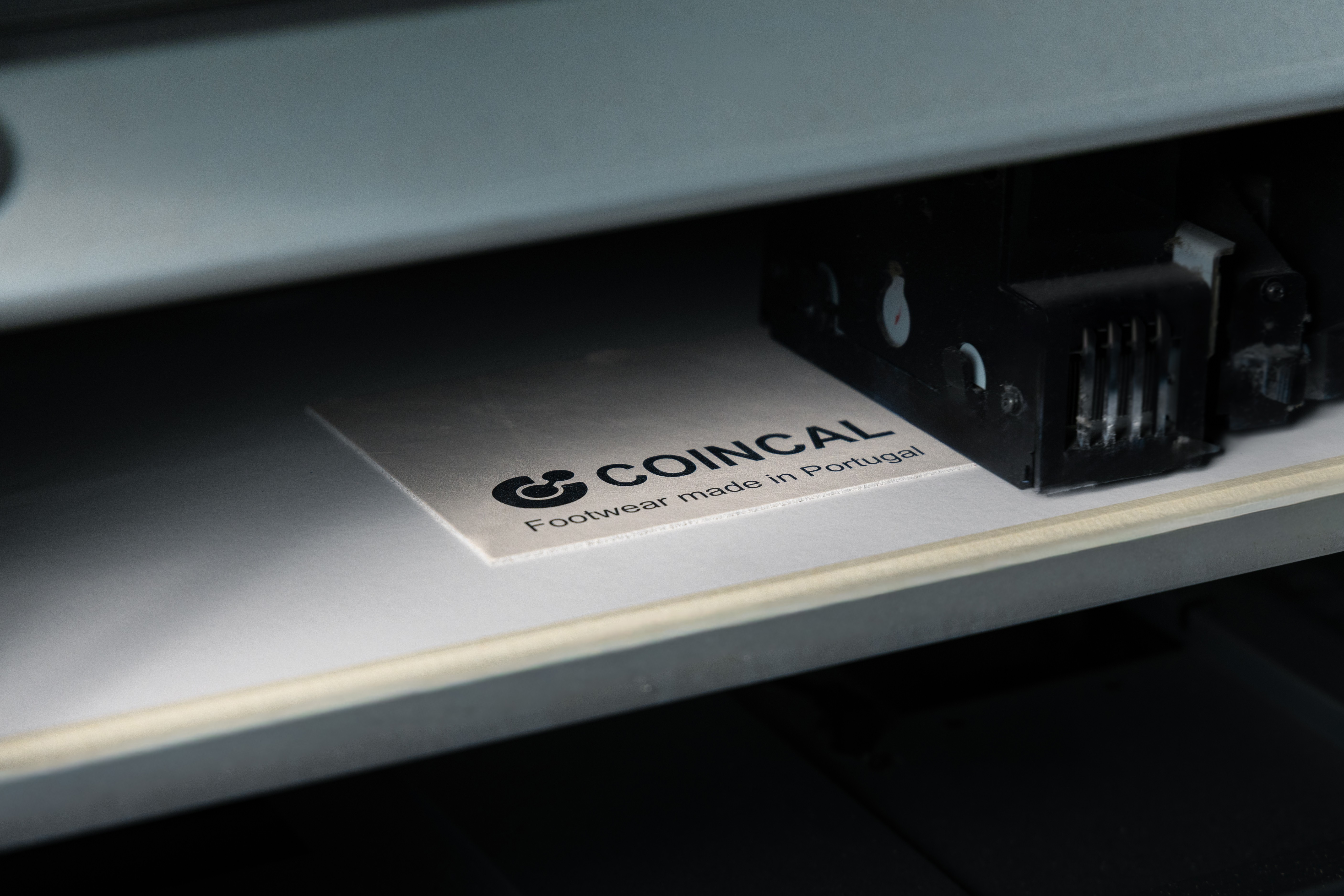
A logo is often the smallest element of a product, yet it carries the greatest responsibility. It represents the identity of a brand, communicates quality and becomes one of the most recognisable details of the finished shoe. Whether blind embossed, debossed, hot stamped or foil finished, logo application demands exceptional precision. Pressure, temperature, material behaviour and positioning must all work together to produce a clean, consistent and permanent result.
A logo is often the smallest element of a product, yet it carries the greatest responsibility. It represents the identity of a brand, communicates quality and becomes one of the most recognisable details of the finished shoe. Whether blind embossed, debossed, hot stamped or foil finished, logo application demands exceptional precision. Pressure, temperature, material behaviour and positioning must all work together to produce a clean, consistent and permanent result.
Wednesday, January 1, 2025
Written by
Coincal
Precision Stitched Into Every Detail
How embroidery transforms branding, decoration and identity into permanent features of every shoe.
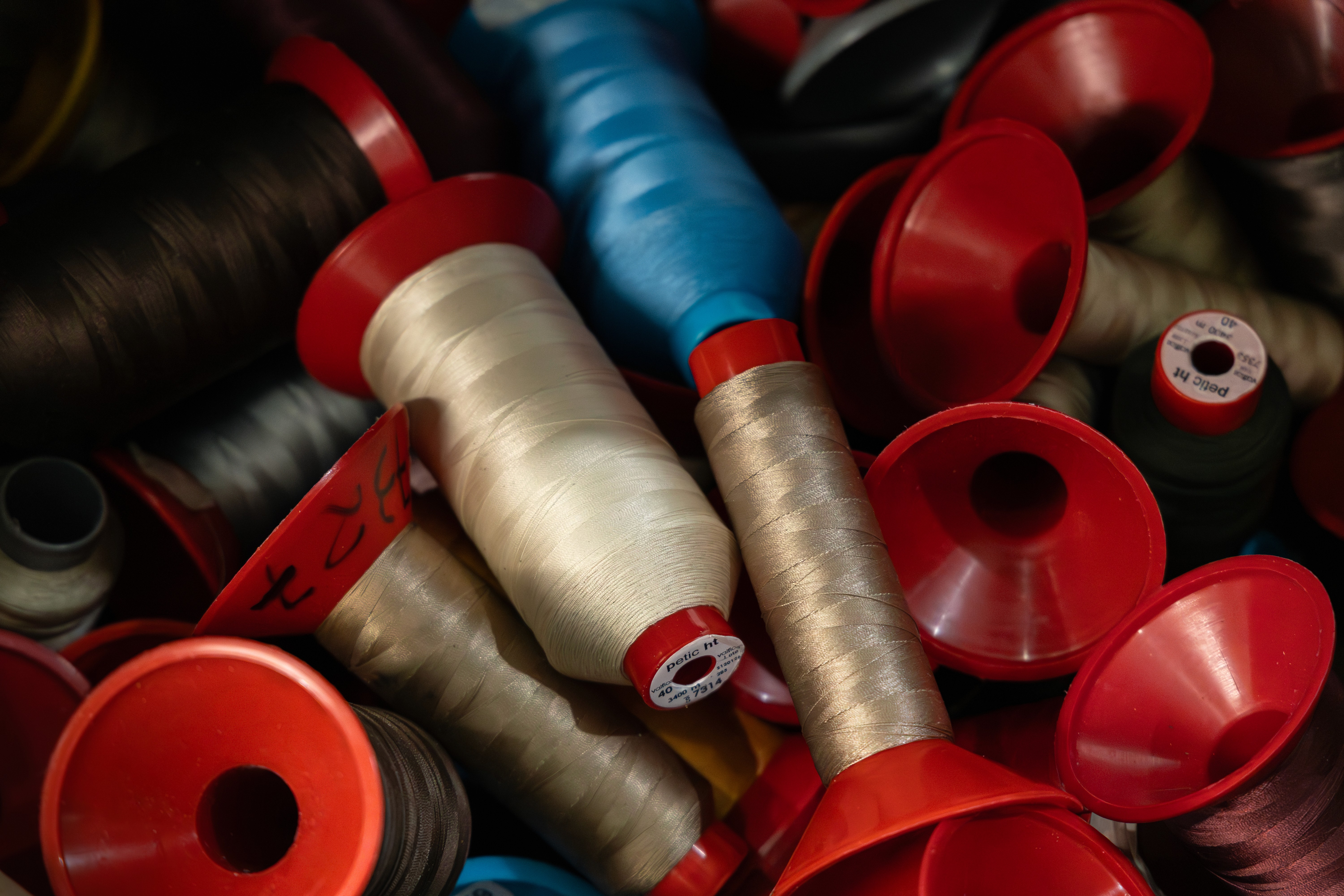
Embroidery is one of the most precise decorative processes in footwear manufacturing. Unlike printed graphics or applied embellishments, embroidery becomes physically integrated into the material through thousands of individual stitches. Every logo, monogram or decorative pattern must balance aesthetics, durability and production efficiency. The quality of the final result depends as much on digital preparation as it does on the precision of the embroidery machine itself.
Embroidery is one of the most precise decorative processes in footwear manufacturing. Unlike printed graphics or applied embellishments, embroidery becomes physically integrated into the material through thousands of individual stitches. Every logo, monogram or decorative pattern must balance aesthetics, durability and production efficiency. The quality of the final result depends as much on digital preparation as it does on the precision of the embroidery machine itself.

Thursday, December 19, 2024
Written by
Coincal
Where Hundreds of Components Become One Product
A closer look at the manufacturing process behind premium footwear.
A finished shoe appears singular: one silhouette, one colour story, one clear object. In production, it begins as a carefully organised field of separate parts. Upper panels, linings, reinforcements, threads, eyelets, insoles, outsoles, counters, toe puffs, labels and laces must arrive at the right workstation in the right condition. Assembly is the discipline of turning that complexity into unity without losing control of fit, proportion or finish.
A finished shoe appears singular: one silhouette, one colour story, one clear object. In production, it begins as a carefully organised field of separate parts. Upper panels, linings, reinforcements, threads, eyelets, insoles, outsoles, counters, toe puffs, labels and laces must arrive at the right workstation in the right condition. Assembly is the discipline of turning that complexity into unity without losing control of fit, proportion or finish.

Thursday, December 19, 2024
Written by
Coincal
Quality Without Compromise
Every product is carefully inspected through rigorous quality control to ensure flawless construction, consistency and long-lasting performance before leaving our facilities.
Quality control is where craftsmanship is verified rather than assumed. Every finished shoe is carefully inspected for construction, proportions, stitching accuracy, material consistency and finishing details before it leaves the factory. It is a meticulous process that combines trained human judgement with rigorous standards, ensuring every pair meets the expectations of the brands we work with. Excellence is not added at the end—it is confirmed through every inspection.
Quality control is where craftsmanship is verified rather than assumed. Every finished shoe is carefully inspected for construction, proportions, stitching accuracy, material consistency and finishing details before it leaves the factory. It is a meticulous process that combines trained human judgement with rigorous standards, ensuring every pair meets the expectations of the brands we work with. Excellence is not added at the end—it is confirmed through every inspection.
The Final Step Is Never Just Shipping
How quality control, finishing and logistics ensure every pair reaches customers exactly as intended.
The Final Step Is Never Just Shipping
Written by
DELIVER
When production ends, responsibility does not. The final days before dispatch determine how a collection will be experienced by warehouses, retailers and, ultimately, customers. Inspection, finishing, packing and logistics are not administrative tasks added after manufacturing; they are the closing stages of it. They protect the work already invested in every pair and ensure that the product arrives with the same clarity it had when it left the line.
A Deliberate Final Inspection
Final quality control begins with the specification agreed during development. Inspectors examine materials, stitching, symmetry, sole attachment, colour, sizing, branding and finish. Pairs are viewed together because consistency matters both within a pair and across the wider production batch. A technically sound left shoe is not acceptable if its shade or shape does not correspond to the right.
Inspection also considers use. Closures are operated, removable components checked and interiors reviewed for roughness or residue. Measurements may be verified against tolerances. The purpose is not to search for an abstract ideal, but to confirm that the manufactured object faithfully represents the approved standard.
Cleaning and Finishing
Production is physical. Adhesives, handling and machinery can leave small traces even in a controlled environment. Cleaning removes these signs without disturbing the material. Leather may be conditioned and brushed; suede carefully raised; edges retouched; hardware polished. Laces are arranged and tissue inserted to support the shape.
Finishing is restrained by design. The goal is not to disguise the natural character of a material, but to present it at its best. Overworked leather can lose depth, while aggressive cleaning can change colour or surface. Experienced finishers know when a pair is complete—and when further intervention would do more harm than good.
Packaging as Product Protection
Packaging has several jobs. It must protect the shoe from abrasion, compression, moisture and movement during transport. It must organise sizes and styles for efficient receiving. It must also deliver the brand’s intended first impression without creating unnecessary complexity.
Boxes, tissue, bags, labels and inserts are selected and tested as part of a system. The internal fit should hold the product securely without forcing it. External markings must remain legible through multiple logistics points. Carton quantities and dimensions affect both protection and freight efficiency. Thoughtful packaging is therefore part presentation, part engineering.
Consistency Across a Production Batch
A single beautiful sample is not the measure of manufacturing. The real test is whether the same standards remain visible across sizes, colours and repeated runs. Materials can vary, operators change shifts and environmental conditions move. Batch control establishes references and checkpoints that keep those variables within acceptable limits.
Records from inspection reveal patterns. If a recurring issue appears in one size or operation, the production team can trace it to pattern grading, equipment settings, material behaviour or handling. This transforms quality control from a final gate into a source of knowledge for the next order.
International Logistics
Exporting footwear requires accuracy long before a vehicle reaches the loading bay. Packing lists, commercial documentation, carton labels, country-of-origin information and shipment details must correspond. Different markets may have specific labelling or compliance requirements. Delivery windows must account for transport mode, customs procedures and the receiving schedule of the client.
The best logistics plan begins during production planning. Knowing the destination, launch date and distribution model helps determine packing sequence and dispatch priorities. Consolidated shipments may improve efficiency; split deliveries may support a phased launch. The right choice depends on the brand’s commercial reality, not on a standard formula.
Supporting Global Footwear Brands
For an international brand, a manufacturer is also a point of coordination. Product, packaging, timing and documentation converge before dispatch. Clear updates allow teams to plan photography, retail allocation, wholesale deliveries and e-commerce launches with greater confidence. When information is timely, logistics becomes less reactive and more strategic.
Partnership Beyond the Purchase Order
Long-term manufacturing relationships are built through memory. Feedback from one collection should inform the next: how a material performed, which tolerance needed refinement, where packaging could be simplified, how delivery timing aligned with the market. This accumulated context shortens future decisions and helps the product evolve without repeatedly starting from zero.
Continuous Improvement
After delivery, performance is reviewed. Returns, wear feedback, retailer comments and production observations can all reveal useful information. The aim is not to defend the previous process, but to improve the next one. Manufacturing maturity is visible in this willingness to learn from the full life of the product.
A pair is not finished when it leaves the line. It is finished when it arrives exactly as the brand intended.
Conclusion
Delivery closes the manufacturing cycle, but it also begins the next conversation. Careful inspection, considered packing and informed logistics protect both the product and the partnership behind it.
More articles
Where every great shoe begins
How ideas evolve into production-ready footwear through research, creative direction and technical expertise.
Where Every Impression Represents the Brand
How precision embossing transforms logos into permanent signatures of quality and craftsmanship.
Precision Stitched Into Every Detail
How embroidery transforms branding, decoration and identity into permanent features of every shoe.
Where Hundreds of Components Become One Product
A closer look at the manufacturing process behind premium footwear.
Quality Without Compromise
Every product is carefully inspected through rigorous quality control to ensure flawless construction, consistency and long-lasting performance before leaving our facilities.
The Final Step Is Never Just Shipping
How quality control, finishing and logistics ensure every pair reaches customers exactly as intended.
The Final Step Is Never Just Shipping
Written by
DELIVER
When production ends, responsibility does not. The final days before dispatch determine how a collection will be experienced by warehouses, retailers and, ultimately, customers. Inspection, finishing, packing and logistics are not administrative tasks added after manufacturing; they are the closing stages of it. They protect the work already invested in every pair and ensure that the product arrives with the same clarity it had when it left the line.
A Deliberate Final Inspection
Final quality control begins with the specification agreed during development. Inspectors examine materials, stitching, symmetry, sole attachment, colour, sizing, branding and finish. Pairs are viewed together because consistency matters both within a pair and across the wider production batch. A technically sound left shoe is not acceptable if its shade or shape does not correspond to the right.
Inspection also considers use. Closures are operated, removable components checked and interiors reviewed for roughness or residue. Measurements may be verified against tolerances. The purpose is not to search for an abstract ideal, but to confirm that the manufactured object faithfully represents the approved standard.
Cleaning and Finishing
Production is physical. Adhesives, handling and machinery can leave small traces even in a controlled environment. Cleaning removes these signs without disturbing the material. Leather may be conditioned and brushed; suede carefully raised; edges retouched; hardware polished. Laces are arranged and tissue inserted to support the shape.
Finishing is restrained by design. The goal is not to disguise the natural character of a material, but to present it at its best. Overworked leather can lose depth, while aggressive cleaning can change colour or surface. Experienced finishers know when a pair is complete—and when further intervention would do more harm than good.
Packaging as Product Protection
Packaging has several jobs. It must protect the shoe from abrasion, compression, moisture and movement during transport. It must organise sizes and styles for efficient receiving. It must also deliver the brand’s intended first impression without creating unnecessary complexity.
Boxes, tissue, bags, labels and inserts are selected and tested as part of a system. The internal fit should hold the product securely without forcing it. External markings must remain legible through multiple logistics points. Carton quantities and dimensions affect both protection and freight efficiency. Thoughtful packaging is therefore part presentation, part engineering.
Consistency Across a Production Batch
A single beautiful sample is not the measure of manufacturing. The real test is whether the same standards remain visible across sizes, colours and repeated runs. Materials can vary, operators change shifts and environmental conditions move. Batch control establishes references and checkpoints that keep those variables within acceptable limits.
Records from inspection reveal patterns. If a recurring issue appears in one size or operation, the production team can trace it to pattern grading, equipment settings, material behaviour or handling. This transforms quality control from a final gate into a source of knowledge for the next order.
International Logistics
Exporting footwear requires accuracy long before a vehicle reaches the loading bay. Packing lists, commercial documentation, carton labels, country-of-origin information and shipment details must correspond. Different markets may have specific labelling or compliance requirements. Delivery windows must account for transport mode, customs procedures and the receiving schedule of the client.
The best logistics plan begins during production planning. Knowing the destination, launch date and distribution model helps determine packing sequence and dispatch priorities. Consolidated shipments may improve efficiency; split deliveries may support a phased launch. The right choice depends on the brand’s commercial reality, not on a standard formula.
Supporting Global Footwear Brands
For an international brand, a manufacturer is also a point of coordination. Product, packaging, timing and documentation converge before dispatch. Clear updates allow teams to plan photography, retail allocation, wholesale deliveries and e-commerce launches with greater confidence. When information is timely, logistics becomes less reactive and more strategic.
Partnership Beyond the Purchase Order
Long-term manufacturing relationships are built through memory. Feedback from one collection should inform the next: how a material performed, which tolerance needed refinement, where packaging could be simplified, how delivery timing aligned with the market. This accumulated context shortens future decisions and helps the product evolve without repeatedly starting from zero.
Continuous Improvement
After delivery, performance is reviewed. Returns, wear feedback, retailer comments and production observations can all reveal useful information. The aim is not to defend the previous process, but to improve the next one. Manufacturing maturity is visible in this willingness to learn from the full life of the product.
A pair is not finished when it leaves the line. It is finished when it arrives exactly as the brand intended.
Conclusion
Delivery closes the manufacturing cycle, but it also begins the next conversation. Careful inspection, considered packing and informed logistics protect both the product and the partnership behind it.
More articles
Where every great shoe begins
How ideas evolve into production-ready footwear through research, creative direction and technical expertise.
Where Every Impression Represents the Brand
How precision embossing transforms logos into permanent signatures of quality and craftsmanship.
Precision Stitched Into Every Detail
How embroidery transforms branding, decoration and identity into permanent features of every shoe.
Where Hundreds of Components Become One Product
A closer look at the manufacturing process behind premium footwear.
Quality Without Compromise
Every product is carefully inspected through rigorous quality control to ensure flawless construction, consistency and long-lasting performance before leaving our facilities.

We transform brands.
Your success is next.
Start your footwear journey by speaking with our manufacturing experts.

The Final Step Is Never Just Shipping
How quality control, finishing and logistics ensure every pair reaches customers exactly as intended.
The Final Step Is Never Just Shipping
Written by
DELIVER
When production ends, responsibility does not. The final days before dispatch determine how a collection will be experienced by warehouses, retailers and, ultimately, customers. Inspection, finishing, packing and logistics are not administrative tasks added after manufacturing; they are the closing stages of it. They protect the work already invested in every pair and ensure that the product arrives with the same clarity it had when it left the line.
A Deliberate Final Inspection
Final quality control begins with the specification agreed during development. Inspectors examine materials, stitching, symmetry, sole attachment, colour, sizing, branding and finish. Pairs are viewed together because consistency matters both within a pair and across the wider production batch. A technically sound left shoe is not acceptable if its shade or shape does not correspond to the right.
Inspection also considers use. Closures are operated, removable components checked and interiors reviewed for roughness or residue. Measurements may be verified against tolerances. The purpose is not to search for an abstract ideal, but to confirm that the manufactured object faithfully represents the approved standard.
Cleaning and Finishing
Production is physical. Adhesives, handling and machinery can leave small traces even in a controlled environment. Cleaning removes these signs without disturbing the material. Leather may be conditioned and brushed; suede carefully raised; edges retouched; hardware polished. Laces are arranged and tissue inserted to support the shape.
Finishing is restrained by design. The goal is not to disguise the natural character of a material, but to present it at its best. Overworked leather can lose depth, while aggressive cleaning can change colour or surface. Experienced finishers know when a pair is complete—and when further intervention would do more harm than good.
Packaging as Product Protection
Packaging has several jobs. It must protect the shoe from abrasion, compression, moisture and movement during transport. It must organise sizes and styles for efficient receiving. It must also deliver the brand’s intended first impression without creating unnecessary complexity.
Boxes, tissue, bags, labels and inserts are selected and tested as part of a system. The internal fit should hold the product securely without forcing it. External markings must remain legible through multiple logistics points. Carton quantities and dimensions affect both protection and freight efficiency. Thoughtful packaging is therefore part presentation, part engineering.
Consistency Across a Production Batch
A single beautiful sample is not the measure of manufacturing. The real test is whether the same standards remain visible across sizes, colours and repeated runs. Materials can vary, operators change shifts and environmental conditions move. Batch control establishes references and checkpoints that keep those variables within acceptable limits.
Records from inspection reveal patterns. If a recurring issue appears in one size or operation, the production team can trace it to pattern grading, equipment settings, material behaviour or handling. This transforms quality control from a final gate into a source of knowledge for the next order.
International Logistics
Exporting footwear requires accuracy long before a vehicle reaches the loading bay. Packing lists, commercial documentation, carton labels, country-of-origin information and shipment details must correspond. Different markets may have specific labelling or compliance requirements. Delivery windows must account for transport mode, customs procedures and the receiving schedule of the client.
The best logistics plan begins during production planning. Knowing the destination, launch date and distribution model helps determine packing sequence and dispatch priorities. Consolidated shipments may improve efficiency; split deliveries may support a phased launch. The right choice depends on the brand’s commercial reality, not on a standard formula.
Supporting Global Footwear Brands
For an international brand, a manufacturer is also a point of coordination. Product, packaging, timing and documentation converge before dispatch. Clear updates allow teams to plan photography, retail allocation, wholesale deliveries and e-commerce launches with greater confidence. When information is timely, logistics becomes less reactive and more strategic.
Partnership Beyond the Purchase Order
Long-term manufacturing relationships are built through memory. Feedback from one collection should inform the next: how a material performed, which tolerance needed refinement, where packaging could be simplified, how delivery timing aligned with the market. This accumulated context shortens future decisions and helps the product evolve without repeatedly starting from zero.
Continuous Improvement
After delivery, performance is reviewed. Returns, wear feedback, retailer comments and production observations can all reveal useful information. The aim is not to defend the previous process, but to improve the next one. Manufacturing maturity is visible in this willingness to learn from the full life of the product.
A pair is not finished when it leaves the line. It is finished when it arrives exactly as the brand intended.
Conclusion
Delivery closes the manufacturing cycle, but it also begins the next conversation. Careful inspection, considered packing and informed logistics protect both the product and the partnership behind it.
More articles
Sunday, June 14, 2026
Written by
Coincal
Where every great shoe begins
How ideas evolve into production-ready footwear through research, creative direction and technical expertise.
Every successful footwear collection begins long before the first material is selected or the first sample is produced. It begins with an idea. Whether that idea arrives as a sketch, a moodboard or a fully developed concept, the design phase is where creative ambition meets the discipline of manufacturing. At Coincal, the purpose is not simply to draw an attractive shoe. It is to understand the brand behind it, the person who will wear it and the practical decisions that will allow the idea to become a convincing, producible object. This early alignment is especially important in footwear, where appearance, comfort and construction are inseparable. A line that gives a silhouette energy may change the pattern beneath it; a material chosen for softness may require hidden reinforcement; a sole selected for attitude will also determine weight and flex. Design becomes stronger when these consequences are welcomed from the beginning.
Every successful footwear collection begins long before the first material is selected or the first sample is produced. It begins with an idea. Whether that idea arrives as a sketch, a moodboard or a fully developed concept, the design phase is where creative ambition meets the discipline of manufacturing. At Coincal, the purpose is not simply to draw an attractive shoe. It is to understand the brand behind it, the person who will wear it and the practical decisions that will allow the idea to become a convincing, producible object. This early alignment is especially important in footwear, where appearance, comfort and construction are inseparable. A line that gives a silhouette energy may change the pattern beneath it; a material chosen for softness may require hidden reinforcement; a sole selected for attitude will also determine weight and flex. Design becomes stronger when these consequences are welcomed from the beginning.
Sunday, June 14, 2026
Written by
Coincal
Where Every Impression Represents the Brand
How precision embossing transforms logos into permanent signatures of quality and craftsmanship.
A logo is often the smallest element of a product, yet it carries the greatest responsibility. It represents the identity of a brand, communicates quality and becomes one of the most recognisable details of the finished shoe. Whether blind embossed, debossed, hot stamped or foil finished, logo application demands exceptional precision. Pressure, temperature, material behaviour and positioning must all work together to produce a clean, consistent and permanent result.
A logo is often the smallest element of a product, yet it carries the greatest responsibility. It represents the identity of a brand, communicates quality and becomes one of the most recognisable details of the finished shoe. Whether blind embossed, debossed, hot stamped or foil finished, logo application demands exceptional precision. Pressure, temperature, material behaviour and positioning must all work together to produce a clean, consistent and permanent result.
Wednesday, January 1, 2025
Written by
Coincal
Precision Stitched Into Every Detail
How embroidery transforms branding, decoration and identity into permanent features of every shoe.
Embroidery is one of the most precise decorative processes in footwear manufacturing. Unlike printed graphics or applied embellishments, embroidery becomes physically integrated into the material through thousands of individual stitches. Every logo, monogram or decorative pattern must balance aesthetics, durability and production efficiency. The quality of the final result depends as much on digital preparation as it does on the precision of the embroidery machine itself.
Embroidery is one of the most precise decorative processes in footwear manufacturing. Unlike printed graphics or applied embellishments, embroidery becomes physically integrated into the material through thousands of individual stitches. Every logo, monogram or decorative pattern must balance aesthetics, durability and production efficiency. The quality of the final result depends as much on digital preparation as it does on the precision of the embroidery machine itself.
Thursday, December 19, 2024
Written by
Coincal
Where Hundreds of Components Become One Product
A closer look at the manufacturing process behind premium footwear.
A finished shoe appears singular: one silhouette, one colour story, one clear object. In production, it begins as a carefully organised field of separate parts. Upper panels, linings, reinforcements, threads, eyelets, insoles, outsoles, counters, toe puffs, labels and laces must arrive at the right workstation in the right condition. Assembly is the discipline of turning that complexity into unity without losing control of fit, proportion or finish.
A finished shoe appears singular: one silhouette, one colour story, one clear object. In production, it begins as a carefully organised field of separate parts. Upper panels, linings, reinforcements, threads, eyelets, insoles, outsoles, counters, toe puffs, labels and laces must arrive at the right workstation in the right condition. Assembly is the discipline of turning that complexity into unity without losing control of fit, proportion or finish.
Thursday, December 19, 2024
Written by
Coincal
Quality Without Compromise
Every product is carefully inspected through rigorous quality control to ensure flawless construction, consistency and long-lasting performance before leaving our facilities.
Quality control is where craftsmanship is verified rather than assumed. Every finished shoe is carefully inspected for construction, proportions, stitching accuracy, material consistency and finishing details before it leaves the factory. It is a meticulous process that combines trained human judgement with rigorous standards, ensuring every pair meets the expectations of the brands we work with. Excellence is not added at the end—it is confirmed through every inspection.
Quality control is where craftsmanship is verified rather than assumed. Every finished shoe is carefully inspected for construction, proportions, stitching accuracy, material consistency and finishing details before it leaves the factory. It is a meticulous process that combines trained human judgement with rigorous standards, ensuring every pair meets the expectations of the brands we work with. Excellence is not added at the end—it is confirmed through every inspection.
The Final Step Is Never Just Shipping
How quality control, finishing and logistics ensure every pair reaches customers exactly as intended.
The Final Step Is Never Just Shipping
Written by
DELIVER
When production ends, responsibility does not. The final days before dispatch determine how a collection will be experienced by warehouses, retailers and, ultimately, customers. Inspection, finishing, packing and logistics are not administrative tasks added after manufacturing; they are the closing stages of it. They protect the work already invested in every pair and ensure that the product arrives with the same clarity it had when it left the line.
A Deliberate Final Inspection
Final quality control begins with the specification agreed during development. Inspectors examine materials, stitching, symmetry, sole attachment, colour, sizing, branding and finish. Pairs are viewed together because consistency matters both within a pair and across the wider production batch. A technically sound left shoe is not acceptable if its shade or shape does not correspond to the right.
Inspection also considers use. Closures are operated, removable components checked and interiors reviewed for roughness or residue. Measurements may be verified against tolerances. The purpose is not to search for an abstract ideal, but to confirm that the manufactured object faithfully represents the approved standard.
Cleaning and Finishing
Production is physical. Adhesives, handling and machinery can leave small traces even in a controlled environment. Cleaning removes these signs without disturbing the material. Leather may be conditioned and brushed; suede carefully raised; edges retouched; hardware polished. Laces are arranged and tissue inserted to support the shape.
Finishing is restrained by design. The goal is not to disguise the natural character of a material, but to present it at its best. Overworked leather can lose depth, while aggressive cleaning can change colour or surface. Experienced finishers know when a pair is complete—and when further intervention would do more harm than good.
Packaging as Product Protection
Packaging has several jobs. It must protect the shoe from abrasion, compression, moisture and movement during transport. It must organise sizes and styles for efficient receiving. It must also deliver the brand’s intended first impression without creating unnecessary complexity.
Boxes, tissue, bags, labels and inserts are selected and tested as part of a system. The internal fit should hold the product securely without forcing it. External markings must remain legible through multiple logistics points. Carton quantities and dimensions affect both protection and freight efficiency. Thoughtful packaging is therefore part presentation, part engineering.
Consistency Across a Production Batch
A single beautiful sample is not the measure of manufacturing. The real test is whether the same standards remain visible across sizes, colours and repeated runs. Materials can vary, operators change shifts and environmental conditions move. Batch control establishes references and checkpoints that keep those variables within acceptable limits.
Records from inspection reveal patterns. If a recurring issue appears in one size or operation, the production team can trace it to pattern grading, equipment settings, material behaviour or handling. This transforms quality control from a final gate into a source of knowledge for the next order.
International Logistics
Exporting footwear requires accuracy long before a vehicle reaches the loading bay. Packing lists, commercial documentation, carton labels, country-of-origin information and shipment details must correspond. Different markets may have specific labelling or compliance requirements. Delivery windows must account for transport mode, customs procedures and the receiving schedule of the client.
The best logistics plan begins during production planning. Knowing the destination, launch date and distribution model helps determine packing sequence and dispatch priorities. Consolidated shipments may improve efficiency; split deliveries may support a phased launch. The right choice depends on the brand’s commercial reality, not on a standard formula.
Supporting Global Footwear Brands
For an international brand, a manufacturer is also a point of coordination. Product, packaging, timing and documentation converge before dispatch. Clear updates allow teams to plan photography, retail allocation, wholesale deliveries and e-commerce launches with greater confidence. When information is timely, logistics becomes less reactive and more strategic.
Partnership Beyond the Purchase Order
Long-term manufacturing relationships are built through memory. Feedback from one collection should inform the next: how a material performed, which tolerance needed refinement, where packaging could be simplified, how delivery timing aligned with the market. This accumulated context shortens future decisions and helps the product evolve without repeatedly starting from zero.
Continuous Improvement
After delivery, performance is reviewed. Returns, wear feedback, retailer comments and production observations can all reveal useful information. The aim is not to defend the previous process, but to improve the next one. Manufacturing maturity is visible in this willingness to learn from the full life of the product.
A pair is not finished when it leaves the line. It is finished when it arrives exactly as the brand intended.
Conclusion
Delivery closes the manufacturing cycle, but it also begins the next conversation. Careful inspection, considered packing and informed logistics protect both the product and the partnership behind it.
More articles
Where every great shoe begins
How ideas evolve into production-ready footwear through research, creative direction and technical expertise.
Where Every Impression Represents the Brand
How precision embossing transforms logos into permanent signatures of quality and craftsmanship.
Precision Stitched Into Every Detail
How embroidery transforms branding, decoration and identity into permanent features of every shoe.
Where Hundreds of Components Become One Product
A closer look at the manufacturing process behind premium footwear.
Quality Without Compromise
Every product is carefully inspected through rigorous quality control to ensure flawless construction, consistency and long-lasting performance before leaving our facilities.
The Final Step Is Never Just Shipping
How quality control, finishing and logistics ensure every pair reaches customers exactly as intended.
The Final Step Is Never Just Shipping
Written by
DELIVER
When production ends, responsibility does not. The final days before dispatch determine how a collection will be experienced by warehouses, retailers and, ultimately, customers. Inspection, finishing, packing and logistics are not administrative tasks added after manufacturing; they are the closing stages of it. They protect the work already invested in every pair and ensure that the product arrives with the same clarity it had when it left the line.
A Deliberate Final Inspection
Final quality control begins with the specification agreed during development. Inspectors examine materials, stitching, symmetry, sole attachment, colour, sizing, branding and finish. Pairs are viewed together because consistency matters both within a pair and across the wider production batch. A technically sound left shoe is not acceptable if its shade or shape does not correspond to the right.
Inspection also considers use. Closures are operated, removable components checked and interiors reviewed for roughness or residue. Measurements may be verified against tolerances. The purpose is not to search for an abstract ideal, but to confirm that the manufactured object faithfully represents the approved standard.
Cleaning and Finishing
Production is physical. Adhesives, handling and machinery can leave small traces even in a controlled environment. Cleaning removes these signs without disturbing the material. Leather may be conditioned and brushed; suede carefully raised; edges retouched; hardware polished. Laces are arranged and tissue inserted to support the shape.
Finishing is restrained by design. The goal is not to disguise the natural character of a material, but to present it at its best. Overworked leather can lose depth, while aggressive cleaning can change colour or surface. Experienced finishers know when a pair is complete—and when further intervention would do more harm than good.
Packaging as Product Protection
Packaging has several jobs. It must protect the shoe from abrasion, compression, moisture and movement during transport. It must organise sizes and styles for efficient receiving. It must also deliver the brand’s intended first impression without creating unnecessary complexity.
Boxes, tissue, bags, labels and inserts are selected and tested as part of a system. The internal fit should hold the product securely without forcing it. External markings must remain legible through multiple logistics points. Carton quantities and dimensions affect both protection and freight efficiency. Thoughtful packaging is therefore part presentation, part engineering.
Consistency Across a Production Batch
A single beautiful sample is not the measure of manufacturing. The real test is whether the same standards remain visible across sizes, colours and repeated runs. Materials can vary, operators change shifts and environmental conditions move. Batch control establishes references and checkpoints that keep those variables within acceptable limits.
Records from inspection reveal patterns. If a recurring issue appears in one size or operation, the production team can trace it to pattern grading, equipment settings, material behaviour or handling. This transforms quality control from a final gate into a source of knowledge for the next order.
International Logistics
Exporting footwear requires accuracy long before a vehicle reaches the loading bay. Packing lists, commercial documentation, carton labels, country-of-origin information and shipment details must correspond. Different markets may have specific labelling or compliance requirements. Delivery windows must account for transport mode, customs procedures and the receiving schedule of the client.
The best logistics plan begins during production planning. Knowing the destination, launch date and distribution model helps determine packing sequence and dispatch priorities. Consolidated shipments may improve efficiency; split deliveries may support a phased launch. The right choice depends on the brand’s commercial reality, not on a standard formula.
Supporting Global Footwear Brands
For an international brand, a manufacturer is also a point of coordination. Product, packaging, timing and documentation converge before dispatch. Clear updates allow teams to plan photography, retail allocation, wholesale deliveries and e-commerce launches with greater confidence. When information is timely, logistics becomes less reactive and more strategic.
Partnership Beyond the Purchase Order
Long-term manufacturing relationships are built through memory. Feedback from one collection should inform the next: how a material performed, which tolerance needed refinement, where packaging could be simplified, how delivery timing aligned with the market. This accumulated context shortens future decisions and helps the product evolve without repeatedly starting from zero.
Continuous Improvement
After delivery, performance is reviewed. Returns, wear feedback, retailer comments and production observations can all reveal useful information. The aim is not to defend the previous process, but to improve the next one. Manufacturing maturity is visible in this willingness to learn from the full life of the product.
A pair is not finished when it leaves the line. It is finished when it arrives exactly as the brand intended.
Conclusion
Delivery closes the manufacturing cycle, but it also begins the next conversation. Careful inspection, considered packing and informed logistics protect both the product and the partnership behind it.
More articles
Where every great shoe begins
How ideas evolve into production-ready footwear through research, creative direction and technical expertise.
Where Every Impression Represents the Brand
How precision embossing transforms logos into permanent signatures of quality and craftsmanship.
Precision Stitched Into Every Detail
How embroidery transforms branding, decoration and identity into permanent features of every shoe.
Where Hundreds of Components Become One Product
A closer look at the manufacturing process behind premium footwear.
Quality Without Compromise
Every product is carefully inspected through rigorous quality control to ensure flawless construction, consistency and long-lasting performance before leaving our facilities.
We transform brands.
Your success is next.
Start your footwear journey by speaking with our manufacturing experts.
The Final Step Is Never Just Shipping
How quality control, finishing and logistics ensure every pair reaches customers exactly as intended.
The Final Step Is Never Just Shipping
Written by
DELIVER
When production ends, responsibility does not. The final days before dispatch determine how a collection will be experienced by warehouses, retailers and, ultimately, customers. Inspection, finishing, packing and logistics are not administrative tasks added after manufacturing; they are the closing stages of it. They protect the work already invested in every pair and ensure that the product arrives with the same clarity it had when it left the line.
A Deliberate Final Inspection
Final quality control begins with the specification agreed during development. Inspectors examine materials, stitching, symmetry, sole attachment, colour, sizing, branding and finish. Pairs are viewed together because consistency matters both within a pair and across the wider production batch. A technically sound left shoe is not acceptable if its shade or shape does not correspond to the right.
Inspection also considers use. Closures are operated, removable components checked and interiors reviewed for roughness or residue. Measurements may be verified against tolerances. The purpose is not to search for an abstract ideal, but to confirm that the manufactured object faithfully represents the approved standard.
Cleaning and Finishing
Production is physical. Adhesives, handling and machinery can leave small traces even in a controlled environment. Cleaning removes these signs without disturbing the material. Leather may be conditioned and brushed; suede carefully raised; edges retouched; hardware polished. Laces are arranged and tissue inserted to support the shape.
Finishing is restrained by design. The goal is not to disguise the natural character of a material, but to present it at its best. Overworked leather can lose depth, while aggressive cleaning can change colour or surface. Experienced finishers know when a pair is complete—and when further intervention would do more harm than good.
Packaging as Product Protection
Packaging has several jobs. It must protect the shoe from abrasion, compression, moisture and movement during transport. It must organise sizes and styles for efficient receiving. It must also deliver the brand’s intended first impression without creating unnecessary complexity.
Boxes, tissue, bags, labels and inserts are selected and tested as part of a system. The internal fit should hold the product securely without forcing it. External markings must remain legible through multiple logistics points. Carton quantities and dimensions affect both protection and freight efficiency. Thoughtful packaging is therefore part presentation, part engineering.
Consistency Across a Production Batch
A single beautiful sample is not the measure of manufacturing. The real test is whether the same standards remain visible across sizes, colours and repeated runs. Materials can vary, operators change shifts and environmental conditions move. Batch control establishes references and checkpoints that keep those variables within acceptable limits.
Records from inspection reveal patterns. If a recurring issue appears in one size or operation, the production team can trace it to pattern grading, equipment settings, material behaviour or handling. This transforms quality control from a final gate into a source of knowledge for the next order.
International Logistics
Exporting footwear requires accuracy long before a vehicle reaches the loading bay. Packing lists, commercial documentation, carton labels, country-of-origin information and shipment details must correspond. Different markets may have specific labelling or compliance requirements. Delivery windows must account for transport mode, customs procedures and the receiving schedule of the client.
The best logistics plan begins during production planning. Knowing the destination, launch date and distribution model helps determine packing sequence and dispatch priorities. Consolidated shipments may improve efficiency; split deliveries may support a phased launch. The right choice depends on the brand’s commercial reality, not on a standard formula.
Supporting Global Footwear Brands
For an international brand, a manufacturer is also a point of coordination. Product, packaging, timing and documentation converge before dispatch. Clear updates allow teams to plan photography, retail allocation, wholesale deliveries and e-commerce launches with greater confidence. When information is timely, logistics becomes less reactive and more strategic.
Partnership Beyond the Purchase Order
Long-term manufacturing relationships are built through memory. Feedback from one collection should inform the next: how a material performed, which tolerance needed refinement, where packaging could be simplified, how delivery timing aligned with the market. This accumulated context shortens future decisions and helps the product evolve without repeatedly starting from zero.
Continuous Improvement
After delivery, performance is reviewed. Returns, wear feedback, retailer comments and production observations can all reveal useful information. The aim is not to defend the previous process, but to improve the next one. Manufacturing maturity is visible in this willingness to learn from the full life of the product.
A pair is not finished when it leaves the line. It is finished when it arrives exactly as the brand intended.
Conclusion
Delivery closes the manufacturing cycle, but it also begins the next conversation. Careful inspection, considered packing and informed logistics protect both the product and the partnership behind it.
More articles
Sunday, June 14, 2026
Written by
Coincal
Where every great shoe begins
How ideas evolve into production-ready footwear through research, creative direction and technical expertise.
Every successful footwear collection begins long before the first material is selected or the first sample is produced. It begins with an idea. Whether that idea arrives as a sketch, a moodboard or a fully developed concept, the design phase is where creative ambition meets the discipline of manufacturing. At Coincal, the purpose is not simply to draw an attractive shoe. It is to understand the brand behind it, the person who will wear it and the practical decisions that will allow the idea to become a convincing, producible object. This early alignment is especially important in footwear, where appearance, comfort and construction are inseparable. A line that gives a silhouette energy may change the pattern beneath it; a material chosen for softness may require hidden reinforcement; a sole selected for attitude will also determine weight and flex. Design becomes stronger when these consequences are welcomed from the beginning.
Every successful footwear collection begins long before the first material is selected or the first sample is produced. It begins with an idea. Whether that idea arrives as a sketch, a moodboard or a fully developed concept, the design phase is where creative ambition meets the discipline of manufacturing. At Coincal, the purpose is not simply to draw an attractive shoe. It is to understand the brand behind it, the person who will wear it and the practical decisions that will allow the idea to become a convincing, producible object. This early alignment is especially important in footwear, where appearance, comfort and construction are inseparable. A line that gives a silhouette energy may change the pattern beneath it; a material chosen for softness may require hidden reinforcement; a sole selected for attitude will also determine weight and flex. Design becomes stronger when these consequences are welcomed from the beginning.
Sunday, June 14, 2026
Written by
Coincal
Where Every Impression Represents the Brand
How precision embossing transforms logos into permanent signatures of quality and craftsmanship.
A logo is often the smallest element of a product, yet it carries the greatest responsibility. It represents the identity of a brand, communicates quality and becomes one of the most recognisable details of the finished shoe. Whether blind embossed, debossed, hot stamped or foil finished, logo application demands exceptional precision. Pressure, temperature, material behaviour and positioning must all work together to produce a clean, consistent and permanent result.
A logo is often the smallest element of a product, yet it carries the greatest responsibility. It represents the identity of a brand, communicates quality and becomes one of the most recognisable details of the finished shoe. Whether blind embossed, debossed, hot stamped or foil finished, logo application demands exceptional precision. Pressure, temperature, material behaviour and positioning must all work together to produce a clean, consistent and permanent result.
Wednesday, January 1, 2025
Written by
Coincal
Precision Stitched Into Every Detail
How embroidery transforms branding, decoration and identity into permanent features of every shoe.
Embroidery is one of the most precise decorative processes in footwear manufacturing. Unlike printed graphics or applied embellishments, embroidery becomes physically integrated into the material through thousands of individual stitches. Every logo, monogram or decorative pattern must balance aesthetics, durability and production efficiency. The quality of the final result depends as much on digital preparation as it does on the precision of the embroidery machine itself.
Embroidery is one of the most precise decorative processes in footwear manufacturing. Unlike printed graphics or applied embellishments, embroidery becomes physically integrated into the material through thousands of individual stitches. Every logo, monogram or decorative pattern must balance aesthetics, durability and production efficiency. The quality of the final result depends as much on digital preparation as it does on the precision of the embroidery machine itself.
Thursday, December 19, 2024
Written by
Coincal
Where Hundreds of Components Become One Product
A closer look at the manufacturing process behind premium footwear.
A finished shoe appears singular: one silhouette, one colour story, one clear object. In production, it begins as a carefully organised field of separate parts. Upper panels, linings, reinforcements, threads, eyelets, insoles, outsoles, counters, toe puffs, labels and laces must arrive at the right workstation in the right condition. Assembly is the discipline of turning that complexity into unity without losing control of fit, proportion or finish.
A finished shoe appears singular: one silhouette, one colour story, one clear object. In production, it begins as a carefully organised field of separate parts. Upper panels, linings, reinforcements, threads, eyelets, insoles, outsoles, counters, toe puffs, labels and laces must arrive at the right workstation in the right condition. Assembly is the discipline of turning that complexity into unity without losing control of fit, proportion or finish.
Thursday, December 19, 2024
Written by
Coincal
Quality Without Compromise
Every product is carefully inspected through rigorous quality control to ensure flawless construction, consistency and long-lasting performance before leaving our facilities.
Quality control is where craftsmanship is verified rather than assumed. Every finished shoe is carefully inspected for construction, proportions, stitching accuracy, material consistency and finishing details before it leaves the factory. It is a meticulous process that combines trained human judgement with rigorous standards, ensuring every pair meets the expectations of the brands we work with. Excellence is not added at the end—it is confirmed through every inspection.
Quality control is where craftsmanship is verified rather than assumed. Every finished shoe is carefully inspected for construction, proportions, stitching accuracy, material consistency and finishing details before it leaves the factory. It is a meticulous process that combines trained human judgement with rigorous standards, ensuring every pair meets the expectations of the brands we work with. Excellence is not added at the end—it is confirmed through every inspection.
The Final Step Is Never Just Shipping
How quality control, finishing and logistics ensure every pair reaches customers exactly as intended.
The Final Step Is Never Just Shipping
Written by
DELIVER
When production ends, responsibility does not. The final days before dispatch determine how a collection will be experienced by warehouses, retailers and, ultimately, customers. Inspection, finishing, packing and logistics are not administrative tasks added after manufacturing; they are the closing stages of it. They protect the work already invested in every pair and ensure that the product arrives with the same clarity it had when it left the line.
A Deliberate Final Inspection
Final quality control begins with the specification agreed during development. Inspectors examine materials, stitching, symmetry, sole attachment, colour, sizing, branding and finish. Pairs are viewed together because consistency matters both within a pair and across the wider production batch. A technically sound left shoe is not acceptable if its shade or shape does not correspond to the right.
Inspection also considers use. Closures are operated, removable components checked and interiors reviewed for roughness or residue. Measurements may be verified against tolerances. The purpose is not to search for an abstract ideal, but to confirm that the manufactured object faithfully represents the approved standard.
Cleaning and Finishing
Production is physical. Adhesives, handling and machinery can leave small traces even in a controlled environment. Cleaning removes these signs without disturbing the material. Leather may be conditioned and brushed; suede carefully raised; edges retouched; hardware polished. Laces are arranged and tissue inserted to support the shape.
Finishing is restrained by design. The goal is not to disguise the natural character of a material, but to present it at its best. Overworked leather can lose depth, while aggressive cleaning can change colour or surface. Experienced finishers know when a pair is complete—and when further intervention would do more harm than good.
Packaging as Product Protection
Packaging has several jobs. It must protect the shoe from abrasion, compression, moisture and movement during transport. It must organise sizes and styles for efficient receiving. It must also deliver the brand’s intended first impression without creating unnecessary complexity.
Boxes, tissue, bags, labels and inserts are selected and tested as part of a system. The internal fit should hold the product securely without forcing it. External markings must remain legible through multiple logistics points. Carton quantities and dimensions affect both protection and freight efficiency. Thoughtful packaging is therefore part presentation, part engineering.
Consistency Across a Production Batch
A single beautiful sample is not the measure of manufacturing. The real test is whether the same standards remain visible across sizes, colours and repeated runs. Materials can vary, operators change shifts and environmental conditions move. Batch control establishes references and checkpoints that keep those variables within acceptable limits.
Records from inspection reveal patterns. If a recurring issue appears in one size or operation, the production team can trace it to pattern grading, equipment settings, material behaviour or handling. This transforms quality control from a final gate into a source of knowledge for the next order.
International Logistics
Exporting footwear requires accuracy long before a vehicle reaches the loading bay. Packing lists, commercial documentation, carton labels, country-of-origin information and shipment details must correspond. Different markets may have specific labelling or compliance requirements. Delivery windows must account for transport mode, customs procedures and the receiving schedule of the client.
The best logistics plan begins during production planning. Knowing the destination, launch date and distribution model helps determine packing sequence and dispatch priorities. Consolidated shipments may improve efficiency; split deliveries may support a phased launch. The right choice depends on the brand’s commercial reality, not on a standard formula.
Supporting Global Footwear Brands
For an international brand, a manufacturer is also a point of coordination. Product, packaging, timing and documentation converge before dispatch. Clear updates allow teams to plan photography, retail allocation, wholesale deliveries and e-commerce launches with greater confidence. When information is timely, logistics becomes less reactive and more strategic.
Partnership Beyond the Purchase Order
Long-term manufacturing relationships are built through memory. Feedback from one collection should inform the next: how a material performed, which tolerance needed refinement, where packaging could be simplified, how delivery timing aligned with the market. This accumulated context shortens future decisions and helps the product evolve without repeatedly starting from zero.
Continuous Improvement
After delivery, performance is reviewed. Returns, wear feedback, retailer comments and production observations can all reveal useful information. The aim is not to defend the previous process, but to improve the next one. Manufacturing maturity is visible in this willingness to learn from the full life of the product.
A pair is not finished when it leaves the line. It is finished when it arrives exactly as the brand intended.
Conclusion
Delivery closes the manufacturing cycle, but it also begins the next conversation. Careful inspection, considered packing and informed logistics protect both the product and the partnership behind it.
More articles
Where every great shoe begins
How ideas evolve into production-ready footwear through research, creative direction and technical expertise.
Where Every Impression Represents the Brand
How precision embossing transforms logos into permanent signatures of quality and craftsmanship.
Precision Stitched Into Every Detail
How embroidery transforms branding, decoration and identity into permanent features of every shoe.
Where Hundreds of Components Become One Product
A closer look at the manufacturing process behind premium footwear.
Quality Without Compromise
Every product is carefully inspected through rigorous quality control to ensure flawless construction, consistency and long-lasting performance before leaving our facilities.
The Final Step Is Never Just Shipping
How quality control, finishing and logistics ensure every pair reaches customers exactly as intended.
The Final Step Is Never Just Shipping
Written by
DELIVER
When production ends, responsibility does not. The final days before dispatch determine how a collection will be experienced by warehouses, retailers and, ultimately, customers. Inspection, finishing, packing and logistics are not administrative tasks added after manufacturing; they are the closing stages of it. They protect the work already invested in every pair and ensure that the product arrives with the same clarity it had when it left the line.
A Deliberate Final Inspection
Final quality control begins with the specification agreed during development. Inspectors examine materials, stitching, symmetry, sole attachment, colour, sizing, branding and finish. Pairs are viewed together because consistency matters both within a pair and across the wider production batch. A technically sound left shoe is not acceptable if its shade or shape does not correspond to the right.
Inspection also considers use. Closures are operated, removable components checked and interiors reviewed for roughness or residue. Measurements may be verified against tolerances. The purpose is not to search for an abstract ideal, but to confirm that the manufactured object faithfully represents the approved standard.
Cleaning and Finishing
Production is physical. Adhesives, handling and machinery can leave small traces even in a controlled environment. Cleaning removes these signs without disturbing the material. Leather may be conditioned and brushed; suede carefully raised; edges retouched; hardware polished. Laces are arranged and tissue inserted to support the shape.
Finishing is restrained by design. The goal is not to disguise the natural character of a material, but to present it at its best. Overworked leather can lose depth, while aggressive cleaning can change colour or surface. Experienced finishers know when a pair is complete—and when further intervention would do more harm than good.
Packaging as Product Protection
Packaging has several jobs. It must protect the shoe from abrasion, compression, moisture and movement during transport. It must organise sizes and styles for efficient receiving. It must also deliver the brand’s intended first impression without creating unnecessary complexity.
Boxes, tissue, bags, labels and inserts are selected and tested as part of a system. The internal fit should hold the product securely without forcing it. External markings must remain legible through multiple logistics points. Carton quantities and dimensions affect both protection and freight efficiency. Thoughtful packaging is therefore part presentation, part engineering.
Consistency Across a Production Batch
A single beautiful sample is not the measure of manufacturing. The real test is whether the same standards remain visible across sizes, colours and repeated runs. Materials can vary, operators change shifts and environmental conditions move. Batch control establishes references and checkpoints that keep those variables within acceptable limits.
Records from inspection reveal patterns. If a recurring issue appears in one size or operation, the production team can trace it to pattern grading, equipment settings, material behaviour or handling. This transforms quality control from a final gate into a source of knowledge for the next order.
International Logistics
Exporting footwear requires accuracy long before a vehicle reaches the loading bay. Packing lists, commercial documentation, carton labels, country-of-origin information and shipment details must correspond. Different markets may have specific labelling or compliance requirements. Delivery windows must account for transport mode, customs procedures and the receiving schedule of the client.
The best logistics plan begins during production planning. Knowing the destination, launch date and distribution model helps determine packing sequence and dispatch priorities. Consolidated shipments may improve efficiency; split deliveries may support a phased launch. The right choice depends on the brand’s commercial reality, not on a standard formula.
Supporting Global Footwear Brands
For an international brand, a manufacturer is also a point of coordination. Product, packaging, timing and documentation converge before dispatch. Clear updates allow teams to plan photography, retail allocation, wholesale deliveries and e-commerce launches with greater confidence. When information is timely, logistics becomes less reactive and more strategic.
Partnership Beyond the Purchase Order
Long-term manufacturing relationships are built through memory. Feedback from one collection should inform the next: how a material performed, which tolerance needed refinement, where packaging could be simplified, how delivery timing aligned with the market. This accumulated context shortens future decisions and helps the product evolve without repeatedly starting from zero.
Continuous Improvement
After delivery, performance is reviewed. Returns, wear feedback, retailer comments and production observations can all reveal useful information. The aim is not to defend the previous process, but to improve the next one. Manufacturing maturity is visible in this willingness to learn from the full life of the product.
A pair is not finished when it leaves the line. It is finished when it arrives exactly as the brand intended.
Conclusion
Delivery closes the manufacturing cycle, but it also begins the next conversation. Careful inspection, considered packing and informed logistics protect both the product and the partnership behind it.
More articles
Where every great shoe begins
How ideas evolve into production-ready footwear through research, creative direction and technical expertise.
Where Every Impression Represents the Brand
How precision embossing transforms logos into permanent signatures of quality and craftsmanship.
Precision Stitched Into Every Detail
How embroidery transforms branding, decoration and identity into permanent features of every shoe.
Where Hundreds of Components Become One Product
A closer look at the manufacturing process behind premium footwear.
Quality Without Compromise
Every product is carefully inspected through rigorous quality control to ensure flawless construction, consistency and long-lasting performance before leaving our facilities.
We transform brands.
Your success is next.
Start your footwear journey by speaking with our manufacturing experts.
The Final Step Is Never Just Shipping
How quality control, finishing and logistics ensure every pair reaches customers exactly as intended.
The Final Step Is Never Just Shipping
Written by
DELIVER
When production ends, responsibility does not. The final days before dispatch determine how a collection will be experienced by warehouses, retailers and, ultimately, customers. Inspection, finishing, packing and logistics are not administrative tasks added after manufacturing; they are the closing stages of it. They protect the work already invested in every pair and ensure that the product arrives with the same clarity it had when it left the line.
A Deliberate Final Inspection
Final quality control begins with the specification agreed during development. Inspectors examine materials, stitching, symmetry, sole attachment, colour, sizing, branding and finish. Pairs are viewed together because consistency matters both within a pair and across the wider production batch. A technically sound left shoe is not acceptable if its shade or shape does not correspond to the right.
Inspection also considers use. Closures are operated, removable components checked and interiors reviewed for roughness or residue. Measurements may be verified against tolerances. The purpose is not to search for an abstract ideal, but to confirm that the manufactured object faithfully represents the approved standard.
Cleaning and Finishing
Production is physical. Adhesives, handling and machinery can leave small traces even in a controlled environment. Cleaning removes these signs without disturbing the material. Leather may be conditioned and brushed; suede carefully raised; edges retouched; hardware polished. Laces are arranged and tissue inserted to support the shape.
Finishing is restrained by design. The goal is not to disguise the natural character of a material, but to present it at its best. Overworked leather can lose depth, while aggressive cleaning can change colour or surface. Experienced finishers know when a pair is complete—and when further intervention would do more harm than good.
Packaging as Product Protection
Packaging has several jobs. It must protect the shoe from abrasion, compression, moisture and movement during transport. It must organise sizes and styles for efficient receiving. It must also deliver the brand’s intended first impression without creating unnecessary complexity.
Boxes, tissue, bags, labels and inserts are selected and tested as part of a system. The internal fit should hold the product securely without forcing it. External markings must remain legible through multiple logistics points. Carton quantities and dimensions affect both protection and freight efficiency. Thoughtful packaging is therefore part presentation, part engineering.
Consistency Across a Production Batch
A single beautiful sample is not the measure of manufacturing. The real test is whether the same standards remain visible across sizes, colours and repeated runs. Materials can vary, operators change shifts and environmental conditions move. Batch control establishes references and checkpoints that keep those variables within acceptable limits.
Records from inspection reveal patterns. If a recurring issue appears in one size or operation, the production team can trace it to pattern grading, equipment settings, material behaviour or handling. This transforms quality control from a final gate into a source of knowledge for the next order.
International Logistics
Exporting footwear requires accuracy long before a vehicle reaches the loading bay. Packing lists, commercial documentation, carton labels, country-of-origin information and shipment details must correspond. Different markets may have specific labelling or compliance requirements. Delivery windows must account for transport mode, customs procedures and the receiving schedule of the client.
The best logistics plan begins during production planning. Knowing the destination, launch date and distribution model helps determine packing sequence and dispatch priorities. Consolidated shipments may improve efficiency; split deliveries may support a phased launch. The right choice depends on the brand’s commercial reality, not on a standard formula.
Supporting Global Footwear Brands
For an international brand, a manufacturer is also a point of coordination. Product, packaging, timing and documentation converge before dispatch. Clear updates allow teams to plan photography, retail allocation, wholesale deliveries and e-commerce launches with greater confidence. When information is timely, logistics becomes less reactive and more strategic.
Partnership Beyond the Purchase Order
Long-term manufacturing relationships are built through memory. Feedback from one collection should inform the next: how a material performed, which tolerance needed refinement, where packaging could be simplified, how delivery timing aligned with the market. This accumulated context shortens future decisions and helps the product evolve without repeatedly starting from zero.
Continuous Improvement
After delivery, performance is reviewed. Returns, wear feedback, retailer comments and production observations can all reveal useful information. The aim is not to defend the previous process, but to improve the next one. Manufacturing maturity is visible in this willingness to learn from the full life of the product.
A pair is not finished when it leaves the line. It is finished when it arrives exactly as the brand intended.
Conclusion
Delivery closes the manufacturing cycle, but it also begins the next conversation. Careful inspection, considered packing and informed logistics protect both the product and the partnership behind it.
More articles
Sunday, June 14, 2026
Written by
Coincal
Where every great shoe begins
How ideas evolve into production-ready footwear through research, creative direction and technical expertise.
Every successful footwear collection begins long before the first material is selected or the first sample is produced. It begins with an idea. Whether that idea arrives as a sketch, a moodboard or a fully developed concept, the design phase is where creative ambition meets the discipline of manufacturing. At Coincal, the purpose is not simply to draw an attractive shoe. It is to understand the brand behind it, the person who will wear it and the practical decisions that will allow the idea to become a convincing, producible object. This early alignment is especially important in footwear, where appearance, comfort and construction are inseparable. A line that gives a silhouette energy may change the pattern beneath it; a material chosen for softness may require hidden reinforcement; a sole selected for attitude will also determine weight and flex. Design becomes stronger when these consequences are welcomed from the beginning.
Every successful footwear collection begins long before the first material is selected or the first sample is produced. It begins with an idea. Whether that idea arrives as a sketch, a moodboard or a fully developed concept, the design phase is where creative ambition meets the discipline of manufacturing. At Coincal, the purpose is not simply to draw an attractive shoe. It is to understand the brand behind it, the person who will wear it and the practical decisions that will allow the idea to become a convincing, producible object. This early alignment is especially important in footwear, where appearance, comfort and construction are inseparable. A line that gives a silhouette energy may change the pattern beneath it; a material chosen for softness may require hidden reinforcement; a sole selected for attitude will also determine weight and flex. Design becomes stronger when these consequences are welcomed from the beginning.
Sunday, June 14, 2026
Written by
Coincal
Where Every Impression Represents the Brand
How precision embossing transforms logos into permanent signatures of quality and craftsmanship.
A logo is often the smallest element of a product, yet it carries the greatest responsibility. It represents the identity of a brand, communicates quality and becomes one of the most recognisable details of the finished shoe. Whether blind embossed, debossed, hot stamped or foil finished, logo application demands exceptional precision. Pressure, temperature, material behaviour and positioning must all work together to produce a clean, consistent and permanent result.
A logo is often the smallest element of a product, yet it carries the greatest responsibility. It represents the identity of a brand, communicates quality and becomes one of the most recognisable details of the finished shoe. Whether blind embossed, debossed, hot stamped or foil finished, logo application demands exceptional precision. Pressure, temperature, material behaviour and positioning must all work together to produce a clean, consistent and permanent result.
Wednesday, January 1, 2025
Written by
Coincal
Precision Stitched Into Every Detail
How embroidery transforms branding, decoration and identity into permanent features of every shoe.
Embroidery is one of the most precise decorative processes in footwear manufacturing. Unlike printed graphics or applied embellishments, embroidery becomes physically integrated into the material through thousands of individual stitches. Every logo, monogram or decorative pattern must balance aesthetics, durability and production efficiency. The quality of the final result depends as much on digital preparation as it does on the precision of the embroidery machine itself.
Embroidery is one of the most precise decorative processes in footwear manufacturing. Unlike printed graphics or applied embellishments, embroidery becomes physically integrated into the material through thousands of individual stitches. Every logo, monogram or decorative pattern must balance aesthetics, durability and production efficiency. The quality of the final result depends as much on digital preparation as it does on the precision of the embroidery machine itself.
Thursday, December 19, 2024
Written by
Coincal
Where Hundreds of Components Become One Product
A closer look at the manufacturing process behind premium footwear.
A finished shoe appears singular: one silhouette, one colour story, one clear object. In production, it begins as a carefully organised field of separate parts. Upper panels, linings, reinforcements, threads, eyelets, insoles, outsoles, counters, toe puffs, labels and laces must arrive at the right workstation in the right condition. Assembly is the discipline of turning that complexity into unity without losing control of fit, proportion or finish.
A finished shoe appears singular: one silhouette, one colour story, one clear object. In production, it begins as a carefully organised field of separate parts. Upper panels, linings, reinforcements, threads, eyelets, insoles, outsoles, counters, toe puffs, labels and laces must arrive at the right workstation in the right condition. Assembly is the discipline of turning that complexity into unity without losing control of fit, proportion or finish.
Thursday, December 19, 2024
Written by
Coincal
Quality Without Compromise
Every product is carefully inspected through rigorous quality control to ensure flawless construction, consistency and long-lasting performance before leaving our facilities.
Quality control is where craftsmanship is verified rather than assumed. Every finished shoe is carefully inspected for construction, proportions, stitching accuracy, material consistency and finishing details before it leaves the factory. It is a meticulous process that combines trained human judgement with rigorous standards, ensuring every pair meets the expectations of the brands we work with. Excellence is not added at the end—it is confirmed through every inspection.
Quality control is where craftsmanship is verified rather than assumed. Every finished shoe is carefully inspected for construction, proportions, stitching accuracy, material consistency and finishing details before it leaves the factory. It is a meticulous process that combines trained human judgement with rigorous standards, ensuring every pair meets the expectations of the brands we work with. Excellence is not added at the end—it is confirmed through every inspection.
The Final Step Is Never Just Shipping
How quality control, finishing and logistics ensure every pair reaches customers exactly as intended.
The Final Step Is Never Just Shipping
Written by
DELIVER
When production ends, responsibility does not. The final days before dispatch determine how a collection will be experienced by warehouses, retailers and, ultimately, customers. Inspection, finishing, packing and logistics are not administrative tasks added after manufacturing; they are the closing stages of it. They protect the work already invested in every pair and ensure that the product arrives with the same clarity it had when it left the line.
A Deliberate Final Inspection
Final quality control begins with the specification agreed during development. Inspectors examine materials, stitching, symmetry, sole attachment, colour, sizing, branding and finish. Pairs are viewed together because consistency matters both within a pair and across the wider production batch. A technically sound left shoe is not acceptable if its shade or shape does not correspond to the right.
Inspection also considers use. Closures are operated, removable components checked and interiors reviewed for roughness or residue. Measurements may be verified against tolerances. The purpose is not to search for an abstract ideal, but to confirm that the manufactured object faithfully represents the approved standard.
Cleaning and Finishing
Production is physical. Adhesives, handling and machinery can leave small traces even in a controlled environment. Cleaning removes these signs without disturbing the material. Leather may be conditioned and brushed; suede carefully raised; edges retouched; hardware polished. Laces are arranged and tissue inserted to support the shape.
Finishing is restrained by design. The goal is not to disguise the natural character of a material, but to present it at its best. Overworked leather can lose depth, while aggressive cleaning can change colour or surface. Experienced finishers know when a pair is complete—and when further intervention would do more harm than good.
Packaging as Product Protection
Packaging has several jobs. It must protect the shoe from abrasion, compression, moisture and movement during transport. It must organise sizes and styles for efficient receiving. It must also deliver the brand’s intended first impression without creating unnecessary complexity.
Boxes, tissue, bags, labels and inserts are selected and tested as part of a system. The internal fit should hold the product securely without forcing it. External markings must remain legible through multiple logistics points. Carton quantities and dimensions affect both protection and freight efficiency. Thoughtful packaging is therefore part presentation, part engineering.
Consistency Across a Production Batch
A single beautiful sample is not the measure of manufacturing. The real test is whether the same standards remain visible across sizes, colours and repeated runs. Materials can vary, operators change shifts and environmental conditions move. Batch control establishes references and checkpoints that keep those variables within acceptable limits.
Records from inspection reveal patterns. If a recurring issue appears in one size or operation, the production team can trace it to pattern grading, equipment settings, material behaviour or handling. This transforms quality control from a final gate into a source of knowledge for the next order.
International Logistics
Exporting footwear requires accuracy long before a vehicle reaches the loading bay. Packing lists, commercial documentation, carton labels, country-of-origin information and shipment details must correspond. Different markets may have specific labelling or compliance requirements. Delivery windows must account for transport mode, customs procedures and the receiving schedule of the client.
The best logistics plan begins during production planning. Knowing the destination, launch date and distribution model helps determine packing sequence and dispatch priorities. Consolidated shipments may improve efficiency; split deliveries may support a phased launch. The right choice depends on the brand’s commercial reality, not on a standard formula.
Supporting Global Footwear Brands
For an international brand, a manufacturer is also a point of coordination. Product, packaging, timing and documentation converge before dispatch. Clear updates allow teams to plan photography, retail allocation, wholesale deliveries and e-commerce launches with greater confidence. When information is timely, logistics becomes less reactive and more strategic.
Partnership Beyond the Purchase Order
Long-term manufacturing relationships are built through memory. Feedback from one collection should inform the next: how a material performed, which tolerance needed refinement, where packaging could be simplified, how delivery timing aligned with the market. This accumulated context shortens future decisions and helps the product evolve without repeatedly starting from zero.
Continuous Improvement
After delivery, performance is reviewed. Returns, wear feedback, retailer comments and production observations can all reveal useful information. The aim is not to defend the previous process, but to improve the next one. Manufacturing maturity is visible in this willingness to learn from the full life of the product.
A pair is not finished when it leaves the line. It is finished when it arrives exactly as the brand intended.
Conclusion
Delivery closes the manufacturing cycle, but it also begins the next conversation. Careful inspection, considered packing and informed logistics protect both the product and the partnership behind it.
More articles
Where every great shoe begins
How ideas evolve into production-ready footwear through research, creative direction and technical expertise.
Where Every Impression Represents the Brand
How precision embossing transforms logos into permanent signatures of quality and craftsmanship.
Precision Stitched Into Every Detail
How embroidery transforms branding, decoration and identity into permanent features of every shoe.
Where Hundreds of Components Become One Product
A closer look at the manufacturing process behind premium footwear.
Quality Without Compromise
Every product is carefully inspected through rigorous quality control to ensure flawless construction, consistency and long-lasting performance before leaving our facilities.
The Final Step Is Never Just Shipping
How quality control, finishing and logistics ensure every pair reaches customers exactly as intended.
The Final Step Is Never Just Shipping
Written by
DELIVER
When production ends, responsibility does not. The final days before dispatch determine how a collection will be experienced by warehouses, retailers and, ultimately, customers. Inspection, finishing, packing and logistics are not administrative tasks added after manufacturing; they are the closing stages of it. They protect the work already invested in every pair and ensure that the product arrives with the same clarity it had when it left the line.
A Deliberate Final Inspection
Final quality control begins with the specification agreed during development. Inspectors examine materials, stitching, symmetry, sole attachment, colour, sizing, branding and finish. Pairs are viewed together because consistency matters both within a pair and across the wider production batch. A technically sound left shoe is not acceptable if its shade or shape does not correspond to the right.
Inspection also considers use. Closures are operated, removable components checked and interiors reviewed for roughness or residue. Measurements may be verified against tolerances. The purpose is not to search for an abstract ideal, but to confirm that the manufactured object faithfully represents the approved standard.
Cleaning and Finishing
Production is physical. Adhesives, handling and machinery can leave small traces even in a controlled environment. Cleaning removes these signs without disturbing the material. Leather may be conditioned and brushed; suede carefully raised; edges retouched; hardware polished. Laces are arranged and tissue inserted to support the shape.
Finishing is restrained by design. The goal is not to disguise the natural character of a material, but to present it at its best. Overworked leather can lose depth, while aggressive cleaning can change colour or surface. Experienced finishers know when a pair is complete—and when further intervention would do more harm than good.
Packaging as Product Protection
Packaging has several jobs. It must protect the shoe from abrasion, compression, moisture and movement during transport. It must organise sizes and styles for efficient receiving. It must also deliver the brand’s intended first impression without creating unnecessary complexity.
Boxes, tissue, bags, labels and inserts are selected and tested as part of a system. The internal fit should hold the product securely without forcing it. External markings must remain legible through multiple logistics points. Carton quantities and dimensions affect both protection and freight efficiency. Thoughtful packaging is therefore part presentation, part engineering.
Consistency Across a Production Batch
A single beautiful sample is not the measure of manufacturing. The real test is whether the same standards remain visible across sizes, colours and repeated runs. Materials can vary, operators change shifts and environmental conditions move. Batch control establishes references and checkpoints that keep those variables within acceptable limits.
Records from inspection reveal patterns. If a recurring issue appears in one size or operation, the production team can trace it to pattern grading, equipment settings, material behaviour or handling. This transforms quality control from a final gate into a source of knowledge for the next order.
International Logistics
Exporting footwear requires accuracy long before a vehicle reaches the loading bay. Packing lists, commercial documentation, carton labels, country-of-origin information and shipment details must correspond. Different markets may have specific labelling or compliance requirements. Delivery windows must account for transport mode, customs procedures and the receiving schedule of the client.
The best logistics plan begins during production planning. Knowing the destination, launch date and distribution model helps determine packing sequence and dispatch priorities. Consolidated shipments may improve efficiency; split deliveries may support a phased launch. The right choice depends on the brand’s commercial reality, not on a standard formula.
Supporting Global Footwear Brands
For an international brand, a manufacturer is also a point of coordination. Product, packaging, timing and documentation converge before dispatch. Clear updates allow teams to plan photography, retail allocation, wholesale deliveries and e-commerce launches with greater confidence. When information is timely, logistics becomes less reactive and more strategic.
Partnership Beyond the Purchase Order
Long-term manufacturing relationships are built through memory. Feedback from one collection should inform the next: how a material performed, which tolerance needed refinement, where packaging could be simplified, how delivery timing aligned with the market. This accumulated context shortens future decisions and helps the product evolve without repeatedly starting from zero.
Continuous Improvement
After delivery, performance is reviewed. Returns, wear feedback, retailer comments and production observations can all reveal useful information. The aim is not to defend the previous process, but to improve the next one. Manufacturing maturity is visible in this willingness to learn from the full life of the product.
A pair is not finished when it leaves the line. It is finished when it arrives exactly as the brand intended.
Conclusion
Delivery closes the manufacturing cycle, but it also begins the next conversation. Careful inspection, considered packing and informed logistics protect both the product and the partnership behind it.
More articles
Where every great shoe begins
How ideas evolve into production-ready footwear through research, creative direction and technical expertise.
Where Every Impression Represents the Brand
How precision embossing transforms logos into permanent signatures of quality and craftsmanship.
Precision Stitched Into Every Detail
How embroidery transforms branding, decoration and identity into permanent features of every shoe.
Where Hundreds of Components Become One Product
A closer look at the manufacturing process behind premium footwear.
Quality Without Compromise
Every product is carefully inspected through rigorous quality control to ensure flawless construction, consistency and long-lasting performance before leaving our facilities.
We transform brands.
Your success is next.
Start your footwear journey by speaking with our manufacturing experts.