
Where Hundreds of Components Become One Product
A closer look at the manufacturing process behind premium footwear.

Where Hundreds of Components Become One Product
Written by
ASSEMBLE

A finished shoe appears singular: one silhouette, one colour story, one clear object. In production, it begins as a carefully organised field of separate parts. Upper panels, linings, reinforcements, threads, eyelets, insoles, outsoles, counters, toe puffs, labels and laces must arrive at the right workstation in the right condition. Assembly is the discipline of turning that complexity into unity without losing control of fit, proportion or finish.

Preparing Every Component
Before the line begins, components are checked, counted and grouped by model, colour and size. Leather panels may be skived to reduce bulk, textile edges reinforced and linings paired with their corresponding uppers. Structural elements are selected according to the support required by the design. A lightweight trainer and a formal boot ask different things of their internal architecture.
Preparation creates the conditions for consistency. If a reinforcement sits a few millimetres out of position, the effect may not appear until lasting. If an adhesive is applied too early or a component is insufficiently conditioned, the bond may weaken later. Good assembly therefore begins with sequence: knowing not only what must be done, but exactly when.
Building the Upper
The upper is constructed in stages. Smaller sections are joined first, then assembled into larger groups. Decorative seams, perforations and branding are completed before access becomes restricted. Linings are integrated with care so they remain smooth against the foot. Throughout, operators control alignment against reference points rather than relying on the apparent edge of a flexible material.
At this point, the shoe is still largely two-dimensional. Yet the precision of the upper determines how successfully it will accept its final shape. Symmetry between left and right, clean seam intersections and controlled tension are essential. Errors concealed in a flat upper become immediately visible when it is drawn over the last.
The Lasting Process
Lasting is the decisive transformation. The assembled upper is conditioned and pulled over a last—the three-dimensional form that defines the shoe’s volume, toe shape, heel position and much of its fit. Material is tensioned progressively, fixed beneath the insole and shaped until the surface sits cleanly without wrinkles or distortion.
Machinery provides controlled force and repeatable positioning, but the operator reads the response of the material. Soft calf, robust suede and technical mesh each stretch differently. The aim is not maximum tension; it is balanced tension. Too little leaves an imprecise form. Too much can alter dimensions, strain seams or change the intended character of the leather.
Joining Upper and Sole
Once lasted, the bottom is prepared for its chosen construction. Surfaces may be roughened, cleaned, primed and activated before adhesive is applied. Cemented, stitched and hybrid constructions each demand specific processes. Soles must be positioned accurately at the first decisive contact, then pressed under controlled conditions to secure the bond.
This stage illustrates why footwear manufacturing is a chain rather than a collection of isolated skills. The strength of a bond depends on earlier material selection, preparation, environmental control and timing. A press cannot compensate for a contaminated surface, just as careful stitching cannot correct an unsuitable pattern.
Machinery and Human Expertise
Modern equipment improves control over pressure, temperature and repetition. It can make demanding operations safer and more consistent. Yet machines work within parameters established and monitored by people. Operators adjust for material behaviour, model complexity and small production variations. Technicians maintain equipment and verify that settings correspond to the specifications of the product in front of them.
Quality Checks in Motion
Inspection does not wait until the final pair is complete. Alignment, stitching, symmetry, sole placement and surface condition are checked throughout production. Catching an issue at its source protects the stages that follow and provides useful feedback to the responsible team. This is how efficiency supports craft: not by rushing, but by preventing avoidable work from travelling further down the line.
One Roof, One Conversation
Managing core processes in-house keeps information close to the product. Pattern, sample and production teams can compare outcomes directly. Questions move quickly. Adjustments are documented and applied consistently. For brands, this visibility makes production easier to understand and gives decisions a clear technical context.
Final Assembly
After the last is removed, footbeds, laces and final components are added. The shoe is cleaned, shaped and paired. What began as hundreds of separate elements now reads as one object, but its unity depends on every handover that came before.
A shoe becomes coherent when every component, process and person works toward the same final shape.
Conclusion
Assembly is where design meets consequence. Managed carefully, it preserves the intention of the sketch while giving the finished product strength, comfort and repeatable form.

More articles

Sunday, June 14, 2026
Written by
Coincal
Where every great shoe begins
How ideas evolve into production-ready footwear through research, creative direction and technical expertise.
Every successful footwear collection begins long before the first material is selected or the first sample is produced. It begins with an idea. Whether that idea arrives as a sketch, a moodboard or a fully developed concept, the design phase is where creative ambition meets the discipline of manufacturing. At Coincal, the purpose is not simply to draw an attractive shoe. It is to understand the brand behind it, the person who will wear it and the practical decisions that will allow the idea to become a convincing, producible object. This early alignment is especially important in footwear, where appearance, comfort and construction are inseparable. A line that gives a silhouette energy may change the pattern beneath it; a material chosen for softness may require hidden reinforcement; a sole selected for attitude will also determine weight and flex. Design becomes stronger when these consequences are welcomed from the beginning.
Every successful footwear collection begins long before the first material is selected or the first sample is produced. It begins with an idea. Whether that idea arrives as a sketch, a moodboard or a fully developed concept, the design phase is where creative ambition meets the discipline of manufacturing. At Coincal, the purpose is not simply to draw an attractive shoe. It is to understand the brand behind it, the person who will wear it and the practical decisions that will allow the idea to become a convincing, producible object. This early alignment is especially important in footwear, where appearance, comfort and construction are inseparable. A line that gives a silhouette energy may change the pattern beneath it; a material chosen for softness may require hidden reinforcement; a sole selected for attitude will also determine weight and flex. Design becomes stronger when these consequences are welcomed from the beginning.
Sunday, June 14, 2026
Written by
Coincal
Where Every Impression Represents the Brand
How precision embossing transforms logos into permanent signatures of quality and craftsmanship.
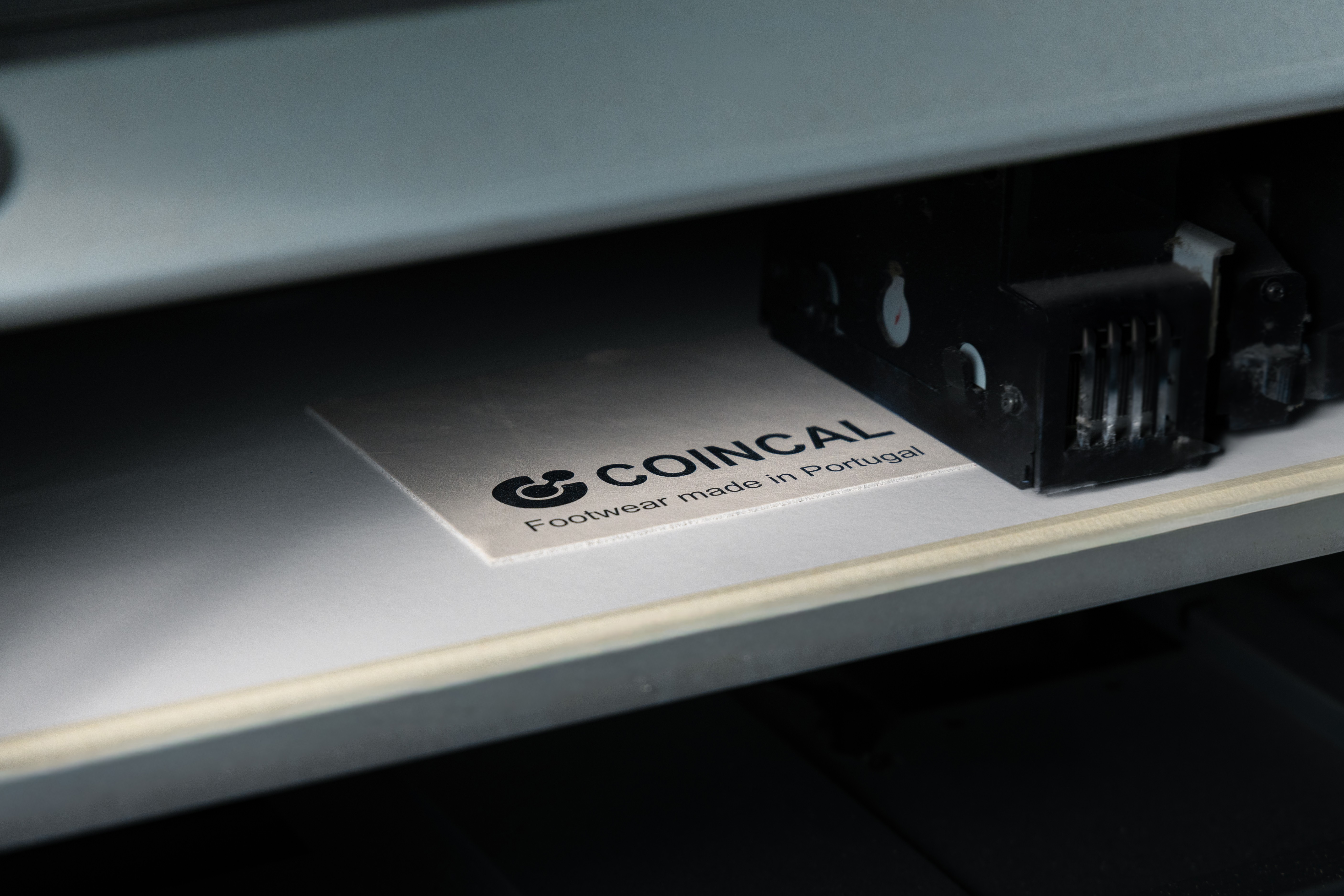
A logo is often the smallest element of a product, yet it carries the greatest responsibility. It represents the identity of a brand, communicates quality and becomes one of the most recognisable details of the finished shoe. Whether blind embossed, debossed, hot stamped or foil finished, logo application demands exceptional precision. Pressure, temperature, material behaviour and positioning must all work together to produce a clean, consistent and permanent result.
A logo is often the smallest element of a product, yet it carries the greatest responsibility. It represents the identity of a brand, communicates quality and becomes one of the most recognisable details of the finished shoe. Whether blind embossed, debossed, hot stamped or foil finished, logo application demands exceptional precision. Pressure, temperature, material behaviour and positioning must all work together to produce a clean, consistent and permanent result.
Wednesday, January 1, 2025
Written by
Coincal
Precision Stitched Into Every Detail
How embroidery transforms branding, decoration and identity into permanent features of every shoe.
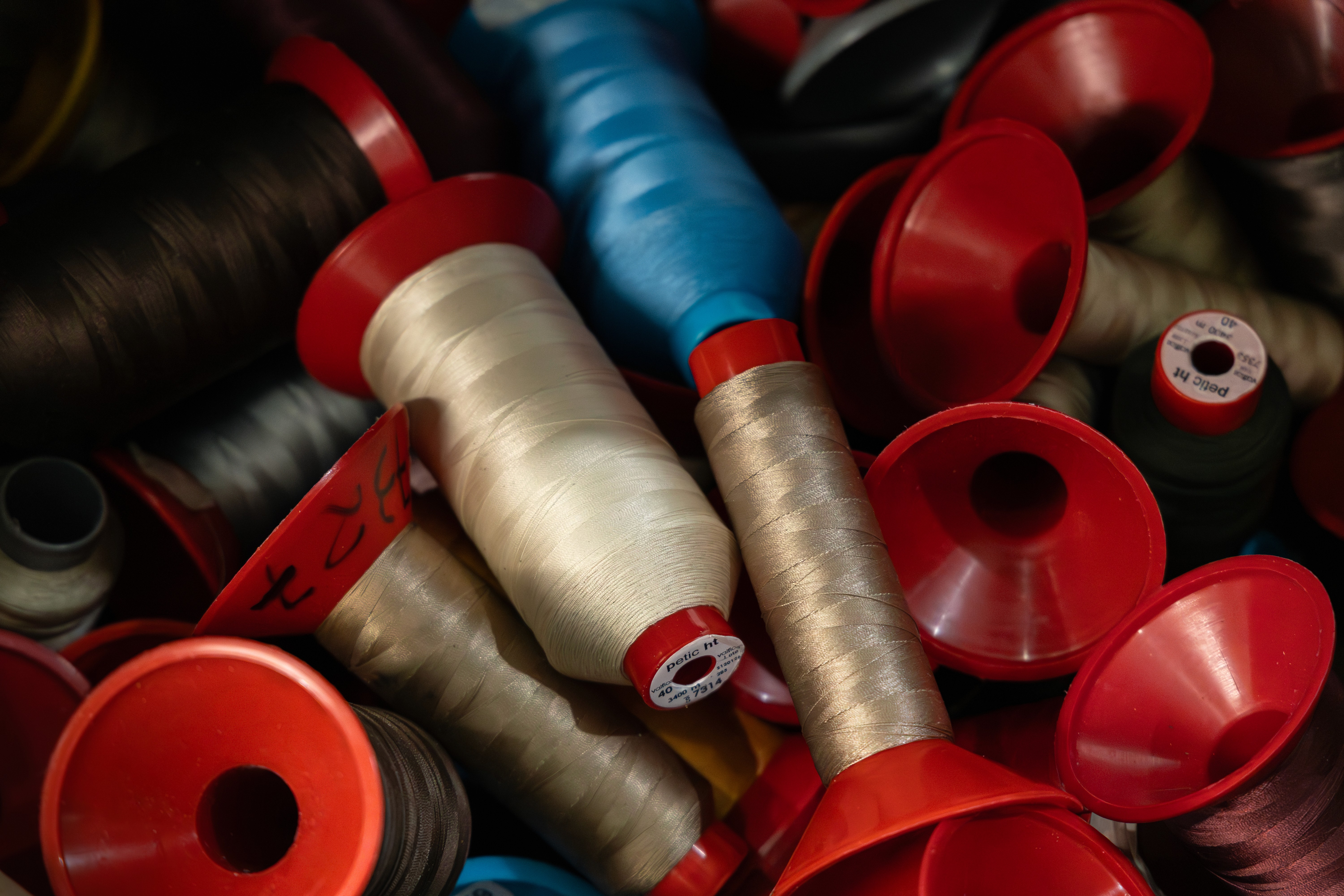
Embroidery is one of the most precise decorative processes in footwear manufacturing. Unlike printed graphics or applied embellishments, embroidery becomes physically integrated into the material through thousands of individual stitches. Every logo, monogram or decorative pattern must balance aesthetics, durability and production efficiency. The quality of the final result depends as much on digital preparation as it does on the precision of the embroidery machine itself.
Embroidery is one of the most precise decorative processes in footwear manufacturing. Unlike printed graphics or applied embellishments, embroidery becomes physically integrated into the material through thousands of individual stitches. Every logo, monogram or decorative pattern must balance aesthetics, durability and production efficiency. The quality of the final result depends as much on digital preparation as it does on the precision of the embroidery machine itself.

Wednesday, January 1, 2025
Written by
Coincal
The Final Step Is Never Just Shipping
How quality control, finishing and logistics ensure every pair reaches customers exactly as intended.
When production ends, responsibility does not. The final days before dispatch determine how a collection will be experienced by warehouses, retailers and, ultimately, customers. Inspection, finishing, packing and logistics are not administrative tasks added after manufacturing; they are the closing stages of it. They protect the work already invested in every pair and ensure that the product arrives with the same clarity it had when it left the line.
When production ends, responsibility does not. The final days before dispatch determine how a collection will be experienced by warehouses, retailers and, ultimately, customers. Inspection, finishing, packing and logistics are not administrative tasks added after manufacturing; they are the closing stages of it. They protect the work already invested in every pair and ensure that the product arrives with the same clarity it had when it left the line.

Thursday, December 19, 2024
Written by
Coincal
Quality Without Compromise
Every product is carefully inspected through rigorous quality control to ensure flawless construction, consistency and long-lasting performance before leaving our facilities.
Quality control is where craftsmanship is verified rather than assumed. Every finished shoe is carefully inspected for construction, proportions, stitching accuracy, material consistency and finishing details before it leaves the factory. It is a meticulous process that combines trained human judgement with rigorous standards, ensuring every pair meets the expectations of the brands we work with. Excellence is not added at the end—it is confirmed through every inspection.
Quality control is where craftsmanship is verified rather than assumed. Every finished shoe is carefully inspected for construction, proportions, stitching accuracy, material consistency and finishing details before it leaves the factory. It is a meticulous process that combines trained human judgement with rigorous standards, ensuring every pair meets the expectations of the brands we work with. Excellence is not added at the end—it is confirmed through every inspection.
Where Hundreds of Components Become One Product
A closer look at the manufacturing process behind premium footwear.
Where Hundreds of Components Become One Product
Written by
ASSEMBLE
A finished shoe appears singular: one silhouette, one colour story, one clear object. In production, it begins as a carefully organised field of separate parts. Upper panels, linings, reinforcements, threads, eyelets, insoles, outsoles, counters, toe puffs, labels and laces must arrive at the right workstation in the right condition. Assembly is the discipline of turning that complexity into unity without losing control of fit, proportion or finish.
Preparing Every Component
Before the line begins, components are checked, counted and grouped by model, colour and size. Leather panels may be skived to reduce bulk, textile edges reinforced and linings paired with their corresponding uppers. Structural elements are selected according to the support required by the design. A lightweight trainer and a formal boot ask different things of their internal architecture.
Preparation creates the conditions for consistency. If a reinforcement sits a few millimetres out of position, the effect may not appear until lasting. If an adhesive is applied too early or a component is insufficiently conditioned, the bond may weaken later. Good assembly therefore begins with sequence: knowing not only what must be done, but exactly when.
Building the Upper
The upper is constructed in stages. Smaller sections are joined first, then assembled into larger groups. Decorative seams, perforations and branding are completed before access becomes restricted. Linings are integrated with care so they remain smooth against the foot. Throughout, operators control alignment against reference points rather than relying on the apparent edge of a flexible material.
At this point, the shoe is still largely two-dimensional. Yet the precision of the upper determines how successfully it will accept its final shape. Symmetry between left and right, clean seam intersections and controlled tension are essential. Errors concealed in a flat upper become immediately visible when it is drawn over the last.
The Lasting Process
Lasting is the decisive transformation. The assembled upper is conditioned and pulled over a last—the three-dimensional form that defines the shoe’s volume, toe shape, heel position and much of its fit. Material is tensioned progressively, fixed beneath the insole and shaped until the surface sits cleanly without wrinkles or distortion.
Machinery provides controlled force and repeatable positioning, but the operator reads the response of the material. Soft calf, robust suede and technical mesh each stretch differently. The aim is not maximum tension; it is balanced tension. Too little leaves an imprecise form. Too much can alter dimensions, strain seams or change the intended character of the leather.
Joining Upper and Sole
Once lasted, the bottom is prepared for its chosen construction. Surfaces may be roughened, cleaned, primed and activated before adhesive is applied. Cemented, stitched and hybrid constructions each demand specific processes. Soles must be positioned accurately at the first decisive contact, then pressed under controlled conditions to secure the bond.
This stage illustrates why footwear manufacturing is a chain rather than a collection of isolated skills. The strength of a bond depends on earlier material selection, preparation, environmental control and timing. A press cannot compensate for a contaminated surface, just as careful stitching cannot correct an unsuitable pattern.
Machinery and Human Expertise
Modern equipment improves control over pressure, temperature and repetition. It can make demanding operations safer and more consistent. Yet machines work within parameters established and monitored by people. Operators adjust for material behaviour, model complexity and small production variations. Technicians maintain equipment and verify that settings correspond to the specifications of the product in front of them.
Quality Checks in Motion
Inspection does not wait until the final pair is complete. Alignment, stitching, symmetry, sole placement and surface condition are checked throughout production. Catching an issue at its source protects the stages that follow and provides useful feedback to the responsible team. This is how efficiency supports craft: not by rushing, but by preventing avoidable work from travelling further down the line.
One Roof, One Conversation
Managing core processes in-house keeps information close to the product. Pattern, sample and production teams can compare outcomes directly. Questions move quickly. Adjustments are documented and applied consistently. For brands, this visibility makes production easier to understand and gives decisions a clear technical context.
Final Assembly
After the last is removed, footbeds, laces and final components are added. The shoe is cleaned, shaped and paired. What began as hundreds of separate elements now reads as one object, but its unity depends on every handover that came before.
A shoe becomes coherent when every component, process and person works toward the same final shape.
Conclusion
Assembly is where design meets consequence. Managed carefully, it preserves the intention of the sketch while giving the finished product strength, comfort and repeatable form.
More articles
Where every great shoe begins
How ideas evolve into production-ready footwear through research, creative direction and technical expertise.
Where Every Impression Represents the Brand
How precision embossing transforms logos into permanent signatures of quality and craftsmanship.
Precision Stitched Into Every Detail
How embroidery transforms branding, decoration and identity into permanent features of every shoe.
The Final Step Is Never Just Shipping
How quality control, finishing and logistics ensure every pair reaches customers exactly as intended.
Quality Without Compromise
Every product is carefully inspected through rigorous quality control to ensure flawless construction, consistency and long-lasting performance before leaving our facilities.
Where Hundreds of Components Become One Product
A closer look at the manufacturing process behind premium footwear.
Where Hundreds of Components Become One Product
Written by
ASSEMBLE
A finished shoe appears singular: one silhouette, one colour story, one clear object. In production, it begins as a carefully organised field of separate parts. Upper panels, linings, reinforcements, threads, eyelets, insoles, outsoles, counters, toe puffs, labels and laces must arrive at the right workstation in the right condition. Assembly is the discipline of turning that complexity into unity without losing control of fit, proportion or finish.
Preparing Every Component
Before the line begins, components are checked, counted and grouped by model, colour and size. Leather panels may be skived to reduce bulk, textile edges reinforced and linings paired with their corresponding uppers. Structural elements are selected according to the support required by the design. A lightweight trainer and a formal boot ask different things of their internal architecture.
Preparation creates the conditions for consistency. If a reinforcement sits a few millimetres out of position, the effect may not appear until lasting. If an adhesive is applied too early or a component is insufficiently conditioned, the bond may weaken later. Good assembly therefore begins with sequence: knowing not only what must be done, but exactly when.
Building the Upper
The upper is constructed in stages. Smaller sections are joined first, then assembled into larger groups. Decorative seams, perforations and branding are completed before access becomes restricted. Linings are integrated with care so they remain smooth against the foot. Throughout, operators control alignment against reference points rather than relying on the apparent edge of a flexible material.
At this point, the shoe is still largely two-dimensional. Yet the precision of the upper determines how successfully it will accept its final shape. Symmetry between left and right, clean seam intersections and controlled tension are essential. Errors concealed in a flat upper become immediately visible when it is drawn over the last.
The Lasting Process
Lasting is the decisive transformation. The assembled upper is conditioned and pulled over a last—the three-dimensional form that defines the shoe’s volume, toe shape, heel position and much of its fit. Material is tensioned progressively, fixed beneath the insole and shaped until the surface sits cleanly without wrinkles or distortion.
Machinery provides controlled force and repeatable positioning, but the operator reads the response of the material. Soft calf, robust suede and technical mesh each stretch differently. The aim is not maximum tension; it is balanced tension. Too little leaves an imprecise form. Too much can alter dimensions, strain seams or change the intended character of the leather.
Joining Upper and Sole
Once lasted, the bottom is prepared for its chosen construction. Surfaces may be roughened, cleaned, primed and activated before adhesive is applied. Cemented, stitched and hybrid constructions each demand specific processes. Soles must be positioned accurately at the first decisive contact, then pressed under controlled conditions to secure the bond.
This stage illustrates why footwear manufacturing is a chain rather than a collection of isolated skills. The strength of a bond depends on earlier material selection, preparation, environmental control and timing. A press cannot compensate for a contaminated surface, just as careful stitching cannot correct an unsuitable pattern.
Machinery and Human Expertise
Modern equipment improves control over pressure, temperature and repetition. It can make demanding operations safer and more consistent. Yet machines work within parameters established and monitored by people. Operators adjust for material behaviour, model complexity and small production variations. Technicians maintain equipment and verify that settings correspond to the specifications of the product in front of them.
Quality Checks in Motion
Inspection does not wait until the final pair is complete. Alignment, stitching, symmetry, sole placement and surface condition are checked throughout production. Catching an issue at its source protects the stages that follow and provides useful feedback to the responsible team. This is how efficiency supports craft: not by rushing, but by preventing avoidable work from travelling further down the line.
One Roof, One Conversation
Managing core processes in-house keeps information close to the product. Pattern, sample and production teams can compare outcomes directly. Questions move quickly. Adjustments are documented and applied consistently. For brands, this visibility makes production easier to understand and gives decisions a clear technical context.
Final Assembly
After the last is removed, footbeds, laces and final components are added. The shoe is cleaned, shaped and paired. What began as hundreds of separate elements now reads as one object, but its unity depends on every handover that came before.
A shoe becomes coherent when every component, process and person works toward the same final shape.
Conclusion
Assembly is where design meets consequence. Managed carefully, it preserves the intention of the sketch while giving the finished product strength, comfort and repeatable form.
More articles
Where every great shoe begins
How ideas evolve into production-ready footwear through research, creative direction and technical expertise.
Where Every Impression Represents the Brand
How precision embossing transforms logos into permanent signatures of quality and craftsmanship.
Precision Stitched Into Every Detail
How embroidery transforms branding, decoration and identity into permanent features of every shoe.
The Final Step Is Never Just Shipping
How quality control, finishing and logistics ensure every pair reaches customers exactly as intended.
Quality Without Compromise
Every product is carefully inspected through rigorous quality control to ensure flawless construction, consistency and long-lasting performance before leaving our facilities.

We transform brands.
Your success is next.
Start your footwear journey by speaking with our manufacturing experts.

Where Hundreds of Components Become One Product
A closer look at the manufacturing process behind premium footwear.
Where Hundreds of Components Become One Product
Written by
ASSEMBLE
A finished shoe appears singular: one silhouette, one colour story, one clear object. In production, it begins as a carefully organised field of separate parts. Upper panels, linings, reinforcements, threads, eyelets, insoles, outsoles, counters, toe puffs, labels and laces must arrive at the right workstation in the right condition. Assembly is the discipline of turning that complexity into unity without losing control of fit, proportion or finish.
Preparing Every Component
Before the line begins, components are checked, counted and grouped by model, colour and size. Leather panels may be skived to reduce bulk, textile edges reinforced and linings paired with their corresponding uppers. Structural elements are selected according to the support required by the design. A lightweight trainer and a formal boot ask different things of their internal architecture.
Preparation creates the conditions for consistency. If a reinforcement sits a few millimetres out of position, the effect may not appear until lasting. If an adhesive is applied too early or a component is insufficiently conditioned, the bond may weaken later. Good assembly therefore begins with sequence: knowing not only what must be done, but exactly when.
Building the Upper
The upper is constructed in stages. Smaller sections are joined first, then assembled into larger groups. Decorative seams, perforations and branding are completed before access becomes restricted. Linings are integrated with care so they remain smooth against the foot. Throughout, operators control alignment against reference points rather than relying on the apparent edge of a flexible material.
At this point, the shoe is still largely two-dimensional. Yet the precision of the upper determines how successfully it will accept its final shape. Symmetry between left and right, clean seam intersections and controlled tension are essential. Errors concealed in a flat upper become immediately visible when it is drawn over the last.
The Lasting Process
Lasting is the decisive transformation. The assembled upper is conditioned and pulled over a last—the three-dimensional form that defines the shoe’s volume, toe shape, heel position and much of its fit. Material is tensioned progressively, fixed beneath the insole and shaped until the surface sits cleanly without wrinkles or distortion.
Machinery provides controlled force and repeatable positioning, but the operator reads the response of the material. Soft calf, robust suede and technical mesh each stretch differently. The aim is not maximum tension; it is balanced tension. Too little leaves an imprecise form. Too much can alter dimensions, strain seams or change the intended character of the leather.
Joining Upper and Sole
Once lasted, the bottom is prepared for its chosen construction. Surfaces may be roughened, cleaned, primed and activated before adhesive is applied. Cemented, stitched and hybrid constructions each demand specific processes. Soles must be positioned accurately at the first decisive contact, then pressed under controlled conditions to secure the bond.
This stage illustrates why footwear manufacturing is a chain rather than a collection of isolated skills. The strength of a bond depends on earlier material selection, preparation, environmental control and timing. A press cannot compensate for a contaminated surface, just as careful stitching cannot correct an unsuitable pattern.
Machinery and Human Expertise
Modern equipment improves control over pressure, temperature and repetition. It can make demanding operations safer and more consistent. Yet machines work within parameters established and monitored by people. Operators adjust for material behaviour, model complexity and small production variations. Technicians maintain equipment and verify that settings correspond to the specifications of the product in front of them.
Quality Checks in Motion
Inspection does not wait until the final pair is complete. Alignment, stitching, symmetry, sole placement and surface condition are checked throughout production. Catching an issue at its source protects the stages that follow and provides useful feedback to the responsible team. This is how efficiency supports craft: not by rushing, but by preventing avoidable work from travelling further down the line.
One Roof, One Conversation
Managing core processes in-house keeps information close to the product. Pattern, sample and production teams can compare outcomes directly. Questions move quickly. Adjustments are documented and applied consistently. For brands, this visibility makes production easier to understand and gives decisions a clear technical context.
Final Assembly
After the last is removed, footbeds, laces and final components are added. The shoe is cleaned, shaped and paired. What began as hundreds of separate elements now reads as one object, but its unity depends on every handover that came before.
A shoe becomes coherent when every component, process and person works toward the same final shape.
Conclusion
Assembly is where design meets consequence. Managed carefully, it preserves the intention of the sketch while giving the finished product strength, comfort and repeatable form.
More articles
Sunday, June 14, 2026
Written by
Coincal
Where every great shoe begins
How ideas evolve into production-ready footwear through research, creative direction and technical expertise.
Every successful footwear collection begins long before the first material is selected or the first sample is produced. It begins with an idea. Whether that idea arrives as a sketch, a moodboard or a fully developed concept, the design phase is where creative ambition meets the discipline of manufacturing. At Coincal, the purpose is not simply to draw an attractive shoe. It is to understand the brand behind it, the person who will wear it and the practical decisions that will allow the idea to become a convincing, producible object. This early alignment is especially important in footwear, where appearance, comfort and construction are inseparable. A line that gives a silhouette energy may change the pattern beneath it; a material chosen for softness may require hidden reinforcement; a sole selected for attitude will also determine weight and flex. Design becomes stronger when these consequences are welcomed from the beginning.
Every successful footwear collection begins long before the first material is selected or the first sample is produced. It begins with an idea. Whether that idea arrives as a sketch, a moodboard or a fully developed concept, the design phase is where creative ambition meets the discipline of manufacturing. At Coincal, the purpose is not simply to draw an attractive shoe. It is to understand the brand behind it, the person who will wear it and the practical decisions that will allow the idea to become a convincing, producible object. This early alignment is especially important in footwear, where appearance, comfort and construction are inseparable. A line that gives a silhouette energy may change the pattern beneath it; a material chosen for softness may require hidden reinforcement; a sole selected for attitude will also determine weight and flex. Design becomes stronger when these consequences are welcomed from the beginning.
Sunday, June 14, 2026
Written by
Coincal
Where Every Impression Represents the Brand
How precision embossing transforms logos into permanent signatures of quality and craftsmanship.
A logo is often the smallest element of a product, yet it carries the greatest responsibility. It represents the identity of a brand, communicates quality and becomes one of the most recognisable details of the finished shoe. Whether blind embossed, debossed, hot stamped or foil finished, logo application demands exceptional precision. Pressure, temperature, material behaviour and positioning must all work together to produce a clean, consistent and permanent result.
A logo is often the smallest element of a product, yet it carries the greatest responsibility. It represents the identity of a brand, communicates quality and becomes one of the most recognisable details of the finished shoe. Whether blind embossed, debossed, hot stamped or foil finished, logo application demands exceptional precision. Pressure, temperature, material behaviour and positioning must all work together to produce a clean, consistent and permanent result.
Wednesday, January 1, 2025
Written by
Coincal
Precision Stitched Into Every Detail
How embroidery transforms branding, decoration and identity into permanent features of every shoe.
Embroidery is one of the most precise decorative processes in footwear manufacturing. Unlike printed graphics or applied embellishments, embroidery becomes physically integrated into the material through thousands of individual stitches. Every logo, monogram or decorative pattern must balance aesthetics, durability and production efficiency. The quality of the final result depends as much on digital preparation as it does on the precision of the embroidery machine itself.
Embroidery is one of the most precise decorative processes in footwear manufacturing. Unlike printed graphics or applied embellishments, embroidery becomes physically integrated into the material through thousands of individual stitches. Every logo, monogram or decorative pattern must balance aesthetics, durability and production efficiency. The quality of the final result depends as much on digital preparation as it does on the precision of the embroidery machine itself.
Wednesday, January 1, 2025
Written by
Coincal
The Final Step Is Never Just Shipping
How quality control, finishing and logistics ensure every pair reaches customers exactly as intended.
When production ends, responsibility does not. The final days before dispatch determine how a collection will be experienced by warehouses, retailers and, ultimately, customers. Inspection, finishing, packing and logistics are not administrative tasks added after manufacturing; they are the closing stages of it. They protect the work already invested in every pair and ensure that the product arrives with the same clarity it had when it left the line.
When production ends, responsibility does not. The final days before dispatch determine how a collection will be experienced by warehouses, retailers and, ultimately, customers. Inspection, finishing, packing and logistics are not administrative tasks added after manufacturing; they are the closing stages of it. They protect the work already invested in every pair and ensure that the product arrives with the same clarity it had when it left the line.
Thursday, December 19, 2024
Written by
Coincal
Quality Without Compromise
Every product is carefully inspected through rigorous quality control to ensure flawless construction, consistency and long-lasting performance before leaving our facilities.
Quality control is where craftsmanship is verified rather than assumed. Every finished shoe is carefully inspected for construction, proportions, stitching accuracy, material consistency and finishing details before it leaves the factory. It is a meticulous process that combines trained human judgement with rigorous standards, ensuring every pair meets the expectations of the brands we work with. Excellence is not added at the end—it is confirmed through every inspection.
Quality control is where craftsmanship is verified rather than assumed. Every finished shoe is carefully inspected for construction, proportions, stitching accuracy, material consistency and finishing details before it leaves the factory. It is a meticulous process that combines trained human judgement with rigorous standards, ensuring every pair meets the expectations of the brands we work with. Excellence is not added at the end—it is confirmed through every inspection.
Where Hundreds of Components Become One Product
A closer look at the manufacturing process behind premium footwear.
Where Hundreds of Components Become One Product
Written by
ASSEMBLE
A finished shoe appears singular: one silhouette, one colour story, one clear object. In production, it begins as a carefully organised field of separate parts. Upper panels, linings, reinforcements, threads, eyelets, insoles, outsoles, counters, toe puffs, labels and laces must arrive at the right workstation in the right condition. Assembly is the discipline of turning that complexity into unity without losing control of fit, proportion or finish.
Preparing Every Component
Before the line begins, components are checked, counted and grouped by model, colour and size. Leather panels may be skived to reduce bulk, textile edges reinforced and linings paired with their corresponding uppers. Structural elements are selected according to the support required by the design. A lightweight trainer and a formal boot ask different things of their internal architecture.
Preparation creates the conditions for consistency. If a reinforcement sits a few millimetres out of position, the effect may not appear until lasting. If an adhesive is applied too early or a component is insufficiently conditioned, the bond may weaken later. Good assembly therefore begins with sequence: knowing not only what must be done, but exactly when.
Building the Upper
The upper is constructed in stages. Smaller sections are joined first, then assembled into larger groups. Decorative seams, perforations and branding are completed before access becomes restricted. Linings are integrated with care so they remain smooth against the foot. Throughout, operators control alignment against reference points rather than relying on the apparent edge of a flexible material.
At this point, the shoe is still largely two-dimensional. Yet the precision of the upper determines how successfully it will accept its final shape. Symmetry between left and right, clean seam intersections and controlled tension are essential. Errors concealed in a flat upper become immediately visible when it is drawn over the last.
The Lasting Process
Lasting is the decisive transformation. The assembled upper is conditioned and pulled over a last—the three-dimensional form that defines the shoe’s volume, toe shape, heel position and much of its fit. Material is tensioned progressively, fixed beneath the insole and shaped until the surface sits cleanly without wrinkles or distortion.
Machinery provides controlled force and repeatable positioning, but the operator reads the response of the material. Soft calf, robust suede and technical mesh each stretch differently. The aim is not maximum tension; it is balanced tension. Too little leaves an imprecise form. Too much can alter dimensions, strain seams or change the intended character of the leather.
Joining Upper and Sole
Once lasted, the bottom is prepared for its chosen construction. Surfaces may be roughened, cleaned, primed and activated before adhesive is applied. Cemented, stitched and hybrid constructions each demand specific processes. Soles must be positioned accurately at the first decisive contact, then pressed under controlled conditions to secure the bond.
This stage illustrates why footwear manufacturing is a chain rather than a collection of isolated skills. The strength of a bond depends on earlier material selection, preparation, environmental control and timing. A press cannot compensate for a contaminated surface, just as careful stitching cannot correct an unsuitable pattern.
Machinery and Human Expertise
Modern equipment improves control over pressure, temperature and repetition. It can make demanding operations safer and more consistent. Yet machines work within parameters established and monitored by people. Operators adjust for material behaviour, model complexity and small production variations. Technicians maintain equipment and verify that settings correspond to the specifications of the product in front of them.
Quality Checks in Motion
Inspection does not wait until the final pair is complete. Alignment, stitching, symmetry, sole placement and surface condition are checked throughout production. Catching an issue at its source protects the stages that follow and provides useful feedback to the responsible team. This is how efficiency supports craft: not by rushing, but by preventing avoidable work from travelling further down the line.
One Roof, One Conversation
Managing core processes in-house keeps information close to the product. Pattern, sample and production teams can compare outcomes directly. Questions move quickly. Adjustments are documented and applied consistently. For brands, this visibility makes production easier to understand and gives decisions a clear technical context.
Final Assembly
After the last is removed, footbeds, laces and final components are added. The shoe is cleaned, shaped and paired. What began as hundreds of separate elements now reads as one object, but its unity depends on every handover that came before.
A shoe becomes coherent when every component, process and person works toward the same final shape.
Conclusion
Assembly is where design meets consequence. Managed carefully, it preserves the intention of the sketch while giving the finished product strength, comfort and repeatable form.
More articles
Where every great shoe begins
How ideas evolve into production-ready footwear through research, creative direction and technical expertise.
Where Every Impression Represents the Brand
How precision embossing transforms logos into permanent signatures of quality and craftsmanship.
Precision Stitched Into Every Detail
How embroidery transforms branding, decoration and identity into permanent features of every shoe.
The Final Step Is Never Just Shipping
How quality control, finishing and logistics ensure every pair reaches customers exactly as intended.
Quality Without Compromise
Every product is carefully inspected through rigorous quality control to ensure flawless construction, consistency and long-lasting performance before leaving our facilities.
Where Hundreds of Components Become One Product
A closer look at the manufacturing process behind premium footwear.
Where Hundreds of Components Become One Product
Written by
ASSEMBLE
A finished shoe appears singular: one silhouette, one colour story, one clear object. In production, it begins as a carefully organised field of separate parts. Upper panels, linings, reinforcements, threads, eyelets, insoles, outsoles, counters, toe puffs, labels and laces must arrive at the right workstation in the right condition. Assembly is the discipline of turning that complexity into unity without losing control of fit, proportion or finish.
Preparing Every Component
Before the line begins, components are checked, counted and grouped by model, colour and size. Leather panels may be skived to reduce bulk, textile edges reinforced and linings paired with their corresponding uppers. Structural elements are selected according to the support required by the design. A lightweight trainer and a formal boot ask different things of their internal architecture.
Preparation creates the conditions for consistency. If a reinforcement sits a few millimetres out of position, the effect may not appear until lasting. If an adhesive is applied too early or a component is insufficiently conditioned, the bond may weaken later. Good assembly therefore begins with sequence: knowing not only what must be done, but exactly when.
Building the Upper
The upper is constructed in stages. Smaller sections are joined first, then assembled into larger groups. Decorative seams, perforations and branding are completed before access becomes restricted. Linings are integrated with care so they remain smooth against the foot. Throughout, operators control alignment against reference points rather than relying on the apparent edge of a flexible material.
At this point, the shoe is still largely two-dimensional. Yet the precision of the upper determines how successfully it will accept its final shape. Symmetry between left and right, clean seam intersections and controlled tension are essential. Errors concealed in a flat upper become immediately visible when it is drawn over the last.
The Lasting Process
Lasting is the decisive transformation. The assembled upper is conditioned and pulled over a last—the three-dimensional form that defines the shoe’s volume, toe shape, heel position and much of its fit. Material is tensioned progressively, fixed beneath the insole and shaped until the surface sits cleanly without wrinkles or distortion.
Machinery provides controlled force and repeatable positioning, but the operator reads the response of the material. Soft calf, robust suede and technical mesh each stretch differently. The aim is not maximum tension; it is balanced tension. Too little leaves an imprecise form. Too much can alter dimensions, strain seams or change the intended character of the leather.
Joining Upper and Sole
Once lasted, the bottom is prepared for its chosen construction. Surfaces may be roughened, cleaned, primed and activated before adhesive is applied. Cemented, stitched and hybrid constructions each demand specific processes. Soles must be positioned accurately at the first decisive contact, then pressed under controlled conditions to secure the bond.
This stage illustrates why footwear manufacturing is a chain rather than a collection of isolated skills. The strength of a bond depends on earlier material selection, preparation, environmental control and timing. A press cannot compensate for a contaminated surface, just as careful stitching cannot correct an unsuitable pattern.
Machinery and Human Expertise
Modern equipment improves control over pressure, temperature and repetition. It can make demanding operations safer and more consistent. Yet machines work within parameters established and monitored by people. Operators adjust for material behaviour, model complexity and small production variations. Technicians maintain equipment and verify that settings correspond to the specifications of the product in front of them.
Quality Checks in Motion
Inspection does not wait until the final pair is complete. Alignment, stitching, symmetry, sole placement and surface condition are checked throughout production. Catching an issue at its source protects the stages that follow and provides useful feedback to the responsible team. This is how efficiency supports craft: not by rushing, but by preventing avoidable work from travelling further down the line.
One Roof, One Conversation
Managing core processes in-house keeps information close to the product. Pattern, sample and production teams can compare outcomes directly. Questions move quickly. Adjustments are documented and applied consistently. For brands, this visibility makes production easier to understand and gives decisions a clear technical context.
Final Assembly
After the last is removed, footbeds, laces and final components are added. The shoe is cleaned, shaped and paired. What began as hundreds of separate elements now reads as one object, but its unity depends on every handover that came before.
A shoe becomes coherent when every component, process and person works toward the same final shape.
Conclusion
Assembly is where design meets consequence. Managed carefully, it preserves the intention of the sketch while giving the finished product strength, comfort and repeatable form.
More articles
Where every great shoe begins
How ideas evolve into production-ready footwear through research, creative direction and technical expertise.
Where Every Impression Represents the Brand
How precision embossing transforms logos into permanent signatures of quality and craftsmanship.
Precision Stitched Into Every Detail
How embroidery transforms branding, decoration and identity into permanent features of every shoe.
The Final Step Is Never Just Shipping
How quality control, finishing and logistics ensure every pair reaches customers exactly as intended.
Quality Without Compromise
Every product is carefully inspected through rigorous quality control to ensure flawless construction, consistency and long-lasting performance before leaving our facilities.
We transform brands.
Your success is next.
Start your footwear journey by speaking with our manufacturing experts.
Where Hundreds of Components Become One Product
A closer look at the manufacturing process behind premium footwear.
Where Hundreds of Components Become One Product
Written by
ASSEMBLE
A finished shoe appears singular: one silhouette, one colour story, one clear object. In production, it begins as a carefully organised field of separate parts. Upper panels, linings, reinforcements, threads, eyelets, insoles, outsoles, counters, toe puffs, labels and laces must arrive at the right workstation in the right condition. Assembly is the discipline of turning that complexity into unity without losing control of fit, proportion or finish.
Preparing Every Component
Before the line begins, components are checked, counted and grouped by model, colour and size. Leather panels may be skived to reduce bulk, textile edges reinforced and linings paired with their corresponding uppers. Structural elements are selected according to the support required by the design. A lightweight trainer and a formal boot ask different things of their internal architecture.
Preparation creates the conditions for consistency. If a reinforcement sits a few millimetres out of position, the effect may not appear until lasting. If an adhesive is applied too early or a component is insufficiently conditioned, the bond may weaken later. Good assembly therefore begins with sequence: knowing not only what must be done, but exactly when.
Building the Upper
The upper is constructed in stages. Smaller sections are joined first, then assembled into larger groups. Decorative seams, perforations and branding are completed before access becomes restricted. Linings are integrated with care so they remain smooth against the foot. Throughout, operators control alignment against reference points rather than relying on the apparent edge of a flexible material.
At this point, the shoe is still largely two-dimensional. Yet the precision of the upper determines how successfully it will accept its final shape. Symmetry between left and right, clean seam intersections and controlled tension are essential. Errors concealed in a flat upper become immediately visible when it is drawn over the last.
The Lasting Process
Lasting is the decisive transformation. The assembled upper is conditioned and pulled over a last—the three-dimensional form that defines the shoe’s volume, toe shape, heel position and much of its fit. Material is tensioned progressively, fixed beneath the insole and shaped until the surface sits cleanly without wrinkles or distortion.
Machinery provides controlled force and repeatable positioning, but the operator reads the response of the material. Soft calf, robust suede and technical mesh each stretch differently. The aim is not maximum tension; it is balanced tension. Too little leaves an imprecise form. Too much can alter dimensions, strain seams or change the intended character of the leather.
Joining Upper and Sole
Once lasted, the bottom is prepared for its chosen construction. Surfaces may be roughened, cleaned, primed and activated before adhesive is applied. Cemented, stitched and hybrid constructions each demand specific processes. Soles must be positioned accurately at the first decisive contact, then pressed under controlled conditions to secure the bond.
This stage illustrates why footwear manufacturing is a chain rather than a collection of isolated skills. The strength of a bond depends on earlier material selection, preparation, environmental control and timing. A press cannot compensate for a contaminated surface, just as careful stitching cannot correct an unsuitable pattern.
Machinery and Human Expertise
Modern equipment improves control over pressure, temperature and repetition. It can make demanding operations safer and more consistent. Yet machines work within parameters established and monitored by people. Operators adjust for material behaviour, model complexity and small production variations. Technicians maintain equipment and verify that settings correspond to the specifications of the product in front of them.
Quality Checks in Motion
Inspection does not wait until the final pair is complete. Alignment, stitching, symmetry, sole placement and surface condition are checked throughout production. Catching an issue at its source protects the stages that follow and provides useful feedback to the responsible team. This is how efficiency supports craft: not by rushing, but by preventing avoidable work from travelling further down the line.
One Roof, One Conversation
Managing core processes in-house keeps information close to the product. Pattern, sample and production teams can compare outcomes directly. Questions move quickly. Adjustments are documented and applied consistently. For brands, this visibility makes production easier to understand and gives decisions a clear technical context.
Final Assembly
After the last is removed, footbeds, laces and final components are added. The shoe is cleaned, shaped and paired. What began as hundreds of separate elements now reads as one object, but its unity depends on every handover that came before.
A shoe becomes coherent when every component, process and person works toward the same final shape.
Conclusion
Assembly is where design meets consequence. Managed carefully, it preserves the intention of the sketch while giving the finished product strength, comfort and repeatable form.
More articles
Sunday, June 14, 2026
Written by
Coincal
Where every great shoe begins
How ideas evolve into production-ready footwear through research, creative direction and technical expertise.
Every successful footwear collection begins long before the first material is selected or the first sample is produced. It begins with an idea. Whether that idea arrives as a sketch, a moodboard or a fully developed concept, the design phase is where creative ambition meets the discipline of manufacturing. At Coincal, the purpose is not simply to draw an attractive shoe. It is to understand the brand behind it, the person who will wear it and the practical decisions that will allow the idea to become a convincing, producible object. This early alignment is especially important in footwear, where appearance, comfort and construction are inseparable. A line that gives a silhouette energy may change the pattern beneath it; a material chosen for softness may require hidden reinforcement; a sole selected for attitude will also determine weight and flex. Design becomes stronger when these consequences are welcomed from the beginning.
Every successful footwear collection begins long before the first material is selected or the first sample is produced. It begins with an idea. Whether that idea arrives as a sketch, a moodboard or a fully developed concept, the design phase is where creative ambition meets the discipline of manufacturing. At Coincal, the purpose is not simply to draw an attractive shoe. It is to understand the brand behind it, the person who will wear it and the practical decisions that will allow the idea to become a convincing, producible object. This early alignment is especially important in footwear, where appearance, comfort and construction are inseparable. A line that gives a silhouette energy may change the pattern beneath it; a material chosen for softness may require hidden reinforcement; a sole selected for attitude will also determine weight and flex. Design becomes stronger when these consequences are welcomed from the beginning.
Sunday, June 14, 2026
Written by
Coincal
Where Every Impression Represents the Brand
How precision embossing transforms logos into permanent signatures of quality and craftsmanship.
A logo is often the smallest element of a product, yet it carries the greatest responsibility. It represents the identity of a brand, communicates quality and becomes one of the most recognisable details of the finished shoe. Whether blind embossed, debossed, hot stamped or foil finished, logo application demands exceptional precision. Pressure, temperature, material behaviour and positioning must all work together to produce a clean, consistent and permanent result.
A logo is often the smallest element of a product, yet it carries the greatest responsibility. It represents the identity of a brand, communicates quality and becomes one of the most recognisable details of the finished shoe. Whether blind embossed, debossed, hot stamped or foil finished, logo application demands exceptional precision. Pressure, temperature, material behaviour and positioning must all work together to produce a clean, consistent and permanent result.
Wednesday, January 1, 2025
Written by
Coincal
Precision Stitched Into Every Detail
How embroidery transforms branding, decoration and identity into permanent features of every shoe.
Embroidery is one of the most precise decorative processes in footwear manufacturing. Unlike printed graphics or applied embellishments, embroidery becomes physically integrated into the material through thousands of individual stitches. Every logo, monogram or decorative pattern must balance aesthetics, durability and production efficiency. The quality of the final result depends as much on digital preparation as it does on the precision of the embroidery machine itself.
Embroidery is one of the most precise decorative processes in footwear manufacturing. Unlike printed graphics or applied embellishments, embroidery becomes physically integrated into the material through thousands of individual stitches. Every logo, monogram or decorative pattern must balance aesthetics, durability and production efficiency. The quality of the final result depends as much on digital preparation as it does on the precision of the embroidery machine itself.
Wednesday, January 1, 2025
Written by
Coincal
The Final Step Is Never Just Shipping
How quality control, finishing and logistics ensure every pair reaches customers exactly as intended.
When production ends, responsibility does not. The final days before dispatch determine how a collection will be experienced by warehouses, retailers and, ultimately, customers. Inspection, finishing, packing and logistics are not administrative tasks added after manufacturing; they are the closing stages of it. They protect the work already invested in every pair and ensure that the product arrives with the same clarity it had when it left the line.
When production ends, responsibility does not. The final days before dispatch determine how a collection will be experienced by warehouses, retailers and, ultimately, customers. Inspection, finishing, packing and logistics are not administrative tasks added after manufacturing; they are the closing stages of it. They protect the work already invested in every pair and ensure that the product arrives with the same clarity it had when it left the line.
Thursday, December 19, 2024
Written by
Coincal
Quality Without Compromise
Every product is carefully inspected through rigorous quality control to ensure flawless construction, consistency and long-lasting performance before leaving our facilities.
Quality control is where craftsmanship is verified rather than assumed. Every finished shoe is carefully inspected for construction, proportions, stitching accuracy, material consistency and finishing details before it leaves the factory. It is a meticulous process that combines trained human judgement with rigorous standards, ensuring every pair meets the expectations of the brands we work with. Excellence is not added at the end—it is confirmed through every inspection.
Quality control is where craftsmanship is verified rather than assumed. Every finished shoe is carefully inspected for construction, proportions, stitching accuracy, material consistency and finishing details before it leaves the factory. It is a meticulous process that combines trained human judgement with rigorous standards, ensuring every pair meets the expectations of the brands we work with. Excellence is not added at the end—it is confirmed through every inspection.
Where Hundreds of Components Become One Product
A closer look at the manufacturing process behind premium footwear.
Where Hundreds of Components Become One Product
Written by
ASSEMBLE
A finished shoe appears singular: one silhouette, one colour story, one clear object. In production, it begins as a carefully organised field of separate parts. Upper panels, linings, reinforcements, threads, eyelets, insoles, outsoles, counters, toe puffs, labels and laces must arrive at the right workstation in the right condition. Assembly is the discipline of turning that complexity into unity without losing control of fit, proportion or finish.
Preparing Every Component
Before the line begins, components are checked, counted and grouped by model, colour and size. Leather panels may be skived to reduce bulk, textile edges reinforced and linings paired with their corresponding uppers. Structural elements are selected according to the support required by the design. A lightweight trainer and a formal boot ask different things of their internal architecture.
Preparation creates the conditions for consistency. If a reinforcement sits a few millimetres out of position, the effect may not appear until lasting. If an adhesive is applied too early or a component is insufficiently conditioned, the bond may weaken later. Good assembly therefore begins with sequence: knowing not only what must be done, but exactly when.
Building the Upper
The upper is constructed in stages. Smaller sections are joined first, then assembled into larger groups. Decorative seams, perforations and branding are completed before access becomes restricted. Linings are integrated with care so they remain smooth against the foot. Throughout, operators control alignment against reference points rather than relying on the apparent edge of a flexible material.
At this point, the shoe is still largely two-dimensional. Yet the precision of the upper determines how successfully it will accept its final shape. Symmetry between left and right, clean seam intersections and controlled tension are essential. Errors concealed in a flat upper become immediately visible when it is drawn over the last.
The Lasting Process
Lasting is the decisive transformation. The assembled upper is conditioned and pulled over a last—the three-dimensional form that defines the shoe’s volume, toe shape, heel position and much of its fit. Material is tensioned progressively, fixed beneath the insole and shaped until the surface sits cleanly without wrinkles or distortion.
Machinery provides controlled force and repeatable positioning, but the operator reads the response of the material. Soft calf, robust suede and technical mesh each stretch differently. The aim is not maximum tension; it is balanced tension. Too little leaves an imprecise form. Too much can alter dimensions, strain seams or change the intended character of the leather.
Joining Upper and Sole
Once lasted, the bottom is prepared for its chosen construction. Surfaces may be roughened, cleaned, primed and activated before adhesive is applied. Cemented, stitched and hybrid constructions each demand specific processes. Soles must be positioned accurately at the first decisive contact, then pressed under controlled conditions to secure the bond.
This stage illustrates why footwear manufacturing is a chain rather than a collection of isolated skills. The strength of a bond depends on earlier material selection, preparation, environmental control and timing. A press cannot compensate for a contaminated surface, just as careful stitching cannot correct an unsuitable pattern.
Machinery and Human Expertise
Modern equipment improves control over pressure, temperature and repetition. It can make demanding operations safer and more consistent. Yet machines work within parameters established and monitored by people. Operators adjust for material behaviour, model complexity and small production variations. Technicians maintain equipment and verify that settings correspond to the specifications of the product in front of them.
Quality Checks in Motion
Inspection does not wait until the final pair is complete. Alignment, stitching, symmetry, sole placement and surface condition are checked throughout production. Catching an issue at its source protects the stages that follow and provides useful feedback to the responsible team. This is how efficiency supports craft: not by rushing, but by preventing avoidable work from travelling further down the line.
One Roof, One Conversation
Managing core processes in-house keeps information close to the product. Pattern, sample and production teams can compare outcomes directly. Questions move quickly. Adjustments are documented and applied consistently. For brands, this visibility makes production easier to understand and gives decisions a clear technical context.
Final Assembly
After the last is removed, footbeds, laces and final components are added. The shoe is cleaned, shaped and paired. What began as hundreds of separate elements now reads as one object, but its unity depends on every handover that came before.
A shoe becomes coherent when every component, process and person works toward the same final shape.
Conclusion
Assembly is where design meets consequence. Managed carefully, it preserves the intention of the sketch while giving the finished product strength, comfort and repeatable form.
More articles
Where every great shoe begins
How ideas evolve into production-ready footwear through research, creative direction and technical expertise.
Where Every Impression Represents the Brand
How precision embossing transforms logos into permanent signatures of quality and craftsmanship.
Precision Stitched Into Every Detail
How embroidery transforms branding, decoration and identity into permanent features of every shoe.
The Final Step Is Never Just Shipping
How quality control, finishing and logistics ensure every pair reaches customers exactly as intended.
Quality Without Compromise
Every product is carefully inspected through rigorous quality control to ensure flawless construction, consistency and long-lasting performance before leaving our facilities.
Where Hundreds of Components Become One Product
A closer look at the manufacturing process behind premium footwear.
Where Hundreds of Components Become One Product
Written by
ASSEMBLE
A finished shoe appears singular: one silhouette, one colour story, one clear object. In production, it begins as a carefully organised field of separate parts. Upper panels, linings, reinforcements, threads, eyelets, insoles, outsoles, counters, toe puffs, labels and laces must arrive at the right workstation in the right condition. Assembly is the discipline of turning that complexity into unity without losing control of fit, proportion or finish.
Preparing Every Component
Before the line begins, components are checked, counted and grouped by model, colour and size. Leather panels may be skived to reduce bulk, textile edges reinforced and linings paired with their corresponding uppers. Structural elements are selected according to the support required by the design. A lightweight trainer and a formal boot ask different things of their internal architecture.
Preparation creates the conditions for consistency. If a reinforcement sits a few millimetres out of position, the effect may not appear until lasting. If an adhesive is applied too early or a component is insufficiently conditioned, the bond may weaken later. Good assembly therefore begins with sequence: knowing not only what must be done, but exactly when.
Building the Upper
The upper is constructed in stages. Smaller sections are joined first, then assembled into larger groups. Decorative seams, perforations and branding are completed before access becomes restricted. Linings are integrated with care so they remain smooth against the foot. Throughout, operators control alignment against reference points rather than relying on the apparent edge of a flexible material.
At this point, the shoe is still largely two-dimensional. Yet the precision of the upper determines how successfully it will accept its final shape. Symmetry between left and right, clean seam intersections and controlled tension are essential. Errors concealed in a flat upper become immediately visible when it is drawn over the last.
The Lasting Process
Lasting is the decisive transformation. The assembled upper is conditioned and pulled over a last—the three-dimensional form that defines the shoe’s volume, toe shape, heel position and much of its fit. Material is tensioned progressively, fixed beneath the insole and shaped until the surface sits cleanly without wrinkles or distortion.
Machinery provides controlled force and repeatable positioning, but the operator reads the response of the material. Soft calf, robust suede and technical mesh each stretch differently. The aim is not maximum tension; it is balanced tension. Too little leaves an imprecise form. Too much can alter dimensions, strain seams or change the intended character of the leather.
Joining Upper and Sole
Once lasted, the bottom is prepared for its chosen construction. Surfaces may be roughened, cleaned, primed and activated before adhesive is applied. Cemented, stitched and hybrid constructions each demand specific processes. Soles must be positioned accurately at the first decisive contact, then pressed under controlled conditions to secure the bond.
This stage illustrates why footwear manufacturing is a chain rather than a collection of isolated skills. The strength of a bond depends on earlier material selection, preparation, environmental control and timing. A press cannot compensate for a contaminated surface, just as careful stitching cannot correct an unsuitable pattern.
Machinery and Human Expertise
Modern equipment improves control over pressure, temperature and repetition. It can make demanding operations safer and more consistent. Yet machines work within parameters established and monitored by people. Operators adjust for material behaviour, model complexity and small production variations. Technicians maintain equipment and verify that settings correspond to the specifications of the product in front of them.
Quality Checks in Motion
Inspection does not wait until the final pair is complete. Alignment, stitching, symmetry, sole placement and surface condition are checked throughout production. Catching an issue at its source protects the stages that follow and provides useful feedback to the responsible team. This is how efficiency supports craft: not by rushing, but by preventing avoidable work from travelling further down the line.
One Roof, One Conversation
Managing core processes in-house keeps information close to the product. Pattern, sample and production teams can compare outcomes directly. Questions move quickly. Adjustments are documented and applied consistently. For brands, this visibility makes production easier to understand and gives decisions a clear technical context.
Final Assembly
After the last is removed, footbeds, laces and final components are added. The shoe is cleaned, shaped and paired. What began as hundreds of separate elements now reads as one object, but its unity depends on every handover that came before.
A shoe becomes coherent when every component, process and person works toward the same final shape.
Conclusion
Assembly is where design meets consequence. Managed carefully, it preserves the intention of the sketch while giving the finished product strength, comfort and repeatable form.
More articles
Where every great shoe begins
How ideas evolve into production-ready footwear through research, creative direction and technical expertise.
Where Every Impression Represents the Brand
How precision embossing transforms logos into permanent signatures of quality and craftsmanship.
Precision Stitched Into Every Detail
How embroidery transforms branding, decoration and identity into permanent features of every shoe.
The Final Step Is Never Just Shipping
How quality control, finishing and logistics ensure every pair reaches customers exactly as intended.
Quality Without Compromise
Every product is carefully inspected through rigorous quality control to ensure flawless construction, consistency and long-lasting performance before leaving our facilities.
We transform brands.
Your success is next.
Start your footwear journey by speaking with our manufacturing experts.
Where Hundreds of Components Become One Product
A closer look at the manufacturing process behind premium footwear.
Where Hundreds of Components Become One Product
Written by
ASSEMBLE
A finished shoe appears singular: one silhouette, one colour story, one clear object. In production, it begins as a carefully organised field of separate parts. Upper panels, linings, reinforcements, threads, eyelets, insoles, outsoles, counters, toe puffs, labels and laces must arrive at the right workstation in the right condition. Assembly is the discipline of turning that complexity into unity without losing control of fit, proportion or finish.
Preparing Every Component
Before the line begins, components are checked, counted and grouped by model, colour and size. Leather panels may be skived to reduce bulk, textile edges reinforced and linings paired with their corresponding uppers. Structural elements are selected according to the support required by the design. A lightweight trainer and a formal boot ask different things of their internal architecture.
Preparation creates the conditions for consistency. If a reinforcement sits a few millimetres out of position, the effect may not appear until lasting. If an adhesive is applied too early or a component is insufficiently conditioned, the bond may weaken later. Good assembly therefore begins with sequence: knowing not only what must be done, but exactly when.
Building the Upper
The upper is constructed in stages. Smaller sections are joined first, then assembled into larger groups. Decorative seams, perforations and branding are completed before access becomes restricted. Linings are integrated with care so they remain smooth against the foot. Throughout, operators control alignment against reference points rather than relying on the apparent edge of a flexible material.
At this point, the shoe is still largely two-dimensional. Yet the precision of the upper determines how successfully it will accept its final shape. Symmetry between left and right, clean seam intersections and controlled tension are essential. Errors concealed in a flat upper become immediately visible when it is drawn over the last.
The Lasting Process
Lasting is the decisive transformation. The assembled upper is conditioned and pulled over a last—the three-dimensional form that defines the shoe’s volume, toe shape, heel position and much of its fit. Material is tensioned progressively, fixed beneath the insole and shaped until the surface sits cleanly without wrinkles or distortion.
Machinery provides controlled force and repeatable positioning, but the operator reads the response of the material. Soft calf, robust suede and technical mesh each stretch differently. The aim is not maximum tension; it is balanced tension. Too little leaves an imprecise form. Too much can alter dimensions, strain seams or change the intended character of the leather.
Joining Upper and Sole
Once lasted, the bottom is prepared for its chosen construction. Surfaces may be roughened, cleaned, primed and activated before adhesive is applied. Cemented, stitched and hybrid constructions each demand specific processes. Soles must be positioned accurately at the first decisive contact, then pressed under controlled conditions to secure the bond.
This stage illustrates why footwear manufacturing is a chain rather than a collection of isolated skills. The strength of a bond depends on earlier material selection, preparation, environmental control and timing. A press cannot compensate for a contaminated surface, just as careful stitching cannot correct an unsuitable pattern.
Machinery and Human Expertise
Modern equipment improves control over pressure, temperature and repetition. It can make demanding operations safer and more consistent. Yet machines work within parameters established and monitored by people. Operators adjust for material behaviour, model complexity and small production variations. Technicians maintain equipment and verify that settings correspond to the specifications of the product in front of them.
Quality Checks in Motion
Inspection does not wait until the final pair is complete. Alignment, stitching, symmetry, sole placement and surface condition are checked throughout production. Catching an issue at its source protects the stages that follow and provides useful feedback to the responsible team. This is how efficiency supports craft: not by rushing, but by preventing avoidable work from travelling further down the line.
One Roof, One Conversation
Managing core processes in-house keeps information close to the product. Pattern, sample and production teams can compare outcomes directly. Questions move quickly. Adjustments are documented and applied consistently. For brands, this visibility makes production easier to understand and gives decisions a clear technical context.
Final Assembly
After the last is removed, footbeds, laces and final components are added. The shoe is cleaned, shaped and paired. What began as hundreds of separate elements now reads as one object, but its unity depends on every handover that came before.
A shoe becomes coherent when every component, process and person works toward the same final shape.
Conclusion
Assembly is where design meets consequence. Managed carefully, it preserves the intention of the sketch while giving the finished product strength, comfort and repeatable form.
More articles
Sunday, June 14, 2026
Written by
Coincal
Where every great shoe begins
How ideas evolve into production-ready footwear through research, creative direction and technical expertise.
Every successful footwear collection begins long before the first material is selected or the first sample is produced. It begins with an idea. Whether that idea arrives as a sketch, a moodboard or a fully developed concept, the design phase is where creative ambition meets the discipline of manufacturing. At Coincal, the purpose is not simply to draw an attractive shoe. It is to understand the brand behind it, the person who will wear it and the practical decisions that will allow the idea to become a convincing, producible object. This early alignment is especially important in footwear, where appearance, comfort and construction are inseparable. A line that gives a silhouette energy may change the pattern beneath it; a material chosen for softness may require hidden reinforcement; a sole selected for attitude will also determine weight and flex. Design becomes stronger when these consequences are welcomed from the beginning.
Every successful footwear collection begins long before the first material is selected or the first sample is produced. It begins with an idea. Whether that idea arrives as a sketch, a moodboard or a fully developed concept, the design phase is where creative ambition meets the discipline of manufacturing. At Coincal, the purpose is not simply to draw an attractive shoe. It is to understand the brand behind it, the person who will wear it and the practical decisions that will allow the idea to become a convincing, producible object. This early alignment is especially important in footwear, where appearance, comfort and construction are inseparable. A line that gives a silhouette energy may change the pattern beneath it; a material chosen for softness may require hidden reinforcement; a sole selected for attitude will also determine weight and flex. Design becomes stronger when these consequences are welcomed from the beginning.
Sunday, June 14, 2026
Written by
Coincal
Where Every Impression Represents the Brand
How precision embossing transforms logos into permanent signatures of quality and craftsmanship.
A logo is often the smallest element of a product, yet it carries the greatest responsibility. It represents the identity of a brand, communicates quality and becomes one of the most recognisable details of the finished shoe. Whether blind embossed, debossed, hot stamped or foil finished, logo application demands exceptional precision. Pressure, temperature, material behaviour and positioning must all work together to produce a clean, consistent and permanent result.
A logo is often the smallest element of a product, yet it carries the greatest responsibility. It represents the identity of a brand, communicates quality and becomes one of the most recognisable details of the finished shoe. Whether blind embossed, debossed, hot stamped or foil finished, logo application demands exceptional precision. Pressure, temperature, material behaviour and positioning must all work together to produce a clean, consistent and permanent result.
Wednesday, January 1, 2025
Written by
Coincal
Precision Stitched Into Every Detail
How embroidery transforms branding, decoration and identity into permanent features of every shoe.
Embroidery is one of the most precise decorative processes in footwear manufacturing. Unlike printed graphics or applied embellishments, embroidery becomes physically integrated into the material through thousands of individual stitches. Every logo, monogram or decorative pattern must balance aesthetics, durability and production efficiency. The quality of the final result depends as much on digital preparation as it does on the precision of the embroidery machine itself.
Embroidery is one of the most precise decorative processes in footwear manufacturing. Unlike printed graphics or applied embellishments, embroidery becomes physically integrated into the material through thousands of individual stitches. Every logo, monogram or decorative pattern must balance aesthetics, durability and production efficiency. The quality of the final result depends as much on digital preparation as it does on the precision of the embroidery machine itself.
Wednesday, January 1, 2025
Written by
Coincal
The Final Step Is Never Just Shipping
How quality control, finishing and logistics ensure every pair reaches customers exactly as intended.
When production ends, responsibility does not. The final days before dispatch determine how a collection will be experienced by warehouses, retailers and, ultimately, customers. Inspection, finishing, packing and logistics are not administrative tasks added after manufacturing; they are the closing stages of it. They protect the work already invested in every pair and ensure that the product arrives with the same clarity it had when it left the line.
When production ends, responsibility does not. The final days before dispatch determine how a collection will be experienced by warehouses, retailers and, ultimately, customers. Inspection, finishing, packing and logistics are not administrative tasks added after manufacturing; they are the closing stages of it. They protect the work already invested in every pair and ensure that the product arrives with the same clarity it had when it left the line.
Thursday, December 19, 2024
Written by
Coincal
Quality Without Compromise
Every product is carefully inspected through rigorous quality control to ensure flawless construction, consistency and long-lasting performance before leaving our facilities.
Quality control is where craftsmanship is verified rather than assumed. Every finished shoe is carefully inspected for construction, proportions, stitching accuracy, material consistency and finishing details before it leaves the factory. It is a meticulous process that combines trained human judgement with rigorous standards, ensuring every pair meets the expectations of the brands we work with. Excellence is not added at the end—it is confirmed through every inspection.
Quality control is where craftsmanship is verified rather than assumed. Every finished shoe is carefully inspected for construction, proportions, stitching accuracy, material consistency and finishing details before it leaves the factory. It is a meticulous process that combines trained human judgement with rigorous standards, ensuring every pair meets the expectations of the brands we work with. Excellence is not added at the end—it is confirmed through every inspection.
Where Hundreds of Components Become One Product
A closer look at the manufacturing process behind premium footwear.
Where Hundreds of Components Become One Product
Written by
ASSEMBLE
A finished shoe appears singular: one silhouette, one colour story, one clear object. In production, it begins as a carefully organised field of separate parts. Upper panels, linings, reinforcements, threads, eyelets, insoles, outsoles, counters, toe puffs, labels and laces must arrive at the right workstation in the right condition. Assembly is the discipline of turning that complexity into unity without losing control of fit, proportion or finish.
Preparing Every Component
Before the line begins, components are checked, counted and grouped by model, colour and size. Leather panels may be skived to reduce bulk, textile edges reinforced and linings paired with their corresponding uppers. Structural elements are selected according to the support required by the design. A lightweight trainer and a formal boot ask different things of their internal architecture.
Preparation creates the conditions for consistency. If a reinforcement sits a few millimetres out of position, the effect may not appear until lasting. If an adhesive is applied too early or a component is insufficiently conditioned, the bond may weaken later. Good assembly therefore begins with sequence: knowing not only what must be done, but exactly when.
Building the Upper
The upper is constructed in stages. Smaller sections are joined first, then assembled into larger groups. Decorative seams, perforations and branding are completed before access becomes restricted. Linings are integrated with care so they remain smooth against the foot. Throughout, operators control alignment against reference points rather than relying on the apparent edge of a flexible material.
At this point, the shoe is still largely two-dimensional. Yet the precision of the upper determines how successfully it will accept its final shape. Symmetry between left and right, clean seam intersections and controlled tension are essential. Errors concealed in a flat upper become immediately visible when it is drawn over the last.
The Lasting Process
Lasting is the decisive transformation. The assembled upper is conditioned and pulled over a last—the three-dimensional form that defines the shoe’s volume, toe shape, heel position and much of its fit. Material is tensioned progressively, fixed beneath the insole and shaped until the surface sits cleanly without wrinkles or distortion.
Machinery provides controlled force and repeatable positioning, but the operator reads the response of the material. Soft calf, robust suede and technical mesh each stretch differently. The aim is not maximum tension; it is balanced tension. Too little leaves an imprecise form. Too much can alter dimensions, strain seams or change the intended character of the leather.
Joining Upper and Sole
Once lasted, the bottom is prepared for its chosen construction. Surfaces may be roughened, cleaned, primed and activated before adhesive is applied. Cemented, stitched and hybrid constructions each demand specific processes. Soles must be positioned accurately at the first decisive contact, then pressed under controlled conditions to secure the bond.
This stage illustrates why footwear manufacturing is a chain rather than a collection of isolated skills. The strength of a bond depends on earlier material selection, preparation, environmental control and timing. A press cannot compensate for a contaminated surface, just as careful stitching cannot correct an unsuitable pattern.
Machinery and Human Expertise
Modern equipment improves control over pressure, temperature and repetition. It can make demanding operations safer and more consistent. Yet machines work within parameters established and monitored by people. Operators adjust for material behaviour, model complexity and small production variations. Technicians maintain equipment and verify that settings correspond to the specifications of the product in front of them.
Quality Checks in Motion
Inspection does not wait until the final pair is complete. Alignment, stitching, symmetry, sole placement and surface condition are checked throughout production. Catching an issue at its source protects the stages that follow and provides useful feedback to the responsible team. This is how efficiency supports craft: not by rushing, but by preventing avoidable work from travelling further down the line.
One Roof, One Conversation
Managing core processes in-house keeps information close to the product. Pattern, sample and production teams can compare outcomes directly. Questions move quickly. Adjustments are documented and applied consistently. For brands, this visibility makes production easier to understand and gives decisions a clear technical context.
Final Assembly
After the last is removed, footbeds, laces and final components are added. The shoe is cleaned, shaped and paired. What began as hundreds of separate elements now reads as one object, but its unity depends on every handover that came before.
A shoe becomes coherent when every component, process and person works toward the same final shape.
Conclusion
Assembly is where design meets consequence. Managed carefully, it preserves the intention of the sketch while giving the finished product strength, comfort and repeatable form.
More articles
Where every great shoe begins
How ideas evolve into production-ready footwear through research, creative direction and technical expertise.
Where Every Impression Represents the Brand
How precision embossing transforms logos into permanent signatures of quality and craftsmanship.
Precision Stitched Into Every Detail
How embroidery transforms branding, decoration and identity into permanent features of every shoe.
The Final Step Is Never Just Shipping
How quality control, finishing and logistics ensure every pair reaches customers exactly as intended.
Quality Without Compromise
Every product is carefully inspected through rigorous quality control to ensure flawless construction, consistency and long-lasting performance before leaving our facilities.
Where Hundreds of Components Become One Product
A closer look at the manufacturing process behind premium footwear.
Where Hundreds of Components Become One Product
Written by
ASSEMBLE
A finished shoe appears singular: one silhouette, one colour story, one clear object. In production, it begins as a carefully organised field of separate parts. Upper panels, linings, reinforcements, threads, eyelets, insoles, outsoles, counters, toe puffs, labels and laces must arrive at the right workstation in the right condition. Assembly is the discipline of turning that complexity into unity without losing control of fit, proportion or finish.
Preparing Every Component
Before the line begins, components are checked, counted and grouped by model, colour and size. Leather panels may be skived to reduce bulk, textile edges reinforced and linings paired with their corresponding uppers. Structural elements are selected according to the support required by the design. A lightweight trainer and a formal boot ask different things of their internal architecture.
Preparation creates the conditions for consistency. If a reinforcement sits a few millimetres out of position, the effect may not appear until lasting. If an adhesive is applied too early or a component is insufficiently conditioned, the bond may weaken later. Good assembly therefore begins with sequence: knowing not only what must be done, but exactly when.
Building the Upper
The upper is constructed in stages. Smaller sections are joined first, then assembled into larger groups. Decorative seams, perforations and branding are completed before access becomes restricted. Linings are integrated with care so they remain smooth against the foot. Throughout, operators control alignment against reference points rather than relying on the apparent edge of a flexible material.
At this point, the shoe is still largely two-dimensional. Yet the precision of the upper determines how successfully it will accept its final shape. Symmetry between left and right, clean seam intersections and controlled tension are essential. Errors concealed in a flat upper become immediately visible when it is drawn over the last.
The Lasting Process
Lasting is the decisive transformation. The assembled upper is conditioned and pulled over a last—the three-dimensional form that defines the shoe’s volume, toe shape, heel position and much of its fit. Material is tensioned progressively, fixed beneath the insole and shaped until the surface sits cleanly without wrinkles or distortion.
Machinery provides controlled force and repeatable positioning, but the operator reads the response of the material. Soft calf, robust suede and technical mesh each stretch differently. The aim is not maximum tension; it is balanced tension. Too little leaves an imprecise form. Too much can alter dimensions, strain seams or change the intended character of the leather.
Joining Upper and Sole
Once lasted, the bottom is prepared for its chosen construction. Surfaces may be roughened, cleaned, primed and activated before adhesive is applied. Cemented, stitched and hybrid constructions each demand specific processes. Soles must be positioned accurately at the first decisive contact, then pressed under controlled conditions to secure the bond.
This stage illustrates why footwear manufacturing is a chain rather than a collection of isolated skills. The strength of a bond depends on earlier material selection, preparation, environmental control and timing. A press cannot compensate for a contaminated surface, just as careful stitching cannot correct an unsuitable pattern.
Machinery and Human Expertise
Modern equipment improves control over pressure, temperature and repetition. It can make demanding operations safer and more consistent. Yet machines work within parameters established and monitored by people. Operators adjust for material behaviour, model complexity and small production variations. Technicians maintain equipment and verify that settings correspond to the specifications of the product in front of them.
Quality Checks in Motion
Inspection does not wait until the final pair is complete. Alignment, stitching, symmetry, sole placement and surface condition are checked throughout production. Catching an issue at its source protects the stages that follow and provides useful feedback to the responsible team. This is how efficiency supports craft: not by rushing, but by preventing avoidable work from travelling further down the line.
One Roof, One Conversation
Managing core processes in-house keeps information close to the product. Pattern, sample and production teams can compare outcomes directly. Questions move quickly. Adjustments are documented and applied consistently. For brands, this visibility makes production easier to understand and gives decisions a clear technical context.
Final Assembly
After the last is removed, footbeds, laces and final components are added. The shoe is cleaned, shaped and paired. What began as hundreds of separate elements now reads as one object, but its unity depends on every handover that came before.
A shoe becomes coherent when every component, process and person works toward the same final shape.
Conclusion
Assembly is where design meets consequence. Managed carefully, it preserves the intention of the sketch while giving the finished product strength, comfort and repeatable form.
More articles
Where every great shoe begins
How ideas evolve into production-ready footwear through research, creative direction and technical expertise.
Where Every Impression Represents the Brand
How precision embossing transforms logos into permanent signatures of quality and craftsmanship.
Precision Stitched Into Every Detail
How embroidery transforms branding, decoration and identity into permanent features of every shoe.
The Final Step Is Never Just Shipping
How quality control, finishing and logistics ensure every pair reaches customers exactly as intended.
Quality Without Compromise
Every product is carefully inspected through rigorous quality control to ensure flawless construction, consistency and long-lasting performance before leaving our facilities.
We transform brands.
Your success is next.
Start your footwear journey by speaking with our manufacturing experts.