
Craftsmanship That Defines Every Detail
Discover why true craftsmanship remains one of the most valuable parts of modern footwear manufacturing.
Craftsmanship That Defines Every Detail
Written by
CRAFT

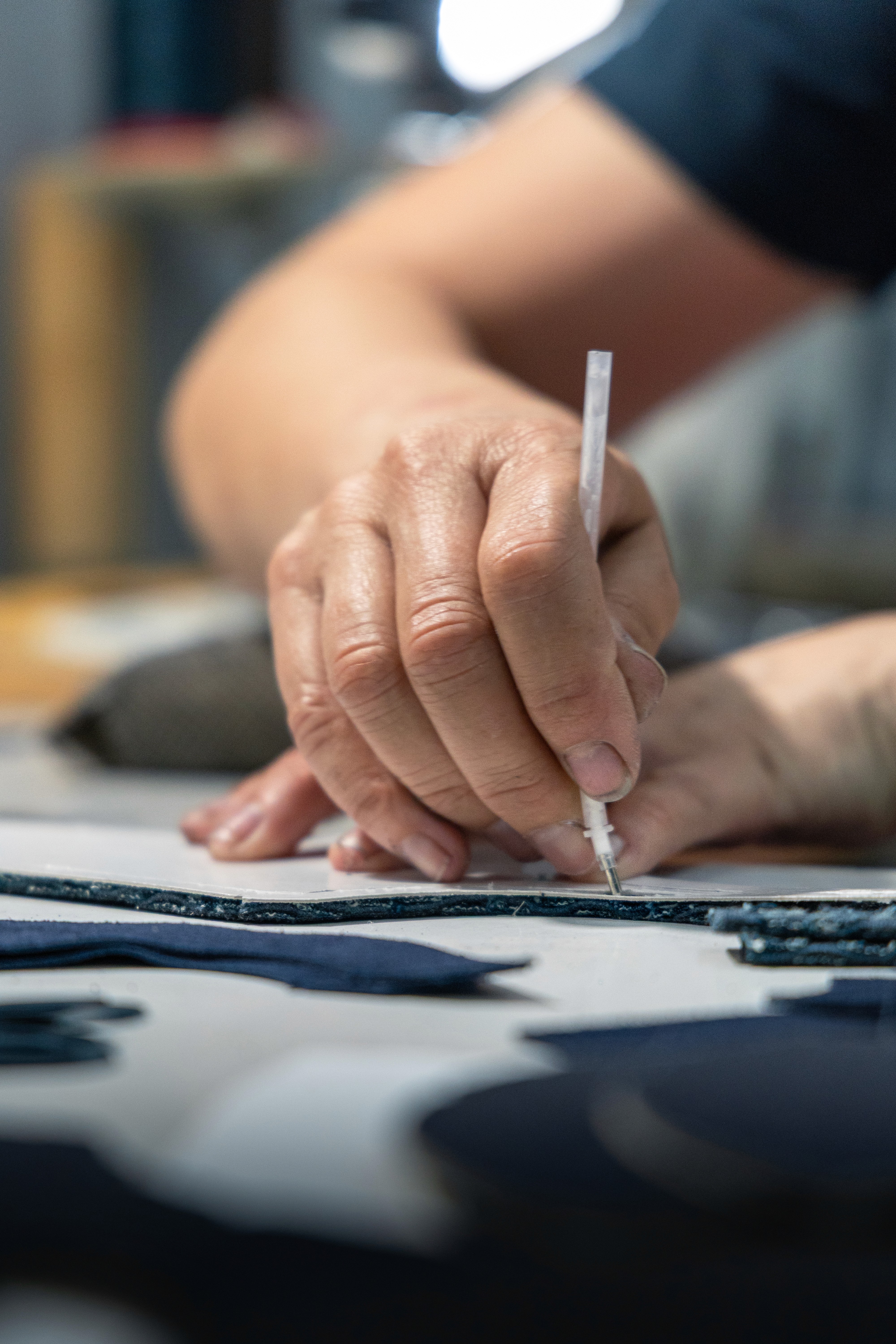
In northern Portugal, footwear knowledge is not confined to manuals or machines. It lives in the trained eye that recognises an unsuitable section of leather, the hand that guides a difficult curve beneath a needle and the instinct that knows when a finish needs one more pass. Premium manufacturing depends on this accumulated judgement. Technology can improve accuracy and repeatability, but craftsmanship gives a shoe its coherence: the quiet sense that every detail has been considered by someone who understands what comes next.

A Portuguese Footwear Heritage
Portugal’s footwear regions have developed through generations of specialised work. Tanneries, component makers, pattern technicians, cutters, stitchers and finishers form an unusually concentrated ecosystem. Proximity matters. It allows questions to be answered quickly, materials to be assessed in person and production knowledge to move between disciplines rather than remaining isolated.
Heritage, however, is not nostalgia. Its value lies in continuity: techniques are retained because they remain useful, then adapted to contemporary designs, new materials and demanding international standards. An experienced artisan does not reproduce the past. They carry forward an understanding of pressure, tension, sequence and touch that gives modern production greater control.
Inspection Before Intervention
Craft begins with selection. Leather is a natural material, and no two hides are identical. Grain, shade, stretch and small surface variations must be read before cutting begins. Inspectors map areas according to their suitability: cleaner sections for prominent panels, more flexible areas where movement is required, and unsuitable zones removed from consideration.
This judgement has a direct effect on both appearance and performance. If panels that should match are cut from visibly different areas, a pair can feel inconsistent. If a section with the wrong stretch is placed under tension, the upper may distort during lasting. Careful inspection is therefore not cosmetic; it is an early form of engineering.
Precision Cutting and Preparation
Cutting determines how efficiently a hide is used and how accurately every later operation can be performed. Patterns must follow the correct grain direction, paired pieces must correspond, and edges must be clean enough for skiving and stitching. Modern cutting systems bring repeatability, while skilled operators make the material decisions that software cannot see.
Before assembly, edges may be thinned, folded, painted or reinforced. Linings are paired with uppers. Eye stays, toe puffs, counters and decorative elements are prepared in a precise sequence. Much of this work disappears inside the finished shoe, yet it governs structure, comfort and durability. Premium craft often reveals itself through details the wearer never consciously notices.
Stitching as Structure
A seam is both a visual line and a structural bond. Stitch length, thread tension, needle choice and distance from the edge must suit the material. Too much tension can pucker a soft leather; too little can leave the seam unstable. Curves require controlled feeding so that the line remains fluid rather than mechanical.
The most accomplished stitching looks effortless because its complexity has been absorbed by the maker. At junctions, layers must meet without bulk. On mirrored panels, lines should remain balanced from left shoe to right. Consistency is not produced by speed alone, but by rhythm, concentration and an understanding of how the upper will later be shaped.
The Intelligence of Hand-Finishing
After assembly, hand-finishing brings definition. Edges are cleaned, surfaces conditioned and colour adjusted where necessary. Waxing, brushing and polishing can deepen leather without making it look artificial. Small marks are corrected, laces set and presentation reviewed from every angle.
These actions resist complete automation because materials do not behave with perfect uniformity. A machine can repeat a movement; an artisan decides whether that movement is appropriate for the specific pair in front of them. That distinction—between repetition and judgement—is the enduring value of craft.
Tradition in Conversation with Technology
The strongest factories do not choose between handwork and advanced machinery. They assign each to the task it performs best. Digital cutting, controlled presses and specialised stitching equipment improve precision. Human expertise interprets variation, protects delicate materials and makes decisions at the threshold where data becomes a physical object.
Craftsmanship is not the absence of technology; it is the intelligence that tells technology where precision matters.
Conclusion
A well-made shoe carries hundreds of decisions, most of them invisible. Together they create balance, comfort and character—and explain why skilled hands remain central to premium manufacturing.

More articles

Sunday, June 14, 2026
Written by
Coincal
Where every great shoe begins
How ideas evolve into production-ready footwear through research, creative direction and technical expertise.
Every successful footwear collection begins long before the first material is selected or the first sample is produced. It begins with an idea. Whether that idea arrives as a sketch, a moodboard or a fully developed concept, the design phase is where creative ambition meets the discipline of manufacturing. At Coincal, the purpose is not simply to draw an attractive shoe. It is to understand the brand behind it, the person who will wear it and the practical decisions that will allow the idea to become a convincing, producible object. This early alignment is especially important in footwear, where appearance, comfort and construction are inseparable. A line that gives a silhouette energy may change the pattern beneath it; a material chosen for softness may require hidden reinforcement; a sole selected for attitude will also determine weight and flex. Design becomes stronger when these consequences are welcomed from the beginning.
Every successful footwear collection begins long before the first material is selected or the first sample is produced. It begins with an idea. Whether that idea arrives as a sketch, a moodboard or a fully developed concept, the design phase is where creative ambition meets the discipline of manufacturing. At Coincal, the purpose is not simply to draw an attractive shoe. It is to understand the brand behind it, the person who will wear it and the practical decisions that will allow the idea to become a convincing, producible object. This early alignment is especially important in footwear, where appearance, comfort and construction are inseparable. A line that gives a silhouette energy may change the pattern beneath it; a material chosen for softness may require hidden reinforcement; a sole selected for attitude will also determine weight and flex. Design becomes stronger when these consequences are welcomed from the beginning.
Sunday, June 14, 2026
Written by
Coincal
Where Every Impression Represents the Brand
How precision embossing transforms logos into permanent signatures of quality and craftsmanship.
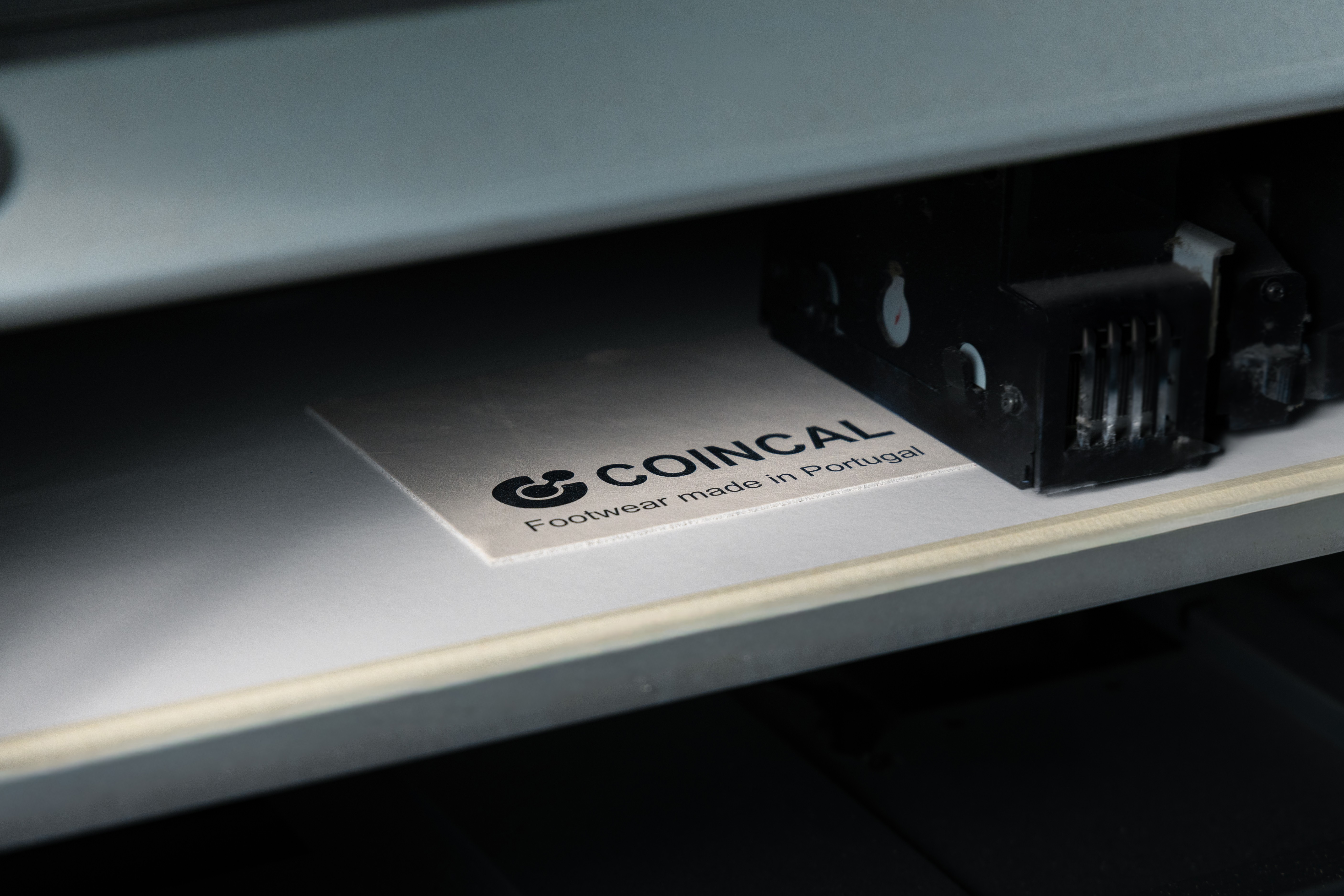
A logo is often the smallest element of a product, yet it carries the greatest responsibility. It represents the identity of a brand, communicates quality and becomes one of the most recognisable details of the finished shoe. Whether blind embossed, debossed, hot stamped or foil finished, logo application demands exceptional precision. Pressure, temperature, material behaviour and positioning must all work together to produce a clean, consistent and permanent result.
A logo is often the smallest element of a product, yet it carries the greatest responsibility. It represents the identity of a brand, communicates quality and becomes one of the most recognisable details of the finished shoe. Whether blind embossed, debossed, hot stamped or foil finished, logo application demands exceptional precision. Pressure, temperature, material behaviour and positioning must all work together to produce a clean, consistent and permanent result.
Wednesday, January 1, 2025
Written by
Coincal
Precision Stitched Into Every Detail
How embroidery transforms branding, decoration and identity into permanent features of every shoe.
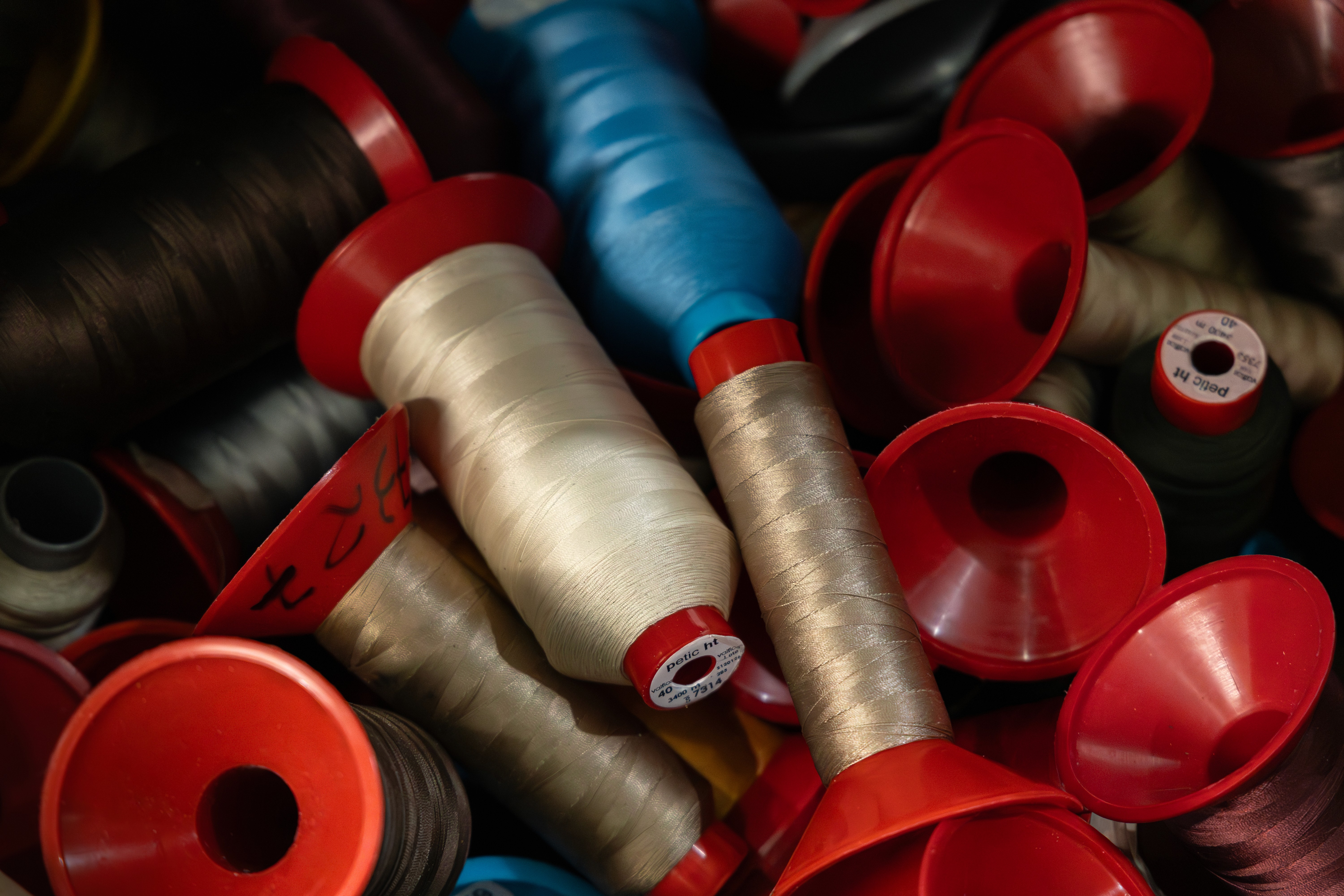
Embroidery is one of the most precise decorative processes in footwear manufacturing. Unlike printed graphics or applied embellishments, embroidery becomes physically integrated into the material through thousands of individual stitches. Every logo, monogram or decorative pattern must balance aesthetics, durability and production efficiency. The quality of the final result depends as much on digital preparation as it does on the precision of the embroidery machine itself.
Embroidery is one of the most precise decorative processes in footwear manufacturing. Unlike printed graphics or applied embellishments, embroidery becomes physically integrated into the material through thousands of individual stitches. Every logo, monogram or decorative pattern must balance aesthetics, durability and production efficiency. The quality of the final result depends as much on digital preparation as it does on the precision of the embroidery machine itself.

Wednesday, January 1, 2025
Written by
Coincal
The Final Step Is Never Just Shipping
How quality control, finishing and logistics ensure every pair reaches customers exactly as intended.
When production ends, responsibility does not. The final days before dispatch determine how a collection will be experienced by warehouses, retailers and, ultimately, customers. Inspection, finishing, packing and logistics are not administrative tasks added after manufacturing; they are the closing stages of it. They protect the work already invested in every pair and ensure that the product arrives with the same clarity it had when it left the line.
When production ends, responsibility does not. The final days before dispatch determine how a collection will be experienced by warehouses, retailers and, ultimately, customers. Inspection, finishing, packing and logistics are not administrative tasks added after manufacturing; they are the closing stages of it. They protect the work already invested in every pair and ensure that the product arrives with the same clarity it had when it left the line.

Thursday, December 19, 2024
Written by
Coincal
Where Hundreds of Components Become One Product
A closer look at the manufacturing process behind premium footwear.
A finished shoe appears singular: one silhouette, one colour story, one clear object. In production, it begins as a carefully organised field of separate parts. Upper panels, linings, reinforcements, threads, eyelets, insoles, outsoles, counters, toe puffs, labels and laces must arrive at the right workstation in the right condition. Assembly is the discipline of turning that complexity into unity without losing control of fit, proportion or finish.
A finished shoe appears singular: one silhouette, one colour story, one clear object. In production, it begins as a carefully organised field of separate parts. Upper panels, linings, reinforcements, threads, eyelets, insoles, outsoles, counters, toe puffs, labels and laces must arrive at the right workstation in the right condition. Assembly is the discipline of turning that complexity into unity without losing control of fit, proportion or finish.
Craftsmanship That Defines Every Detail
Discover why true craftsmanship remains one of the most valuable parts of modern footwear manufacturing.
Craftsmanship That Defines Every Detail
Written by
CRAFT
In northern Portugal, footwear knowledge is not confined to manuals or machines. It lives in the trained eye that recognises an unsuitable section of leather, the hand that guides a difficult curve beneath a needle and the instinct that knows when a finish needs one more pass. Premium manufacturing depends on this accumulated judgement. Technology can improve accuracy and repeatability, but craftsmanship gives a shoe its coherence: the quiet sense that every detail has been considered by someone who understands what comes next.
A Portuguese Footwear Heritage
Portugal’s footwear regions have developed through generations of specialised work. Tanneries, component makers, pattern technicians, cutters, stitchers and finishers form an unusually concentrated ecosystem. Proximity matters. It allows questions to be answered quickly, materials to be assessed in person and production knowledge to move between disciplines rather than remaining isolated.
Heritage, however, is not nostalgia. Its value lies in continuity: techniques are retained because they remain useful, then adapted to contemporary designs, new materials and demanding international standards. An experienced artisan does not reproduce the past. They carry forward an understanding of pressure, tension, sequence and touch that gives modern production greater control.
Inspection Before Intervention
Craft begins with selection. Leather is a natural material, and no two hides are identical. Grain, shade, stretch and small surface variations must be read before cutting begins. Inspectors map areas according to their suitability: cleaner sections for prominent panels, more flexible areas where movement is required, and unsuitable zones removed from consideration.
This judgement has a direct effect on both appearance and performance. If panels that should match are cut from visibly different areas, a pair can feel inconsistent. If a section with the wrong stretch is placed under tension, the upper may distort during lasting. Careful inspection is therefore not cosmetic; it is an early form of engineering.
Precision Cutting and Preparation
Cutting determines how efficiently a hide is used and how accurately every later operation can be performed. Patterns must follow the correct grain direction, paired pieces must correspond, and edges must be clean enough for skiving and stitching. Modern cutting systems bring repeatability, while skilled operators make the material decisions that software cannot see.
Before assembly, edges may be thinned, folded, painted or reinforced. Linings are paired with uppers. Eye stays, toe puffs, counters and decorative elements are prepared in a precise sequence. Much of this work disappears inside the finished shoe, yet it governs structure, comfort and durability. Premium craft often reveals itself through details the wearer never consciously notices.
Stitching as Structure
A seam is both a visual line and a structural bond. Stitch length, thread tension, needle choice and distance from the edge must suit the material. Too much tension can pucker a soft leather; too little can leave the seam unstable. Curves require controlled feeding so that the line remains fluid rather than mechanical.
The most accomplished stitching looks effortless because its complexity has been absorbed by the maker. At junctions, layers must meet without bulk. On mirrored panels, lines should remain balanced from left shoe to right. Consistency is not produced by speed alone, but by rhythm, concentration and an understanding of how the upper will later be shaped.
The Intelligence of Hand-Finishing
After assembly, hand-finishing brings definition. Edges are cleaned, surfaces conditioned and colour adjusted where necessary. Waxing, brushing and polishing can deepen leather without making it look artificial. Small marks are corrected, laces set and presentation reviewed from every angle.
These actions resist complete automation because materials do not behave with perfect uniformity. A machine can repeat a movement; an artisan decides whether that movement is appropriate for the specific pair in front of them. That distinction—between repetition and judgement—is the enduring value of craft.
Tradition in Conversation with Technology
The strongest factories do not choose between handwork and advanced machinery. They assign each to the task it performs best. Digital cutting, controlled presses and specialised stitching equipment improve precision. Human expertise interprets variation, protects delicate materials and makes decisions at the threshold where data becomes a physical object.
Craftsmanship is not the absence of technology; it is the intelligence that tells technology where precision matters.
Conclusion
A well-made shoe carries hundreds of decisions, most of them invisible. Together they create balance, comfort and character—and explain why skilled hands remain central to premium manufacturing.
More articles
Where every great shoe begins
How ideas evolve into production-ready footwear through research, creative direction and technical expertise.
Where Every Impression Represents the Brand
How precision embossing transforms logos into permanent signatures of quality and craftsmanship.
Precision Stitched Into Every Detail
How embroidery transforms branding, decoration and identity into permanent features of every shoe.
The Final Step Is Never Just Shipping
How quality control, finishing and logistics ensure every pair reaches customers exactly as intended.
Where Hundreds of Components Become One Product
A closer look at the manufacturing process behind premium footwear.
Craftsmanship That Defines Every Detail
Discover why true craftsmanship remains one of the most valuable parts of modern footwear manufacturing.
Craftsmanship That Defines Every Detail
Written by
CRAFT
In northern Portugal, footwear knowledge is not confined to manuals or machines. It lives in the trained eye that recognises an unsuitable section of leather, the hand that guides a difficult curve beneath a needle and the instinct that knows when a finish needs one more pass. Premium manufacturing depends on this accumulated judgement. Technology can improve accuracy and repeatability, but craftsmanship gives a shoe its coherence: the quiet sense that every detail has been considered by someone who understands what comes next.
A Portuguese Footwear Heritage
Portugal’s footwear regions have developed through generations of specialised work. Tanneries, component makers, pattern technicians, cutters, stitchers and finishers form an unusually concentrated ecosystem. Proximity matters. It allows questions to be answered quickly, materials to be assessed in person and production knowledge to move between disciplines rather than remaining isolated.
Heritage, however, is not nostalgia. Its value lies in continuity: techniques are retained because they remain useful, then adapted to contemporary designs, new materials and demanding international standards. An experienced artisan does not reproduce the past. They carry forward an understanding of pressure, tension, sequence and touch that gives modern production greater control.
Inspection Before Intervention
Craft begins with selection. Leather is a natural material, and no two hides are identical. Grain, shade, stretch and small surface variations must be read before cutting begins. Inspectors map areas according to their suitability: cleaner sections for prominent panels, more flexible areas where movement is required, and unsuitable zones removed from consideration.
This judgement has a direct effect on both appearance and performance. If panels that should match are cut from visibly different areas, a pair can feel inconsistent. If a section with the wrong stretch is placed under tension, the upper may distort during lasting. Careful inspection is therefore not cosmetic; it is an early form of engineering.
Precision Cutting and Preparation
Cutting determines how efficiently a hide is used and how accurately every later operation can be performed. Patterns must follow the correct grain direction, paired pieces must correspond, and edges must be clean enough for skiving and stitching. Modern cutting systems bring repeatability, while skilled operators make the material decisions that software cannot see.
Before assembly, edges may be thinned, folded, painted or reinforced. Linings are paired with uppers. Eye stays, toe puffs, counters and decorative elements are prepared in a precise sequence. Much of this work disappears inside the finished shoe, yet it governs structure, comfort and durability. Premium craft often reveals itself through details the wearer never consciously notices.
Stitching as Structure
A seam is both a visual line and a structural bond. Stitch length, thread tension, needle choice and distance from the edge must suit the material. Too much tension can pucker a soft leather; too little can leave the seam unstable. Curves require controlled feeding so that the line remains fluid rather than mechanical.
The most accomplished stitching looks effortless because its complexity has been absorbed by the maker. At junctions, layers must meet without bulk. On mirrored panels, lines should remain balanced from left shoe to right. Consistency is not produced by speed alone, but by rhythm, concentration and an understanding of how the upper will later be shaped.
The Intelligence of Hand-Finishing
After assembly, hand-finishing brings definition. Edges are cleaned, surfaces conditioned and colour adjusted where necessary. Waxing, brushing and polishing can deepen leather without making it look artificial. Small marks are corrected, laces set and presentation reviewed from every angle.
These actions resist complete automation because materials do not behave with perfect uniformity. A machine can repeat a movement; an artisan decides whether that movement is appropriate for the specific pair in front of them. That distinction—between repetition and judgement—is the enduring value of craft.
Tradition in Conversation with Technology
The strongest factories do not choose between handwork and advanced machinery. They assign each to the task it performs best. Digital cutting, controlled presses and specialised stitching equipment improve precision. Human expertise interprets variation, protects delicate materials and makes decisions at the threshold where data becomes a physical object.
Craftsmanship is not the absence of technology; it is the intelligence that tells technology where precision matters.
Conclusion
A well-made shoe carries hundreds of decisions, most of them invisible. Together they create balance, comfort and character—and explain why skilled hands remain central to premium manufacturing.
More articles
Where every great shoe begins
How ideas evolve into production-ready footwear through research, creative direction and technical expertise.
Where Every Impression Represents the Brand
How precision embossing transforms logos into permanent signatures of quality and craftsmanship.
Precision Stitched Into Every Detail
How embroidery transforms branding, decoration and identity into permanent features of every shoe.
The Final Step Is Never Just Shipping
How quality control, finishing and logistics ensure every pair reaches customers exactly as intended.
Where Hundreds of Components Become One Product
A closer look at the manufacturing process behind premium footwear.

We transform brands.
Your success is next.
Start your footwear journey by speaking with our manufacturing experts.

Craftsmanship That Defines Every Detail
Discover why true craftsmanship remains one of the most valuable parts of modern footwear manufacturing.
Craftsmanship That Defines Every Detail
Written by
CRAFT
In northern Portugal, footwear knowledge is not confined to manuals or machines. It lives in the trained eye that recognises an unsuitable section of leather, the hand that guides a difficult curve beneath a needle and the instinct that knows when a finish needs one more pass. Premium manufacturing depends on this accumulated judgement. Technology can improve accuracy and repeatability, but craftsmanship gives a shoe its coherence: the quiet sense that every detail has been considered by someone who understands what comes next.
A Portuguese Footwear Heritage
Portugal’s footwear regions have developed through generations of specialised work. Tanneries, component makers, pattern technicians, cutters, stitchers and finishers form an unusually concentrated ecosystem. Proximity matters. It allows questions to be answered quickly, materials to be assessed in person and production knowledge to move between disciplines rather than remaining isolated.
Heritage, however, is not nostalgia. Its value lies in continuity: techniques are retained because they remain useful, then adapted to contemporary designs, new materials and demanding international standards. An experienced artisan does not reproduce the past. They carry forward an understanding of pressure, tension, sequence and touch that gives modern production greater control.
Inspection Before Intervention
Craft begins with selection. Leather is a natural material, and no two hides are identical. Grain, shade, stretch and small surface variations must be read before cutting begins. Inspectors map areas according to their suitability: cleaner sections for prominent panels, more flexible areas where movement is required, and unsuitable zones removed from consideration.
This judgement has a direct effect on both appearance and performance. If panels that should match are cut from visibly different areas, a pair can feel inconsistent. If a section with the wrong stretch is placed under tension, the upper may distort during lasting. Careful inspection is therefore not cosmetic; it is an early form of engineering.
Precision Cutting and Preparation
Cutting determines how efficiently a hide is used and how accurately every later operation can be performed. Patterns must follow the correct grain direction, paired pieces must correspond, and edges must be clean enough for skiving and stitching. Modern cutting systems bring repeatability, while skilled operators make the material decisions that software cannot see.
Before assembly, edges may be thinned, folded, painted or reinforced. Linings are paired with uppers. Eye stays, toe puffs, counters and decorative elements are prepared in a precise sequence. Much of this work disappears inside the finished shoe, yet it governs structure, comfort and durability. Premium craft often reveals itself through details the wearer never consciously notices.
Stitching as Structure
A seam is both a visual line and a structural bond. Stitch length, thread tension, needle choice and distance from the edge must suit the material. Too much tension can pucker a soft leather; too little can leave the seam unstable. Curves require controlled feeding so that the line remains fluid rather than mechanical.
The most accomplished stitching looks effortless because its complexity has been absorbed by the maker. At junctions, layers must meet without bulk. On mirrored panels, lines should remain balanced from left shoe to right. Consistency is not produced by speed alone, but by rhythm, concentration and an understanding of how the upper will later be shaped.
The Intelligence of Hand-Finishing
After assembly, hand-finishing brings definition. Edges are cleaned, surfaces conditioned and colour adjusted where necessary. Waxing, brushing and polishing can deepen leather without making it look artificial. Small marks are corrected, laces set and presentation reviewed from every angle.
These actions resist complete automation because materials do not behave with perfect uniformity. A machine can repeat a movement; an artisan decides whether that movement is appropriate for the specific pair in front of them. That distinction—between repetition and judgement—is the enduring value of craft.
Tradition in Conversation with Technology
The strongest factories do not choose between handwork and advanced machinery. They assign each to the task it performs best. Digital cutting, controlled presses and specialised stitching equipment improve precision. Human expertise interprets variation, protects delicate materials and makes decisions at the threshold where data becomes a physical object.
Craftsmanship is not the absence of technology; it is the intelligence that tells technology where precision matters.
Conclusion
A well-made shoe carries hundreds of decisions, most of them invisible. Together they create balance, comfort and character—and explain why skilled hands remain central to premium manufacturing.
More articles
Sunday, June 14, 2026
Written by
Coincal
Where every great shoe begins
How ideas evolve into production-ready footwear through research, creative direction and technical expertise.
Every successful footwear collection begins long before the first material is selected or the first sample is produced. It begins with an idea. Whether that idea arrives as a sketch, a moodboard or a fully developed concept, the design phase is where creative ambition meets the discipline of manufacturing. At Coincal, the purpose is not simply to draw an attractive shoe. It is to understand the brand behind it, the person who will wear it and the practical decisions that will allow the idea to become a convincing, producible object. This early alignment is especially important in footwear, where appearance, comfort and construction are inseparable. A line that gives a silhouette energy may change the pattern beneath it; a material chosen for softness may require hidden reinforcement; a sole selected for attitude will also determine weight and flex. Design becomes stronger when these consequences are welcomed from the beginning.
Every successful footwear collection begins long before the first material is selected or the first sample is produced. It begins with an idea. Whether that idea arrives as a sketch, a moodboard or a fully developed concept, the design phase is where creative ambition meets the discipline of manufacturing. At Coincal, the purpose is not simply to draw an attractive shoe. It is to understand the brand behind it, the person who will wear it and the practical decisions that will allow the idea to become a convincing, producible object. This early alignment is especially important in footwear, where appearance, comfort and construction are inseparable. A line that gives a silhouette energy may change the pattern beneath it; a material chosen for softness may require hidden reinforcement; a sole selected for attitude will also determine weight and flex. Design becomes stronger when these consequences are welcomed from the beginning.
Sunday, June 14, 2026
Written by
Coincal
Where Every Impression Represents the Brand
How precision embossing transforms logos into permanent signatures of quality and craftsmanship.
A logo is often the smallest element of a product, yet it carries the greatest responsibility. It represents the identity of a brand, communicates quality and becomes one of the most recognisable details of the finished shoe. Whether blind embossed, debossed, hot stamped or foil finished, logo application demands exceptional precision. Pressure, temperature, material behaviour and positioning must all work together to produce a clean, consistent and permanent result.
A logo is often the smallest element of a product, yet it carries the greatest responsibility. It represents the identity of a brand, communicates quality and becomes one of the most recognisable details of the finished shoe. Whether blind embossed, debossed, hot stamped or foil finished, logo application demands exceptional precision. Pressure, temperature, material behaviour and positioning must all work together to produce a clean, consistent and permanent result.
Wednesday, January 1, 2025
Written by
Coincal
Precision Stitched Into Every Detail
How embroidery transforms branding, decoration and identity into permanent features of every shoe.
Embroidery is one of the most precise decorative processes in footwear manufacturing. Unlike printed graphics or applied embellishments, embroidery becomes physically integrated into the material through thousands of individual stitches. Every logo, monogram or decorative pattern must balance aesthetics, durability and production efficiency. The quality of the final result depends as much on digital preparation as it does on the precision of the embroidery machine itself.
Embroidery is one of the most precise decorative processes in footwear manufacturing. Unlike printed graphics or applied embellishments, embroidery becomes physically integrated into the material through thousands of individual stitches. Every logo, monogram or decorative pattern must balance aesthetics, durability and production efficiency. The quality of the final result depends as much on digital preparation as it does on the precision of the embroidery machine itself.
Wednesday, January 1, 2025
Written by
Coincal
The Final Step Is Never Just Shipping
How quality control, finishing and logistics ensure every pair reaches customers exactly as intended.
When production ends, responsibility does not. The final days before dispatch determine how a collection will be experienced by warehouses, retailers and, ultimately, customers. Inspection, finishing, packing and logistics are not administrative tasks added after manufacturing; they are the closing stages of it. They protect the work already invested in every pair and ensure that the product arrives with the same clarity it had when it left the line.
When production ends, responsibility does not. The final days before dispatch determine how a collection will be experienced by warehouses, retailers and, ultimately, customers. Inspection, finishing, packing and logistics are not administrative tasks added after manufacturing; they are the closing stages of it. They protect the work already invested in every pair and ensure that the product arrives with the same clarity it had when it left the line.
Thursday, December 19, 2024
Written by
Coincal
Where Hundreds of Components Become One Product
A closer look at the manufacturing process behind premium footwear.
A finished shoe appears singular: one silhouette, one colour story, one clear object. In production, it begins as a carefully organised field of separate parts. Upper panels, linings, reinforcements, threads, eyelets, insoles, outsoles, counters, toe puffs, labels and laces must arrive at the right workstation in the right condition. Assembly is the discipline of turning that complexity into unity without losing control of fit, proportion or finish.
A finished shoe appears singular: one silhouette, one colour story, one clear object. In production, it begins as a carefully organised field of separate parts. Upper panels, linings, reinforcements, threads, eyelets, insoles, outsoles, counters, toe puffs, labels and laces must arrive at the right workstation in the right condition. Assembly is the discipline of turning that complexity into unity without losing control of fit, proportion or finish.
Craftsmanship That Defines Every Detail
Discover why true craftsmanship remains one of the most valuable parts of modern footwear manufacturing.
Craftsmanship That Defines Every Detail
Written by
CRAFT
In northern Portugal, footwear knowledge is not confined to manuals or machines. It lives in the trained eye that recognises an unsuitable section of leather, the hand that guides a difficult curve beneath a needle and the instinct that knows when a finish needs one more pass. Premium manufacturing depends on this accumulated judgement. Technology can improve accuracy and repeatability, but craftsmanship gives a shoe its coherence: the quiet sense that every detail has been considered by someone who understands what comes next.
A Portuguese Footwear Heritage
Portugal’s footwear regions have developed through generations of specialised work. Tanneries, component makers, pattern technicians, cutters, stitchers and finishers form an unusually concentrated ecosystem. Proximity matters. It allows questions to be answered quickly, materials to be assessed in person and production knowledge to move between disciplines rather than remaining isolated.
Heritage, however, is not nostalgia. Its value lies in continuity: techniques are retained because they remain useful, then adapted to contemporary designs, new materials and demanding international standards. An experienced artisan does not reproduce the past. They carry forward an understanding of pressure, tension, sequence and touch that gives modern production greater control.
Inspection Before Intervention
Craft begins with selection. Leather is a natural material, and no two hides are identical. Grain, shade, stretch and small surface variations must be read before cutting begins. Inspectors map areas according to their suitability: cleaner sections for prominent panels, more flexible areas where movement is required, and unsuitable zones removed from consideration.
This judgement has a direct effect on both appearance and performance. If panels that should match are cut from visibly different areas, a pair can feel inconsistent. If a section with the wrong stretch is placed under tension, the upper may distort during lasting. Careful inspection is therefore not cosmetic; it is an early form of engineering.
Precision Cutting and Preparation
Cutting determines how efficiently a hide is used and how accurately every later operation can be performed. Patterns must follow the correct grain direction, paired pieces must correspond, and edges must be clean enough for skiving and stitching. Modern cutting systems bring repeatability, while skilled operators make the material decisions that software cannot see.
Before assembly, edges may be thinned, folded, painted or reinforced. Linings are paired with uppers. Eye stays, toe puffs, counters and decorative elements are prepared in a precise sequence. Much of this work disappears inside the finished shoe, yet it governs structure, comfort and durability. Premium craft often reveals itself through details the wearer never consciously notices.
Stitching as Structure
A seam is both a visual line and a structural bond. Stitch length, thread tension, needle choice and distance from the edge must suit the material. Too much tension can pucker a soft leather; too little can leave the seam unstable. Curves require controlled feeding so that the line remains fluid rather than mechanical.
The most accomplished stitching looks effortless because its complexity has been absorbed by the maker. At junctions, layers must meet without bulk. On mirrored panels, lines should remain balanced from left shoe to right. Consistency is not produced by speed alone, but by rhythm, concentration and an understanding of how the upper will later be shaped.
The Intelligence of Hand-Finishing
After assembly, hand-finishing brings definition. Edges are cleaned, surfaces conditioned and colour adjusted where necessary. Waxing, brushing and polishing can deepen leather without making it look artificial. Small marks are corrected, laces set and presentation reviewed from every angle.
These actions resist complete automation because materials do not behave with perfect uniformity. A machine can repeat a movement; an artisan decides whether that movement is appropriate for the specific pair in front of them. That distinction—between repetition and judgement—is the enduring value of craft.
Tradition in Conversation with Technology
The strongest factories do not choose between handwork and advanced machinery. They assign each to the task it performs best. Digital cutting, controlled presses and specialised stitching equipment improve precision. Human expertise interprets variation, protects delicate materials and makes decisions at the threshold where data becomes a physical object.
Craftsmanship is not the absence of technology; it is the intelligence that tells technology where precision matters.
Conclusion
A well-made shoe carries hundreds of decisions, most of them invisible. Together they create balance, comfort and character—and explain why skilled hands remain central to premium manufacturing.
More articles
Where every great shoe begins
How ideas evolve into production-ready footwear through research, creative direction and technical expertise.
Where Every Impression Represents the Brand
How precision embossing transforms logos into permanent signatures of quality and craftsmanship.
Precision Stitched Into Every Detail
How embroidery transforms branding, decoration and identity into permanent features of every shoe.
The Final Step Is Never Just Shipping
How quality control, finishing and logistics ensure every pair reaches customers exactly as intended.
Where Hundreds of Components Become One Product
A closer look at the manufacturing process behind premium footwear.
Craftsmanship That Defines Every Detail
Discover why true craftsmanship remains one of the most valuable parts of modern footwear manufacturing.
Craftsmanship That Defines Every Detail
Written by
CRAFT
In northern Portugal, footwear knowledge is not confined to manuals or machines. It lives in the trained eye that recognises an unsuitable section of leather, the hand that guides a difficult curve beneath a needle and the instinct that knows when a finish needs one more pass. Premium manufacturing depends on this accumulated judgement. Technology can improve accuracy and repeatability, but craftsmanship gives a shoe its coherence: the quiet sense that every detail has been considered by someone who understands what comes next.
A Portuguese Footwear Heritage
Portugal’s footwear regions have developed through generations of specialised work. Tanneries, component makers, pattern technicians, cutters, stitchers and finishers form an unusually concentrated ecosystem. Proximity matters. It allows questions to be answered quickly, materials to be assessed in person and production knowledge to move between disciplines rather than remaining isolated.
Heritage, however, is not nostalgia. Its value lies in continuity: techniques are retained because they remain useful, then adapted to contemporary designs, new materials and demanding international standards. An experienced artisan does not reproduce the past. They carry forward an understanding of pressure, tension, sequence and touch that gives modern production greater control.
Inspection Before Intervention
Craft begins with selection. Leather is a natural material, and no two hides are identical. Grain, shade, stretch and small surface variations must be read before cutting begins. Inspectors map areas according to their suitability: cleaner sections for prominent panels, more flexible areas where movement is required, and unsuitable zones removed from consideration.
This judgement has a direct effect on both appearance and performance. If panels that should match are cut from visibly different areas, a pair can feel inconsistent. If a section with the wrong stretch is placed under tension, the upper may distort during lasting. Careful inspection is therefore not cosmetic; it is an early form of engineering.
Precision Cutting and Preparation
Cutting determines how efficiently a hide is used and how accurately every later operation can be performed. Patterns must follow the correct grain direction, paired pieces must correspond, and edges must be clean enough for skiving and stitching. Modern cutting systems bring repeatability, while skilled operators make the material decisions that software cannot see.
Before assembly, edges may be thinned, folded, painted or reinforced. Linings are paired with uppers. Eye stays, toe puffs, counters and decorative elements are prepared in a precise sequence. Much of this work disappears inside the finished shoe, yet it governs structure, comfort and durability. Premium craft often reveals itself through details the wearer never consciously notices.
Stitching as Structure
A seam is both a visual line and a structural bond. Stitch length, thread tension, needle choice and distance from the edge must suit the material. Too much tension can pucker a soft leather; too little can leave the seam unstable. Curves require controlled feeding so that the line remains fluid rather than mechanical.
The most accomplished stitching looks effortless because its complexity has been absorbed by the maker. At junctions, layers must meet without bulk. On mirrored panels, lines should remain balanced from left shoe to right. Consistency is not produced by speed alone, but by rhythm, concentration and an understanding of how the upper will later be shaped.
The Intelligence of Hand-Finishing
After assembly, hand-finishing brings definition. Edges are cleaned, surfaces conditioned and colour adjusted where necessary. Waxing, brushing and polishing can deepen leather without making it look artificial. Small marks are corrected, laces set and presentation reviewed from every angle.
These actions resist complete automation because materials do not behave with perfect uniformity. A machine can repeat a movement; an artisan decides whether that movement is appropriate for the specific pair in front of them. That distinction—between repetition and judgement—is the enduring value of craft.
Tradition in Conversation with Technology
The strongest factories do not choose between handwork and advanced machinery. They assign each to the task it performs best. Digital cutting, controlled presses and specialised stitching equipment improve precision. Human expertise interprets variation, protects delicate materials and makes decisions at the threshold where data becomes a physical object.
Craftsmanship is not the absence of technology; it is the intelligence that tells technology where precision matters.
Conclusion
A well-made shoe carries hundreds of decisions, most of them invisible. Together they create balance, comfort and character—and explain why skilled hands remain central to premium manufacturing.
More articles
Where every great shoe begins
How ideas evolve into production-ready footwear through research, creative direction and technical expertise.
Where Every Impression Represents the Brand
How precision embossing transforms logos into permanent signatures of quality and craftsmanship.
Precision Stitched Into Every Detail
How embroidery transforms branding, decoration and identity into permanent features of every shoe.
The Final Step Is Never Just Shipping
How quality control, finishing and logistics ensure every pair reaches customers exactly as intended.
Where Hundreds of Components Become One Product
A closer look at the manufacturing process behind premium footwear.
We transform brands.
Your success is next.
Start your footwear journey by speaking with our manufacturing experts.
Craftsmanship That Defines Every Detail
Discover why true craftsmanship remains one of the most valuable parts of modern footwear manufacturing.
Craftsmanship That Defines Every Detail
Written by
CRAFT
In northern Portugal, footwear knowledge is not confined to manuals or machines. It lives in the trained eye that recognises an unsuitable section of leather, the hand that guides a difficult curve beneath a needle and the instinct that knows when a finish needs one more pass. Premium manufacturing depends on this accumulated judgement. Technology can improve accuracy and repeatability, but craftsmanship gives a shoe its coherence: the quiet sense that every detail has been considered by someone who understands what comes next.
A Portuguese Footwear Heritage
Portugal’s footwear regions have developed through generations of specialised work. Tanneries, component makers, pattern technicians, cutters, stitchers and finishers form an unusually concentrated ecosystem. Proximity matters. It allows questions to be answered quickly, materials to be assessed in person and production knowledge to move between disciplines rather than remaining isolated.
Heritage, however, is not nostalgia. Its value lies in continuity: techniques are retained because they remain useful, then adapted to contemporary designs, new materials and demanding international standards. An experienced artisan does not reproduce the past. They carry forward an understanding of pressure, tension, sequence and touch that gives modern production greater control.
Inspection Before Intervention
Craft begins with selection. Leather is a natural material, and no two hides are identical. Grain, shade, stretch and small surface variations must be read before cutting begins. Inspectors map areas according to their suitability: cleaner sections for prominent panels, more flexible areas where movement is required, and unsuitable zones removed from consideration.
This judgement has a direct effect on both appearance and performance. If panels that should match are cut from visibly different areas, a pair can feel inconsistent. If a section with the wrong stretch is placed under tension, the upper may distort during lasting. Careful inspection is therefore not cosmetic; it is an early form of engineering.
Precision Cutting and Preparation
Cutting determines how efficiently a hide is used and how accurately every later operation can be performed. Patterns must follow the correct grain direction, paired pieces must correspond, and edges must be clean enough for skiving and stitching. Modern cutting systems bring repeatability, while skilled operators make the material decisions that software cannot see.
Before assembly, edges may be thinned, folded, painted or reinforced. Linings are paired with uppers. Eye stays, toe puffs, counters and decorative elements are prepared in a precise sequence. Much of this work disappears inside the finished shoe, yet it governs structure, comfort and durability. Premium craft often reveals itself through details the wearer never consciously notices.
Stitching as Structure
A seam is both a visual line and a structural bond. Stitch length, thread tension, needle choice and distance from the edge must suit the material. Too much tension can pucker a soft leather; too little can leave the seam unstable. Curves require controlled feeding so that the line remains fluid rather than mechanical.
The most accomplished stitching looks effortless because its complexity has been absorbed by the maker. At junctions, layers must meet without bulk. On mirrored panels, lines should remain balanced from left shoe to right. Consistency is not produced by speed alone, but by rhythm, concentration and an understanding of how the upper will later be shaped.
The Intelligence of Hand-Finishing
After assembly, hand-finishing brings definition. Edges are cleaned, surfaces conditioned and colour adjusted where necessary. Waxing, brushing and polishing can deepen leather without making it look artificial. Small marks are corrected, laces set and presentation reviewed from every angle.
These actions resist complete automation because materials do not behave with perfect uniformity. A machine can repeat a movement; an artisan decides whether that movement is appropriate for the specific pair in front of them. That distinction—between repetition and judgement—is the enduring value of craft.
Tradition in Conversation with Technology
The strongest factories do not choose between handwork and advanced machinery. They assign each to the task it performs best. Digital cutting, controlled presses and specialised stitching equipment improve precision. Human expertise interprets variation, protects delicate materials and makes decisions at the threshold where data becomes a physical object.
Craftsmanship is not the absence of technology; it is the intelligence that tells technology where precision matters.
Conclusion
A well-made shoe carries hundreds of decisions, most of them invisible. Together they create balance, comfort and character—and explain why skilled hands remain central to premium manufacturing.
More articles
Sunday, June 14, 2026
Written by
Coincal
Where every great shoe begins
How ideas evolve into production-ready footwear through research, creative direction and technical expertise.
Every successful footwear collection begins long before the first material is selected or the first sample is produced. It begins with an idea. Whether that idea arrives as a sketch, a moodboard or a fully developed concept, the design phase is where creative ambition meets the discipline of manufacturing. At Coincal, the purpose is not simply to draw an attractive shoe. It is to understand the brand behind it, the person who will wear it and the practical decisions that will allow the idea to become a convincing, producible object. This early alignment is especially important in footwear, where appearance, comfort and construction are inseparable. A line that gives a silhouette energy may change the pattern beneath it; a material chosen for softness may require hidden reinforcement; a sole selected for attitude will also determine weight and flex. Design becomes stronger when these consequences are welcomed from the beginning.
Every successful footwear collection begins long before the first material is selected or the first sample is produced. It begins with an idea. Whether that idea arrives as a sketch, a moodboard or a fully developed concept, the design phase is where creative ambition meets the discipline of manufacturing. At Coincal, the purpose is not simply to draw an attractive shoe. It is to understand the brand behind it, the person who will wear it and the practical decisions that will allow the idea to become a convincing, producible object. This early alignment is especially important in footwear, where appearance, comfort and construction are inseparable. A line that gives a silhouette energy may change the pattern beneath it; a material chosen for softness may require hidden reinforcement; a sole selected for attitude will also determine weight and flex. Design becomes stronger when these consequences are welcomed from the beginning.
Sunday, June 14, 2026
Written by
Coincal
Where Every Impression Represents the Brand
How precision embossing transforms logos into permanent signatures of quality and craftsmanship.
A logo is often the smallest element of a product, yet it carries the greatest responsibility. It represents the identity of a brand, communicates quality and becomes one of the most recognisable details of the finished shoe. Whether blind embossed, debossed, hot stamped or foil finished, logo application demands exceptional precision. Pressure, temperature, material behaviour and positioning must all work together to produce a clean, consistent and permanent result.
A logo is often the smallest element of a product, yet it carries the greatest responsibility. It represents the identity of a brand, communicates quality and becomes one of the most recognisable details of the finished shoe. Whether blind embossed, debossed, hot stamped or foil finished, logo application demands exceptional precision. Pressure, temperature, material behaviour and positioning must all work together to produce a clean, consistent and permanent result.
Wednesday, January 1, 2025
Written by
Coincal
Precision Stitched Into Every Detail
How embroidery transforms branding, decoration and identity into permanent features of every shoe.
Embroidery is one of the most precise decorative processes in footwear manufacturing. Unlike printed graphics or applied embellishments, embroidery becomes physically integrated into the material through thousands of individual stitches. Every logo, monogram or decorative pattern must balance aesthetics, durability and production efficiency. The quality of the final result depends as much on digital preparation as it does on the precision of the embroidery machine itself.
Embroidery is one of the most precise decorative processes in footwear manufacturing. Unlike printed graphics or applied embellishments, embroidery becomes physically integrated into the material through thousands of individual stitches. Every logo, monogram or decorative pattern must balance aesthetics, durability and production efficiency. The quality of the final result depends as much on digital preparation as it does on the precision of the embroidery machine itself.
Wednesday, January 1, 2025
Written by
Coincal
The Final Step Is Never Just Shipping
How quality control, finishing and logistics ensure every pair reaches customers exactly as intended.
When production ends, responsibility does not. The final days before dispatch determine how a collection will be experienced by warehouses, retailers and, ultimately, customers. Inspection, finishing, packing and logistics are not administrative tasks added after manufacturing; they are the closing stages of it. They protect the work already invested in every pair and ensure that the product arrives with the same clarity it had when it left the line.
When production ends, responsibility does not. The final days before dispatch determine how a collection will be experienced by warehouses, retailers and, ultimately, customers. Inspection, finishing, packing and logistics are not administrative tasks added after manufacturing; they are the closing stages of it. They protect the work already invested in every pair and ensure that the product arrives with the same clarity it had when it left the line.
Thursday, December 19, 2024
Written by
Coincal
Where Hundreds of Components Become One Product
A closer look at the manufacturing process behind premium footwear.
A finished shoe appears singular: one silhouette, one colour story, one clear object. In production, it begins as a carefully organised field of separate parts. Upper panels, linings, reinforcements, threads, eyelets, insoles, outsoles, counters, toe puffs, labels and laces must arrive at the right workstation in the right condition. Assembly is the discipline of turning that complexity into unity without losing control of fit, proportion or finish.
A finished shoe appears singular: one silhouette, one colour story, one clear object. In production, it begins as a carefully organised field of separate parts. Upper panels, linings, reinforcements, threads, eyelets, insoles, outsoles, counters, toe puffs, labels and laces must arrive at the right workstation in the right condition. Assembly is the discipline of turning that complexity into unity without losing control of fit, proportion or finish.
Craftsmanship That Defines Every Detail
Discover why true craftsmanship remains one of the most valuable parts of modern footwear manufacturing.
Craftsmanship That Defines Every Detail
Written by
CRAFT
In northern Portugal, footwear knowledge is not confined to manuals or machines. It lives in the trained eye that recognises an unsuitable section of leather, the hand that guides a difficult curve beneath a needle and the instinct that knows when a finish needs one more pass. Premium manufacturing depends on this accumulated judgement. Technology can improve accuracy and repeatability, but craftsmanship gives a shoe its coherence: the quiet sense that every detail has been considered by someone who understands what comes next.
A Portuguese Footwear Heritage
Portugal’s footwear regions have developed through generations of specialised work. Tanneries, component makers, pattern technicians, cutters, stitchers and finishers form an unusually concentrated ecosystem. Proximity matters. It allows questions to be answered quickly, materials to be assessed in person and production knowledge to move between disciplines rather than remaining isolated.
Heritage, however, is not nostalgia. Its value lies in continuity: techniques are retained because they remain useful, then adapted to contemporary designs, new materials and demanding international standards. An experienced artisan does not reproduce the past. They carry forward an understanding of pressure, tension, sequence and touch that gives modern production greater control.
Inspection Before Intervention
Craft begins with selection. Leather is a natural material, and no two hides are identical. Grain, shade, stretch and small surface variations must be read before cutting begins. Inspectors map areas according to their suitability: cleaner sections for prominent panels, more flexible areas where movement is required, and unsuitable zones removed from consideration.
This judgement has a direct effect on both appearance and performance. If panels that should match are cut from visibly different areas, a pair can feel inconsistent. If a section with the wrong stretch is placed under tension, the upper may distort during lasting. Careful inspection is therefore not cosmetic; it is an early form of engineering.
Precision Cutting and Preparation
Cutting determines how efficiently a hide is used and how accurately every later operation can be performed. Patterns must follow the correct grain direction, paired pieces must correspond, and edges must be clean enough for skiving and stitching. Modern cutting systems bring repeatability, while skilled operators make the material decisions that software cannot see.
Before assembly, edges may be thinned, folded, painted or reinforced. Linings are paired with uppers. Eye stays, toe puffs, counters and decorative elements are prepared in a precise sequence. Much of this work disappears inside the finished shoe, yet it governs structure, comfort and durability. Premium craft often reveals itself through details the wearer never consciously notices.
Stitching as Structure
A seam is both a visual line and a structural bond. Stitch length, thread tension, needle choice and distance from the edge must suit the material. Too much tension can pucker a soft leather; too little can leave the seam unstable. Curves require controlled feeding so that the line remains fluid rather than mechanical.
The most accomplished stitching looks effortless because its complexity has been absorbed by the maker. At junctions, layers must meet without bulk. On mirrored panels, lines should remain balanced from left shoe to right. Consistency is not produced by speed alone, but by rhythm, concentration and an understanding of how the upper will later be shaped.
The Intelligence of Hand-Finishing
After assembly, hand-finishing brings definition. Edges are cleaned, surfaces conditioned and colour adjusted where necessary. Waxing, brushing and polishing can deepen leather without making it look artificial. Small marks are corrected, laces set and presentation reviewed from every angle.
These actions resist complete automation because materials do not behave with perfect uniformity. A machine can repeat a movement; an artisan decides whether that movement is appropriate for the specific pair in front of them. That distinction—between repetition and judgement—is the enduring value of craft.
Tradition in Conversation with Technology
The strongest factories do not choose between handwork and advanced machinery. They assign each to the task it performs best. Digital cutting, controlled presses and specialised stitching equipment improve precision. Human expertise interprets variation, protects delicate materials and makes decisions at the threshold where data becomes a physical object.
Craftsmanship is not the absence of technology; it is the intelligence that tells technology where precision matters.
Conclusion
A well-made shoe carries hundreds of decisions, most of them invisible. Together they create balance, comfort and character—and explain why skilled hands remain central to premium manufacturing.
More articles
Where every great shoe begins
How ideas evolve into production-ready footwear through research, creative direction and technical expertise.
Where Every Impression Represents the Brand
How precision embossing transforms logos into permanent signatures of quality and craftsmanship.
Precision Stitched Into Every Detail
How embroidery transforms branding, decoration and identity into permanent features of every shoe.
The Final Step Is Never Just Shipping
How quality control, finishing and logistics ensure every pair reaches customers exactly as intended.
Where Hundreds of Components Become One Product
A closer look at the manufacturing process behind premium footwear.
Craftsmanship That Defines Every Detail
Discover why true craftsmanship remains one of the most valuable parts of modern footwear manufacturing.
Craftsmanship That Defines Every Detail
Written by
CRAFT
In northern Portugal, footwear knowledge is not confined to manuals or machines. It lives in the trained eye that recognises an unsuitable section of leather, the hand that guides a difficult curve beneath a needle and the instinct that knows when a finish needs one more pass. Premium manufacturing depends on this accumulated judgement. Technology can improve accuracy and repeatability, but craftsmanship gives a shoe its coherence: the quiet sense that every detail has been considered by someone who understands what comes next.
A Portuguese Footwear Heritage
Portugal’s footwear regions have developed through generations of specialised work. Tanneries, component makers, pattern technicians, cutters, stitchers and finishers form an unusually concentrated ecosystem. Proximity matters. It allows questions to be answered quickly, materials to be assessed in person and production knowledge to move between disciplines rather than remaining isolated.
Heritage, however, is not nostalgia. Its value lies in continuity: techniques are retained because they remain useful, then adapted to contemporary designs, new materials and demanding international standards. An experienced artisan does not reproduce the past. They carry forward an understanding of pressure, tension, sequence and touch that gives modern production greater control.
Inspection Before Intervention
Craft begins with selection. Leather is a natural material, and no two hides are identical. Grain, shade, stretch and small surface variations must be read before cutting begins. Inspectors map areas according to their suitability: cleaner sections for prominent panels, more flexible areas where movement is required, and unsuitable zones removed from consideration.
This judgement has a direct effect on both appearance and performance. If panels that should match are cut from visibly different areas, a pair can feel inconsistent. If a section with the wrong stretch is placed under tension, the upper may distort during lasting. Careful inspection is therefore not cosmetic; it is an early form of engineering.
Precision Cutting and Preparation
Cutting determines how efficiently a hide is used and how accurately every later operation can be performed. Patterns must follow the correct grain direction, paired pieces must correspond, and edges must be clean enough for skiving and stitching. Modern cutting systems bring repeatability, while skilled operators make the material decisions that software cannot see.
Before assembly, edges may be thinned, folded, painted or reinforced. Linings are paired with uppers. Eye stays, toe puffs, counters and decorative elements are prepared in a precise sequence. Much of this work disappears inside the finished shoe, yet it governs structure, comfort and durability. Premium craft often reveals itself through details the wearer never consciously notices.
Stitching as Structure
A seam is both a visual line and a structural bond. Stitch length, thread tension, needle choice and distance from the edge must suit the material. Too much tension can pucker a soft leather; too little can leave the seam unstable. Curves require controlled feeding so that the line remains fluid rather than mechanical.
The most accomplished stitching looks effortless because its complexity has been absorbed by the maker. At junctions, layers must meet without bulk. On mirrored panels, lines should remain balanced from left shoe to right. Consistency is not produced by speed alone, but by rhythm, concentration and an understanding of how the upper will later be shaped.
The Intelligence of Hand-Finishing
After assembly, hand-finishing brings definition. Edges are cleaned, surfaces conditioned and colour adjusted where necessary. Waxing, brushing and polishing can deepen leather without making it look artificial. Small marks are corrected, laces set and presentation reviewed from every angle.
These actions resist complete automation because materials do not behave with perfect uniformity. A machine can repeat a movement; an artisan decides whether that movement is appropriate for the specific pair in front of them. That distinction—between repetition and judgement—is the enduring value of craft.
Tradition in Conversation with Technology
The strongest factories do not choose between handwork and advanced machinery. They assign each to the task it performs best. Digital cutting, controlled presses and specialised stitching equipment improve precision. Human expertise interprets variation, protects delicate materials and makes decisions at the threshold where data becomes a physical object.
Craftsmanship is not the absence of technology; it is the intelligence that tells technology where precision matters.
Conclusion
A well-made shoe carries hundreds of decisions, most of them invisible. Together they create balance, comfort and character—and explain why skilled hands remain central to premium manufacturing.
More articles
Where every great shoe begins
How ideas evolve into production-ready footwear through research, creative direction and technical expertise.
Where Every Impression Represents the Brand
How precision embossing transforms logos into permanent signatures of quality and craftsmanship.
Precision Stitched Into Every Detail
How embroidery transforms branding, decoration and identity into permanent features of every shoe.
The Final Step Is Never Just Shipping
How quality control, finishing and logistics ensure every pair reaches customers exactly as intended.
Where Hundreds of Components Become One Product
A closer look at the manufacturing process behind premium footwear.
We transform brands.
Your success is next.
Start your footwear journey by speaking with our manufacturing experts.
Craftsmanship That Defines Every Detail
Discover why true craftsmanship remains one of the most valuable parts of modern footwear manufacturing.
Craftsmanship That Defines Every Detail
Written by
CRAFT
In northern Portugal, footwear knowledge is not confined to manuals or machines. It lives in the trained eye that recognises an unsuitable section of leather, the hand that guides a difficult curve beneath a needle and the instinct that knows when a finish needs one more pass. Premium manufacturing depends on this accumulated judgement. Technology can improve accuracy and repeatability, but craftsmanship gives a shoe its coherence: the quiet sense that every detail has been considered by someone who understands what comes next.
A Portuguese Footwear Heritage
Portugal’s footwear regions have developed through generations of specialised work. Tanneries, component makers, pattern technicians, cutters, stitchers and finishers form an unusually concentrated ecosystem. Proximity matters. It allows questions to be answered quickly, materials to be assessed in person and production knowledge to move between disciplines rather than remaining isolated.
Heritage, however, is not nostalgia. Its value lies in continuity: techniques are retained because they remain useful, then adapted to contemporary designs, new materials and demanding international standards. An experienced artisan does not reproduce the past. They carry forward an understanding of pressure, tension, sequence and touch that gives modern production greater control.
Inspection Before Intervention
Craft begins with selection. Leather is a natural material, and no two hides are identical. Grain, shade, stretch and small surface variations must be read before cutting begins. Inspectors map areas according to their suitability: cleaner sections for prominent panels, more flexible areas where movement is required, and unsuitable zones removed from consideration.
This judgement has a direct effect on both appearance and performance. If panels that should match are cut from visibly different areas, a pair can feel inconsistent. If a section with the wrong stretch is placed under tension, the upper may distort during lasting. Careful inspection is therefore not cosmetic; it is an early form of engineering.
Precision Cutting and Preparation
Cutting determines how efficiently a hide is used and how accurately every later operation can be performed. Patterns must follow the correct grain direction, paired pieces must correspond, and edges must be clean enough for skiving and stitching. Modern cutting systems bring repeatability, while skilled operators make the material decisions that software cannot see.
Before assembly, edges may be thinned, folded, painted or reinforced. Linings are paired with uppers. Eye stays, toe puffs, counters and decorative elements are prepared in a precise sequence. Much of this work disappears inside the finished shoe, yet it governs structure, comfort and durability. Premium craft often reveals itself through details the wearer never consciously notices.
Stitching as Structure
A seam is both a visual line and a structural bond. Stitch length, thread tension, needle choice and distance from the edge must suit the material. Too much tension can pucker a soft leather; too little can leave the seam unstable. Curves require controlled feeding so that the line remains fluid rather than mechanical.
The most accomplished stitching looks effortless because its complexity has been absorbed by the maker. At junctions, layers must meet without bulk. On mirrored panels, lines should remain balanced from left shoe to right. Consistency is not produced by speed alone, but by rhythm, concentration and an understanding of how the upper will later be shaped.
The Intelligence of Hand-Finishing
After assembly, hand-finishing brings definition. Edges are cleaned, surfaces conditioned and colour adjusted where necessary. Waxing, brushing and polishing can deepen leather without making it look artificial. Small marks are corrected, laces set and presentation reviewed from every angle.
These actions resist complete automation because materials do not behave with perfect uniformity. A machine can repeat a movement; an artisan decides whether that movement is appropriate for the specific pair in front of them. That distinction—between repetition and judgement—is the enduring value of craft.
Tradition in Conversation with Technology
The strongest factories do not choose between handwork and advanced machinery. They assign each to the task it performs best. Digital cutting, controlled presses and specialised stitching equipment improve precision. Human expertise interprets variation, protects delicate materials and makes decisions at the threshold where data becomes a physical object.
Craftsmanship is not the absence of technology; it is the intelligence that tells technology where precision matters.
Conclusion
A well-made shoe carries hundreds of decisions, most of them invisible. Together they create balance, comfort and character—and explain why skilled hands remain central to premium manufacturing.
More articles
Sunday, June 14, 2026
Written by
Coincal
Where every great shoe begins
How ideas evolve into production-ready footwear through research, creative direction and technical expertise.
Every successful footwear collection begins long before the first material is selected or the first sample is produced. It begins with an idea. Whether that idea arrives as a sketch, a moodboard or a fully developed concept, the design phase is where creative ambition meets the discipline of manufacturing. At Coincal, the purpose is not simply to draw an attractive shoe. It is to understand the brand behind it, the person who will wear it and the practical decisions that will allow the idea to become a convincing, producible object. This early alignment is especially important in footwear, where appearance, comfort and construction are inseparable. A line that gives a silhouette energy may change the pattern beneath it; a material chosen for softness may require hidden reinforcement; a sole selected for attitude will also determine weight and flex. Design becomes stronger when these consequences are welcomed from the beginning.
Every successful footwear collection begins long before the first material is selected or the first sample is produced. It begins with an idea. Whether that idea arrives as a sketch, a moodboard or a fully developed concept, the design phase is where creative ambition meets the discipline of manufacturing. At Coincal, the purpose is not simply to draw an attractive shoe. It is to understand the brand behind it, the person who will wear it and the practical decisions that will allow the idea to become a convincing, producible object. This early alignment is especially important in footwear, where appearance, comfort and construction are inseparable. A line that gives a silhouette energy may change the pattern beneath it; a material chosen for softness may require hidden reinforcement; a sole selected for attitude will also determine weight and flex. Design becomes stronger when these consequences are welcomed from the beginning.
Sunday, June 14, 2026
Written by
Coincal
Where Every Impression Represents the Brand
How precision embossing transforms logos into permanent signatures of quality and craftsmanship.
A logo is often the smallest element of a product, yet it carries the greatest responsibility. It represents the identity of a brand, communicates quality and becomes one of the most recognisable details of the finished shoe. Whether blind embossed, debossed, hot stamped or foil finished, logo application demands exceptional precision. Pressure, temperature, material behaviour and positioning must all work together to produce a clean, consistent and permanent result.
A logo is often the smallest element of a product, yet it carries the greatest responsibility. It represents the identity of a brand, communicates quality and becomes one of the most recognisable details of the finished shoe. Whether blind embossed, debossed, hot stamped or foil finished, logo application demands exceptional precision. Pressure, temperature, material behaviour and positioning must all work together to produce a clean, consistent and permanent result.
Wednesday, January 1, 2025
Written by
Coincal
Precision Stitched Into Every Detail
How embroidery transforms branding, decoration and identity into permanent features of every shoe.
Embroidery is one of the most precise decorative processes in footwear manufacturing. Unlike printed graphics or applied embellishments, embroidery becomes physically integrated into the material through thousands of individual stitches. Every logo, monogram or decorative pattern must balance aesthetics, durability and production efficiency. The quality of the final result depends as much on digital preparation as it does on the precision of the embroidery machine itself.
Embroidery is one of the most precise decorative processes in footwear manufacturing. Unlike printed graphics or applied embellishments, embroidery becomes physically integrated into the material through thousands of individual stitches. Every logo, monogram or decorative pattern must balance aesthetics, durability and production efficiency. The quality of the final result depends as much on digital preparation as it does on the precision of the embroidery machine itself.
Wednesday, January 1, 2025
Written by
Coincal
The Final Step Is Never Just Shipping
How quality control, finishing and logistics ensure every pair reaches customers exactly as intended.
When production ends, responsibility does not. The final days before dispatch determine how a collection will be experienced by warehouses, retailers and, ultimately, customers. Inspection, finishing, packing and logistics are not administrative tasks added after manufacturing; they are the closing stages of it. They protect the work already invested in every pair and ensure that the product arrives with the same clarity it had when it left the line.
When production ends, responsibility does not. The final days before dispatch determine how a collection will be experienced by warehouses, retailers and, ultimately, customers. Inspection, finishing, packing and logistics are not administrative tasks added after manufacturing; they are the closing stages of it. They protect the work already invested in every pair and ensure that the product arrives with the same clarity it had when it left the line.
Thursday, December 19, 2024
Written by
Coincal
Where Hundreds of Components Become One Product
A closer look at the manufacturing process behind premium footwear.
A finished shoe appears singular: one silhouette, one colour story, one clear object. In production, it begins as a carefully organised field of separate parts. Upper panels, linings, reinforcements, threads, eyelets, insoles, outsoles, counters, toe puffs, labels and laces must arrive at the right workstation in the right condition. Assembly is the discipline of turning that complexity into unity without losing control of fit, proportion or finish.
A finished shoe appears singular: one silhouette, one colour story, one clear object. In production, it begins as a carefully organised field of separate parts. Upper panels, linings, reinforcements, threads, eyelets, insoles, outsoles, counters, toe puffs, labels and laces must arrive at the right workstation in the right condition. Assembly is the discipline of turning that complexity into unity without losing control of fit, proportion or finish.
Craftsmanship That Defines Every Detail
Discover why true craftsmanship remains one of the most valuable parts of modern footwear manufacturing.
Craftsmanship That Defines Every Detail
Written by
CRAFT
In northern Portugal, footwear knowledge is not confined to manuals or machines. It lives in the trained eye that recognises an unsuitable section of leather, the hand that guides a difficult curve beneath a needle and the instinct that knows when a finish needs one more pass. Premium manufacturing depends on this accumulated judgement. Technology can improve accuracy and repeatability, but craftsmanship gives a shoe its coherence: the quiet sense that every detail has been considered by someone who understands what comes next.
A Portuguese Footwear Heritage
Portugal’s footwear regions have developed through generations of specialised work. Tanneries, component makers, pattern technicians, cutters, stitchers and finishers form an unusually concentrated ecosystem. Proximity matters. It allows questions to be answered quickly, materials to be assessed in person and production knowledge to move between disciplines rather than remaining isolated.
Heritage, however, is not nostalgia. Its value lies in continuity: techniques are retained because they remain useful, then adapted to contemporary designs, new materials and demanding international standards. An experienced artisan does not reproduce the past. They carry forward an understanding of pressure, tension, sequence and touch that gives modern production greater control.
Inspection Before Intervention
Craft begins with selection. Leather is a natural material, and no two hides are identical. Grain, shade, stretch and small surface variations must be read before cutting begins. Inspectors map areas according to their suitability: cleaner sections for prominent panels, more flexible areas where movement is required, and unsuitable zones removed from consideration.
This judgement has a direct effect on both appearance and performance. If panels that should match are cut from visibly different areas, a pair can feel inconsistent. If a section with the wrong stretch is placed under tension, the upper may distort during lasting. Careful inspection is therefore not cosmetic; it is an early form of engineering.
Precision Cutting and Preparation
Cutting determines how efficiently a hide is used and how accurately every later operation can be performed. Patterns must follow the correct grain direction, paired pieces must correspond, and edges must be clean enough for skiving and stitching. Modern cutting systems bring repeatability, while skilled operators make the material decisions that software cannot see.
Before assembly, edges may be thinned, folded, painted or reinforced. Linings are paired with uppers. Eye stays, toe puffs, counters and decorative elements are prepared in a precise sequence. Much of this work disappears inside the finished shoe, yet it governs structure, comfort and durability. Premium craft often reveals itself through details the wearer never consciously notices.
Stitching as Structure
A seam is both a visual line and a structural bond. Stitch length, thread tension, needle choice and distance from the edge must suit the material. Too much tension can pucker a soft leather; too little can leave the seam unstable. Curves require controlled feeding so that the line remains fluid rather than mechanical.
The most accomplished stitching looks effortless because its complexity has been absorbed by the maker. At junctions, layers must meet without bulk. On mirrored panels, lines should remain balanced from left shoe to right. Consistency is not produced by speed alone, but by rhythm, concentration and an understanding of how the upper will later be shaped.
The Intelligence of Hand-Finishing
After assembly, hand-finishing brings definition. Edges are cleaned, surfaces conditioned and colour adjusted where necessary. Waxing, brushing and polishing can deepen leather without making it look artificial. Small marks are corrected, laces set and presentation reviewed from every angle.
These actions resist complete automation because materials do not behave with perfect uniformity. A machine can repeat a movement; an artisan decides whether that movement is appropriate for the specific pair in front of them. That distinction—between repetition and judgement—is the enduring value of craft.
Tradition in Conversation with Technology
The strongest factories do not choose between handwork and advanced machinery. They assign each to the task it performs best. Digital cutting, controlled presses and specialised stitching equipment improve precision. Human expertise interprets variation, protects delicate materials and makes decisions at the threshold where data becomes a physical object.
Craftsmanship is not the absence of technology; it is the intelligence that tells technology where precision matters.
Conclusion
A well-made shoe carries hundreds of decisions, most of them invisible. Together they create balance, comfort and character—and explain why skilled hands remain central to premium manufacturing.
More articles
Where every great shoe begins
How ideas evolve into production-ready footwear through research, creative direction and technical expertise.
Where Every Impression Represents the Brand
How precision embossing transforms logos into permanent signatures of quality and craftsmanship.
Precision Stitched Into Every Detail
How embroidery transforms branding, decoration and identity into permanent features of every shoe.
The Final Step Is Never Just Shipping
How quality control, finishing and logistics ensure every pair reaches customers exactly as intended.
Where Hundreds of Components Become One Product
A closer look at the manufacturing process behind premium footwear.
Craftsmanship That Defines Every Detail
Discover why true craftsmanship remains one of the most valuable parts of modern footwear manufacturing.
Craftsmanship That Defines Every Detail
Written by
CRAFT
In northern Portugal, footwear knowledge is not confined to manuals or machines. It lives in the trained eye that recognises an unsuitable section of leather, the hand that guides a difficult curve beneath a needle and the instinct that knows when a finish needs one more pass. Premium manufacturing depends on this accumulated judgement. Technology can improve accuracy and repeatability, but craftsmanship gives a shoe its coherence: the quiet sense that every detail has been considered by someone who understands what comes next.
A Portuguese Footwear Heritage
Portugal’s footwear regions have developed through generations of specialised work. Tanneries, component makers, pattern technicians, cutters, stitchers and finishers form an unusually concentrated ecosystem. Proximity matters. It allows questions to be answered quickly, materials to be assessed in person and production knowledge to move between disciplines rather than remaining isolated.
Heritage, however, is not nostalgia. Its value lies in continuity: techniques are retained because they remain useful, then adapted to contemporary designs, new materials and demanding international standards. An experienced artisan does not reproduce the past. They carry forward an understanding of pressure, tension, sequence and touch that gives modern production greater control.
Inspection Before Intervention
Craft begins with selection. Leather is a natural material, and no two hides are identical. Grain, shade, stretch and small surface variations must be read before cutting begins. Inspectors map areas according to their suitability: cleaner sections for prominent panels, more flexible areas where movement is required, and unsuitable zones removed from consideration.
This judgement has a direct effect on both appearance and performance. If panels that should match are cut from visibly different areas, a pair can feel inconsistent. If a section with the wrong stretch is placed under tension, the upper may distort during lasting. Careful inspection is therefore not cosmetic; it is an early form of engineering.
Precision Cutting and Preparation
Cutting determines how efficiently a hide is used and how accurately every later operation can be performed. Patterns must follow the correct grain direction, paired pieces must correspond, and edges must be clean enough for skiving and stitching. Modern cutting systems bring repeatability, while skilled operators make the material decisions that software cannot see.
Before assembly, edges may be thinned, folded, painted or reinforced. Linings are paired with uppers. Eye stays, toe puffs, counters and decorative elements are prepared in a precise sequence. Much of this work disappears inside the finished shoe, yet it governs structure, comfort and durability. Premium craft often reveals itself through details the wearer never consciously notices.
Stitching as Structure
A seam is both a visual line and a structural bond. Stitch length, thread tension, needle choice and distance from the edge must suit the material. Too much tension can pucker a soft leather; too little can leave the seam unstable. Curves require controlled feeding so that the line remains fluid rather than mechanical.
The most accomplished stitching looks effortless because its complexity has been absorbed by the maker. At junctions, layers must meet without bulk. On mirrored panels, lines should remain balanced from left shoe to right. Consistency is not produced by speed alone, but by rhythm, concentration and an understanding of how the upper will later be shaped.
The Intelligence of Hand-Finishing
After assembly, hand-finishing brings definition. Edges are cleaned, surfaces conditioned and colour adjusted where necessary. Waxing, brushing and polishing can deepen leather without making it look artificial. Small marks are corrected, laces set and presentation reviewed from every angle.
These actions resist complete automation because materials do not behave with perfect uniformity. A machine can repeat a movement; an artisan decides whether that movement is appropriate for the specific pair in front of them. That distinction—between repetition and judgement—is the enduring value of craft.
Tradition in Conversation with Technology
The strongest factories do not choose between handwork and advanced machinery. They assign each to the task it performs best. Digital cutting, controlled presses and specialised stitching equipment improve precision. Human expertise interprets variation, protects delicate materials and makes decisions at the threshold where data becomes a physical object.
Craftsmanship is not the absence of technology; it is the intelligence that tells technology where precision matters.
Conclusion
A well-made shoe carries hundreds of decisions, most of them invisible. Together they create balance, comfort and character—and explain why skilled hands remain central to premium manufacturing.
More articles
Where every great shoe begins
How ideas evolve into production-ready footwear through research, creative direction and technical expertise.
Where Every Impression Represents the Brand
How precision embossing transforms logos into permanent signatures of quality and craftsmanship.
Precision Stitched Into Every Detail
How embroidery transforms branding, decoration and identity into permanent features of every shoe.
The Final Step Is Never Just Shipping
How quality control, finishing and logistics ensure every pair reaches customers exactly as intended.
Where Hundreds of Components Become One Product
A closer look at the manufacturing process behind premium footwear.
We transform brands.
Your success is next.
Start your footwear journey by speaking with our manufacturing experts.